Test in 30 Days: Whatnot Alternatives for Card Sellers
By Ripbin Research · Published 2026-09-20

Test in 30 Days: Whatnot Alternatives for Card Sellers
If you sell trading cards, pair Ripbin’s real-time valuation tools with a marketplace listing to skip guesswork on pricing. If you sell fashion or general goods and want low-effort discovery, try a social-shop feed like TikTok Shop. If you want predictable pricing without streaming for hours, list on a static marketplace instead. Test one option for 30 days before committing further.
TL;DR:
- Static marketplaces like Ripbin are ideal for high-value graded cards, as they allow precise pricing based on real sales data and require less effort.
- Live-first platforms suit hype-driven inventory like sealed packs and rookie cards, but often involve higher fees and require regular streaming commitment.
- Social-shop and live commerce apps offer lower effort and discovery-focused selling, making them suitable for quick sales of fashion, beauty, or casual collectibles.
- Testing a new platform with 5-10 mid-value items for 30 days helps determine whether the format is a good fit based on sell-through rate and net proceeds after fees.
- Sellers should prioritize matching inventory type to platform format over fee percentage, as high-value items generally perform better in search-driven static listings.
Table of Contents
- What Are the Best Whatnot Alternatives for Sellers?
- How Do the Main Platform Types Actually Work for Sellers?
- How Do You Choose and Test a New Platform?
- Where Ripbin Fits for Card Sellers Testing Alternatives
- Why the Fee Debate Misses the Real Decision
- Try Ripbin as Your Next Card-Selling Platform
- Sources
- FAQ
What Are the Best Whatnot Alternatives for Sellers?
Whatnot built its business on live auctions and hype-driven breaks, but it’s far from the only place to move inventory. The right whatnot alternative depends less on brand reputation and more on three things: what you’re selling, how many hours a week you can spend on camera, and how much of your margin you’re willing to give up in fees.
Five platform types cover almost every seller scenario worth considering: live-first marketplaces (Whatnot’s direct peers), social-shop and live commerce apps, static marketplaces, specialty break platforms, and auction-house-style sites for higher-value or authenticated goods. Each one trades fees for effort in a different way, and each rewards a different kind of inventory.
| Platform type | Best for | Selling format | Typical seller effort | Fee shape | Buyer protections |
|---|---|---|---|---|---|
| Live-first marketplaces (eBay Live, NTWRK, Whisbi) | Hype drops, breaks, collectibles with a fanbase | Live auction/show | High: multiple streams per week | Commission + payment processing, often 10%+ all in | Seller verification, live chat moderation |
| Social-shop / live commerce (TikTok Shop, Amazon Live, ShopShops) | Fashion, beauty, general goods with discovery-driven buyers | Short-form video plus live shopping | Moderate: content creation, fewer scheduled shows | Varies by platform, often lower than dedicated live-auction apps | Platform-level buyer protection tied to the host app |
| Static marketplaces | Graded singles, predictable high-value items | Fixed-price or offer-based listings | Low to moderate: listing and photography only | Flat or tiered marketplace fee, no streaming cost | Buyer/seller dispute resolution, in some cases authentication add-ons |
| Specialty break platforms (Lucky Cha Cha, AuctionMethod, Live Auctioneers) | Sealed product breaks, group-buy collectibles | Scheduled breaks or timed auctions | High for breaks, low for catalog-style auctions | Break fees or auction-house commission | Vetted breakers, catalog descriptions, sometimes third-party grading verification |
The single biggest tradeoff to notice: live formats reward time and charisma, static formats reward patience and pricing discipline. A seller who tries to force a slow-moving graded card into a live break format usually eats dead air time. A seller who lists a hype box on a static marketplace usually undersells it, because the format can’t generate the bidding energy a live crowd creates.
A few other patterns worth flagging before you pick a lane:
- Enterprise-style live-commerce tools (Bambuser, Livescale, Emplifi) exist mainly for retail brands running their own storefronts, not individual resellers, so they belong in a different conversation than personal card or closet sales.
- Auction-house platforms like Live Auctioneers vet consignors and catalog items before sale, which slows listing speed but raises buyer confidence for expensive pieces.
- Community sentiment on platforms like Reddit consistently points to audience fit and time commitment mattering more than the fee percentage alone when sellers decide whether to switch.
Fee math worth knowing: Whatnot’s effective cost typically lands around an 8% commission plus payment processing near 2.9% plus $0.30, pushing the all-in fee close to 11% on many sales. That’s a useful benchmark. Any alternative charging noticeably more needs to justify it with either a bigger audience or lower effort on your end. G2’s roundup of Whatnot competitors notes that reviewers weigh reliability and integrations almost as heavily as raw fee percentage, which tracks with what sellers report in practice.
How Do the Main Platform Types Actually Work for Sellers?
Each category behaves differently once you’re actually listing inventory, not just browsing it. Here’s what changes at the ground level.
-
Live-first marketplaces run on scheduled shows. Sellers on Whatnot, eBay Live, NTWRK, or Whisbi build a following by streaming repeatedly, often three or more times a week, and selling through auction-style bidding or rapid-fire “buy now” drops. Best inventory: sealed wax breaks, low-to-mid-value singles, and anything with built-in hype (rookie cards, chase parallels). The fee math usually mirrors Whatnot’s roughly 11% all-in figure, so switching platforms rarely saves money on its own. What changes is audience size and show discovery, which varies platform to platform.
-
Social-shop and live commerce apps (TikTok Shop, Amazon Live, ShopShops, Popshop Live, Buywith) lean on algorithmic discovery instead of a dedicated live-auction crowd. You still need content, but the pressure to stream constantly drops. This format suits sellers whose inventory benefits from short demo videos more than bidding wars, think slabbed cards you can show off in a 30-second clip rather than run a 20-minute auction on.
-
Static marketplaces flip the model entirely. On static marketplaces, you list once, set a price or accept offers, and let search traffic find the item. This is where high-value singles and graded cards actually do better than in live formats, because buyers shopping for a specific PSA 10 or a specific rookie card are searching, not scrolling a live feed hoping something good comes up. Static listings also let you price against real comps instead of hoping a room full of bidders pushes the price up.
-
Specialty break platforms and auction houses (Lucky Cha Cha, AuctionMethod, Live Auctioneers, Ease Stream) serve two very different needs under one umbrella. Break platforms run group-buy style openings of sealed product, great for volume and community energy but poor for individual card sales. Auction-house-style sites vet consignors, catalog items with descriptions and provenance, and attract buyers specifically looking for authenticated, higher-value pieces. That vetting step is exactly what builds buyer trust for a $2,000 card that a random live stream can’t replicate.
Pro Tip: If you’re testing a new platform type, list your slowest-moving item first, not your best one. A dead listing on a new platform tells you more about audience fit than a quick sale ever will.
The category-level lesson holds across nearly every roundup on this topic: inventory type determines the winning format far more than brand loyalty does. Sellers chasing whatever platform is trending usually do worse than sellers who match format to product.
How Do You Choose and Test a New Platform?
Run through this checklist before you commit real inventory to any alternative:
- Inventory fit: does your stock skew toward hype (breaks, chase cards) or toward predictable singles (graded, established value)?
- Hours per week: can you realistically commit to multiple live shows, or do you need a list-and-wait format?
- Fee math: what’s the all-in cost including payment processing, not just the headline commission rate?
- Buyer-protection needs: does your inventory need authentication, or is standard dispute resolution enough?
- Authentication requirements: for anything over roughly $500 in value, does the platform offer or require third-party grading verification?
Before listing anything, ask the platform or breaker directly: How often are payouts issued, and is there a minimum threshold? What’s the dispute process if a buyer claims an item wasn’t as described? What authentication steps exist for cards above a certain price point?
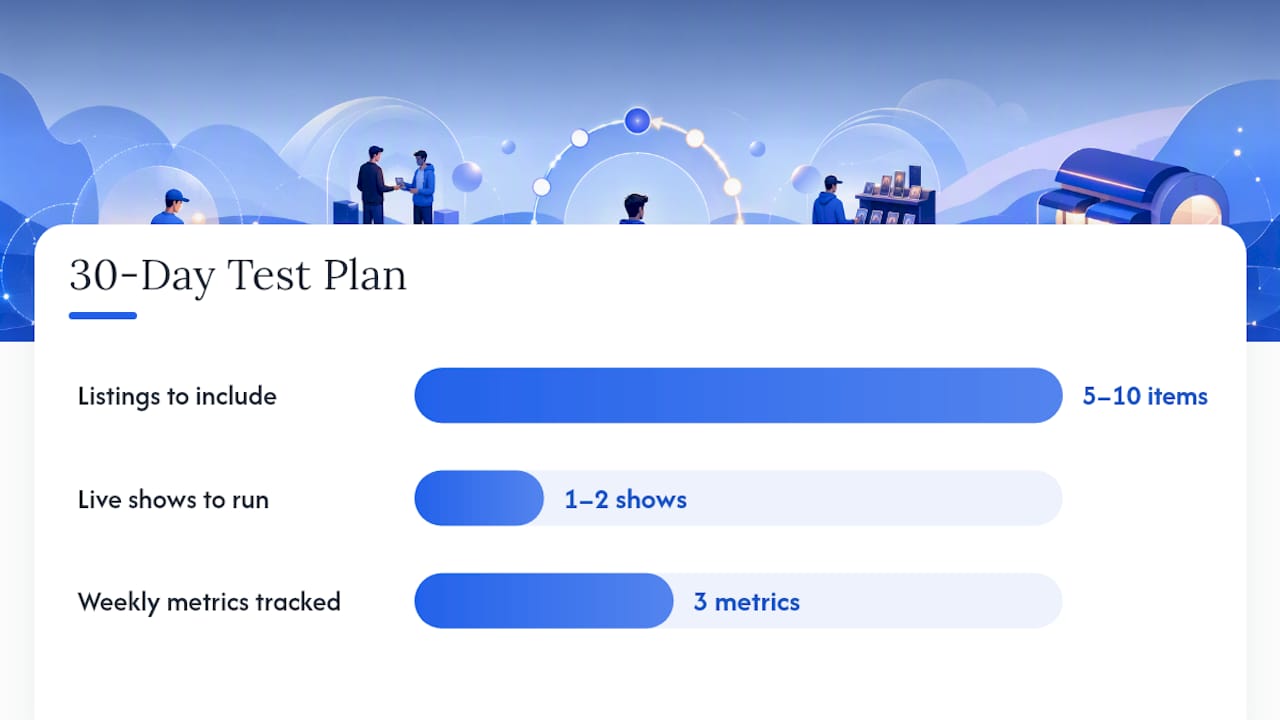
Once you’ve picked a candidate, run a 30-day test with a deliberate mix rather than dumping your whole collection in at once:
- List 5 to 10 mid-value singles to gauge search traffic and pricing accuracy.
- If the platform supports live formats, run one or two short shows with lower-stakes inventory to test show mechanics and chat engagement.
- Track sell-through rate, net proceeds after fees, and any audience growth (followers, repeat buyers) weekly.
- Compare that data against your Whatnot baseline before shifting more inventory over.
Sellers who treat multi-platform selling as sync work, not guesswork, avoid the most common new-platform mistake: double-selling the same item across two listings because inventory wasn’t updated after a sale. If you list the same card on a live platform and a static marketplace simultaneously, pull it from both the moment it sells anywhere.
Pro Tip: Track your net-after-fees number, not your gross sales number, for the full 30-day test. A platform with a lower headline fee can still net you less if it takes three times as long to sell the same item.
Where Ripbin Fits for Card Sellers Testing Alternatives
For sellers whose inventory is specifically sports or Pokémon cards, the decision gets simpler once real market data is in front of you instead of a guess. Some marketplaces track live values across many cards sourced from actual completed sales, not asking prices, which matters because asking-price data (the kind that inflates a lot of live-auction hype) tends to overstate what a card is genuinely worth.
A few features change the calculus directly:
- Scan-to-value tools let you check a card’s current market price before deciding whether it’s worth a live break slot or a straightforward static listing.
- The collection locker tracks your inventory’s value over time, so you know exactly what’s appreciating and what’s better sold now.
- Fee transparency without browsing fees means you’re not paying to window-shop the market before you even list anything.
That combination answers the exact question a lot of sellers struggle with: is this card worth streaming for, or should it just go up as a fixed-price listing? When the scan tool shows a card’s real sales-based value sitting well above what a live crowd is likely to bid in a rushed auction format, the static route wins. Ripbin’s monthly investment reports build that same data-driven approach into ongoing collection decisions, not just one-off listings.
Why the Fee Debate Misses the Real Decision
Most comparisons of Whatnot alternatives obsess over shaving a percentage point off commission, and that’s the wrong fight. The fee only matters once you already know the platform can move your specific inventory.
What the research consistently supports instead is matching format to product first, then optimizing fees second. Graded singles and higher-value cards do better with searchable, patient formats: Ripbin’s marketplace or a static listing site. Hype inventory, breaks, and low-to-mid value singles do better with the theater of live selling. Sellers who ignore that and chase whichever platform their favorite streamer uses tend to burn hours for worse returns than a simple static listing would’ve delivered.
The most overlooked variable isn’t fees or even audience size. It’s whether you can honestly commit to the streaming cadence a live platform demands. Sellers who treat live selling as a part-time hobby usually get part-time results, while a static listing keeps working for you at zero additional time cost once it’s live.
— Saad
Try Ripbin as Your Next Card-Selling Platform
Some marketplaces fit sellers who want pricing backed by actual completed sales instead of a bidding crowd’s mood on a given night. If graded singles, rookie cards, or a growing collectible card collection make up your inventory, you can get real-time values across many cards without paying to browse the market first.

Two places to start today:
- Browse Cards to check current market values across sets and checklists before you list anything, anywhere.
- Use the scan-to-value tool to price your next card in seconds and decide whether it’s worth a live break or a straightforward listing.
Sources
- Top 10 Whatnot Alternatives & Competitors in 2026
- Whatnot Seller Review: Earnings & Fees 2026 | LiveShopFront
- How to Sell Trading Cards on Whatnot — The Complete Guide for 2026 – FLUF Connect
- Sites Like Whatnot: Live Selling Options
FAQ
Is Tilt or Whatnot Better?
Neither is universally better. Tilt-style card-shop apps and Whatnot serve overlapping but distinct audiences, and the right pick depends on whether your inventory skews toward hype breaks (Whatnot’s strength) or toward slower, community-driven trading. Test both with a small inventory batch before committing.
What Is the Most Profitable Site to Sell On?
There’s no single most profitable site. Profitability depends on matching inventory to format: hype-driven cards often net more on live platforms despite higher fees, while graded singles typically net more on static marketplaces like Ripbin, where fees stay lower and search traffic finds the specific card a buyer wants.
Is Whatnot a Bad App?
Whatnot isn’t a bad app, but it’s not the right fit for every seller. Its roughly 11% all-in fee and streaming demands work well for sellers with hype inventory and time to go live regularly, and work poorly for sellers with slow-moving, high-value singles that sell better on a static listing.
What Are Some Apps Similar to Whatnot That Offer Giveaways?
Several live-commerce and social-shop apps run giveaway-style promotions to build audience, including platforms like KingSumo for giveaway mechanics layered onto a seller’s existing storefront. Giveaways build audience loyalty but rarely move high-value inventory on their own, so treat them as a discovery tool rather than a sales channel.
Which Whatnot Alternative Works Best for Card Sellers Specifically?
For sports and Pokémon card sellers, a static marketplace with real market data, like Ripbin, tends to outperform live formats for graded singles and higher-value cards. Live platforms still make sense for sealed breaks and hype-driven inventory where a crowd can push bidding energy that a fixed-price listing can’t replicate.