Track Card Prices for Hobbyists: Price a Card in 60–90 Seconds
By Ripbin Research · Published 2026-09-07
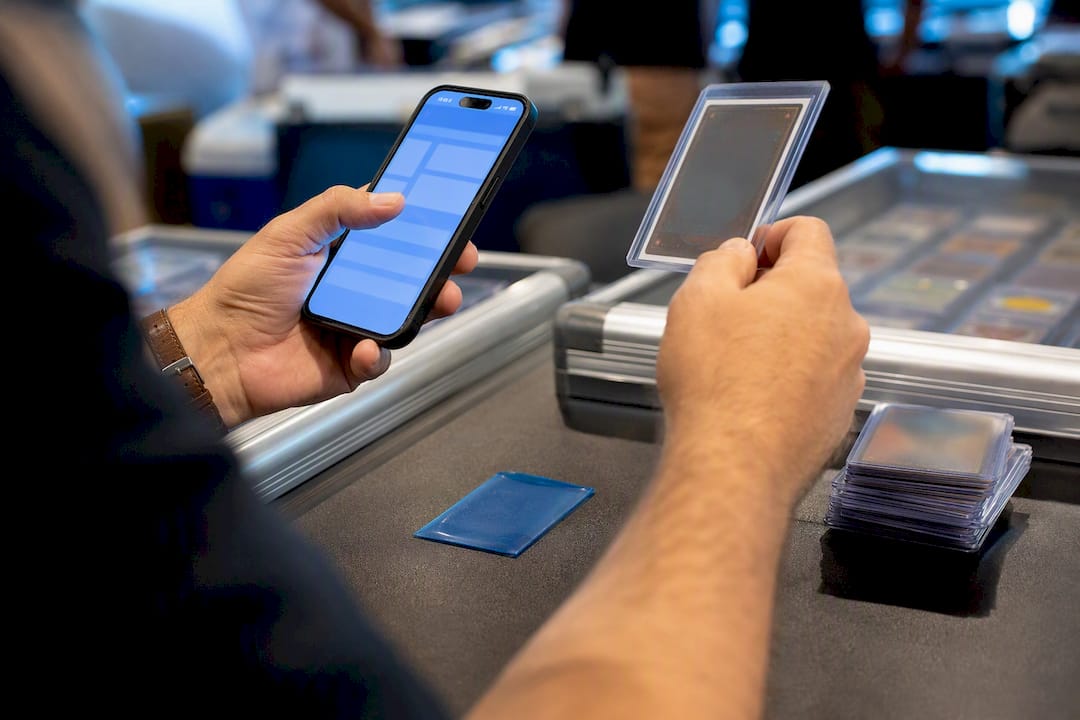
Track Card Prices for Hobbyists: Price a Card in 60–90 Seconds
The fastest way to know what a card is worth right now is to scan it with a live-value app for an instant estimate, then confirm that number against completed sales in a price guide before you buy, sell, or grade. Add the card to a tracking tool if you want alerts when the price moves. Some platforms combine live values, instant scanning, and collection lockers to facilitate that workflow.
TL;DR:
- Use a live-value app for quick estimates but verify with completed sales data to avoid overpaying on rare or high-value cards.
- Confirm the card’s specific printing and grade before trusting scan app estimates, especially for cards with multiple parallels or conditions.
- Build a collection tracker with accurate identifiers and set alerts based on percentage or dollar changes to monitor market movements effectively.
- Grade cards with high demand when the price increase from grading outweighs the cost and turnaround time, particularly for top-grade versions.
- Be cautious of lot sales and unfiltered data sources, always verify sale conditions, grade, and data origin to avoid misleading price impressions.
Table of Contents
- Quick Tools: Scan Apps, Browser Price Guides, and When to Use Each
- How to Track a Whole Collection and Set Price Alerts
- How Grading and Condition Change a Card’s Tracked Price
- Common Pitfalls: Data Quality Issues and How to Avoid Being Misled
- A Short, Practical Workflow: From Scanning to Acting
- What Live Data Actually Looks Like at a Show
- Track Card Prices Faster With Ripbin’s Live Data
- Sources
Quick Tools: Scan Apps, Browser Price Guides, and When to Use Each
Photo-scan apps are the fastest starting point for any card. Point your phone at the front of the card, and the app matches it against a database and returns a market value, usually pulled from live listings or a price database that updates continuously. This works well for bulk inventorying at a card show, when you have thirty cards on a table and need rough numbers in under two minutes.
Manual price-guide searches take longer but give you more control. Sites like eBay’s price guide let you filter completed sales by grade, set, and printing, which matters when a card has multiple parallels that scan apps sometimes lump together. Completed sales tell you what buyers actually paid; current listings only tell you what sellers are asking.
Here’s how to pick between them:
- Speed priority: Use a scan app when you need dozens of quick estimates and can flag outliers for later review.
- Accuracy priority: Use completed-sales filters when the card is valuable enough that a wrong number costs real money.
- Transparency priority: Look for tools that show grade-by-grade charts and let you export price history, since that tells you exactly what data built the number in front of you.
Subscription tiers on many pricing tools gate the good stuff. Free versions often show only a current estimate. Paid tiers unlock historical charts, population context, and sometimes API access for collectors tracking large inventories.
How to Track a Whole Collection and Set Price Alerts
Building a tracked collection starts with getting the intake right. You have three practical options: scan cards one by one, import a CSV if you’re migrating from a spreadsheet, or add cards manually. Whichever method you choose, nail down the identifiers that actually change value: set, year, card number, printing (base, parallel, insert), and grade. Miss the printing or grade, and your tracked value will drift from reality fast.
Once your collection is loaded, set alerts that actually mean something to you:
- Percent-change alerts for volatile cards where a 15% swing signals real market movement.
- Dollar-threshold alerts for high-value cards where percentage swings understate the dollar risk.
- Grade-specific alerts so a price jump on a PSA 10 doesn’t get confused with movement on the raw or lower-grade version.
- Priority tiers so your five most valuable cards get watched closely while common cards sit in a passive list.
Most tracking platforms split the view into two useful modes: a portfolio total that shows collection value over time, and individual watchlists for cards you’re actively deciding on. Export a gain/loss report when you need documentation for insurance or taxes.
Pro Tip: Set your dollar-threshold alerts based on what would actually change your behavior. If a $20 price swing wouldn’t make you list a card, don’t get pinged for it.
How Grading and Condition Change a Card’s Tracked Price
Grading creates price lanes. A raw card and its PSA 10 counterpart can trade at prices that differ by a factor of ten or more, because grading gives buyers a shared, verifiable condition language instead of a seller’s subjective description. Sotheby’s pricing guidance notes that population reports and grade-specific comps sharpen liquidity and price clarity, since buyers know exactly what they’re bidding on.
Condition sensitivity isn’t linear. The jump from a PSA 9 to a PSA 10 sometimes moves the price far more than the jump from a PSA 7 to a PSA 8, because collectors chase the top grade disproportionately.
Before sending a card to a grading service, weigh these factors:
- Expected price jump between your card’s likely grade and the raw price.
- Liquidity for that specific card. Some low-demand cards barely move regardless of grade.
- Grading turnaround and cost against how soon you plan to sell.
Grading pays off most on cards with real buyer demand, according to CollectorsPrice’s breakdown of what makes grading valuable. A thinly traded common rarely justifies the fee.
Common Pitfalls: Data Quality Issues and How to Avoid Being Misled
Lot sales are the most common trap. A listing for “50 cards, $200” gets averaged into per-card pricing tools and drags every card in that lot toward a misleadingly low number. Check the sale description and lot size before trusting any comp that looks suspiciously cheap.
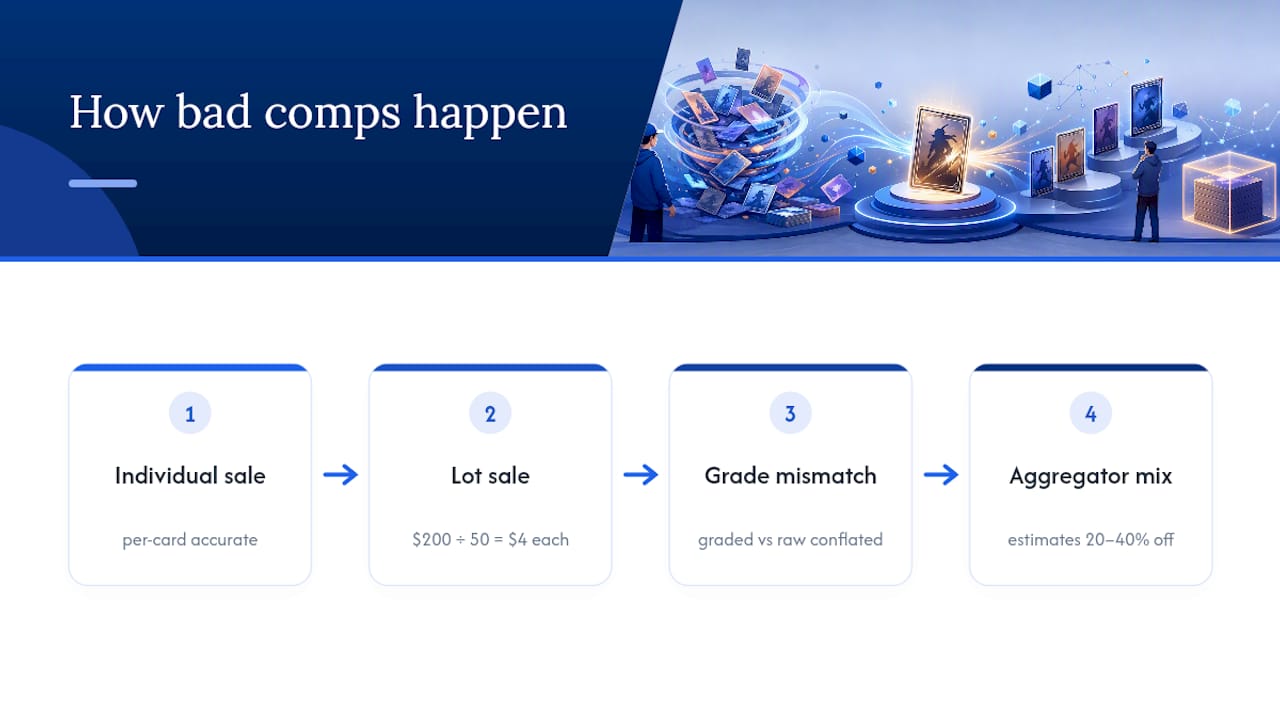
Graded and raw sales get conflated constantly, especially on tools that don’t force a grade filter. Always confirm the comp matches your card’s actual grade, not just its name and set.
Subscription pricing tools and marketplaces that also sell cards carry a built-in incentive to show numbers that favor transactions. Research on market consolidation found subscription aggregators sometimes mixing lot sales with individual sales, producing estimates that diverge 20 to 40 percent for thinly traded cards.
Pro Tip: Before trusting any price, check whether the tool discloses its data source. If it won’t tell you where the number comes from, don’t build a selling decision around it.
A Short, Practical Workflow: From Scanning to Acting
Here’s the routine that works whether you’re at a kitchen table or a card show table:
- Scan the card for an instant baseline estimate.
- Confirm the exact printing and grade before trusting that number.
- Check three recent completed sales matching that exact grade and printing.
- Factor in selling fees and shipping before comparing net proceeds across marketplaces.
- Decide: list it if the numbers agree, research further if sources disagree by more than 30%, or consider grading if the expected price jump clearly beats the grading cost.
At a show, budget about 60 to 90 seconds per card for the scan-and-glance step. Flag anything with a wide price spread for a deeper completed-sales check once you’re home. That single habit, checking PSA’s guidance on using completed sales and population data before finalizing a number, prevents most of the pricing mistakes hobbyists make under time pressure.
What Live Data Actually Looks Like at a Show
Working a table at a card show usually means fifteen minutes and forty cards someone wants to sell you on the spot. Scan first. Every card that scans within a reasonable range of your gut estimate gets a quick yes or no. The ones that scan far outside expectation get set aside for a completed-sales check before you commit any money.
Some tools follow a similar logic: scan for an instant number, then let live values and a locker handle the tracking to avoid rebuilding spreadsheets manually. The population and grading context matter here too. A card that looks unremarkable raw can jump considerably once you know how few exist in gem-mint condition.
None of this replaces judgment. It just means the judgment gets made with real numbers instead of a guess based on what a similar card sold for two years ago.
— Saad
Track Card Prices Faster With Ripbin’s Live Data
Certain platforms aim to put the entire workflow into one place, combining live values, instant scan-to-price identification, and grade-by-grade tracking that updates as new sales happen.

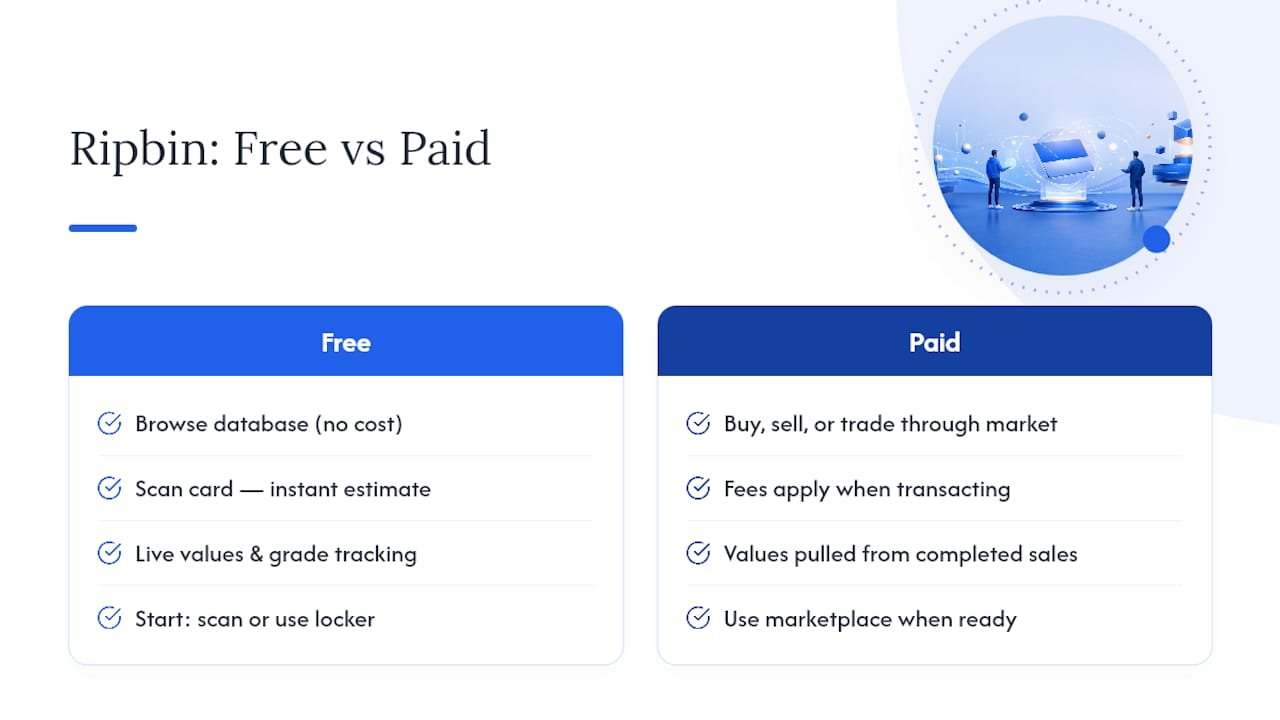
Browsing the database of cards, sets, and current values costs nothing, and scanning a card for an instant estimate is free too. The paid layer comes in when you actually buy, sell, or trade through the marketplace, where Ripbin skips the browsing fees other platforms charge and pulls its values from real completed sales instead of asking prices. If you’re weighing whether a card is worth adding to your holdings long term, the guide to investing in sports cards walks through how to read those signals before you commit money.
Start small: scan the next card you pick up, or drop a handful of cards from your current collection into a locker and watch how the value moves over the next few weeks.
Sources
Every price you see falls into one of a few buckets, and confusing them is the single most common way collectors overpay or undersell. A lowest listing is the cheapest active ask on a marketplace, not a sale. An active listing average tells you what sellers hope to get. A completed sale is what a buyer actually paid, which is the number that matters most for selling decisions. An auction hammer price reflects competitive bidding and can run hot or cold depending on the day. Social and group-chat listings add another layer entirely, often reflecting local demand that national platforms miss.
Some tools report a rolling average across recent sales, others weight recent sales more heavily, and some just show the lowest available comp. Ask any pricing tool which method it uses before trusting the number for a big decision.
Independent research on the collectible market found meaningful price dispersion across platforms and non-linear sensitivity to condition, meaning a single “market price” often isn’t enough for an informed transaction on its own.
To reconcile conflicting numbers:
- What’s that card worth? A pricing guide to trading card values | Sotheby’s
- PSA | Getting Started With Grading
- Scan sports cards to get free price and market data — eBay price guide