Sell Sports Cards for Top Dollar With Live Pricing & Instant Scans
By Ripbin Research · Published 2026-08-26
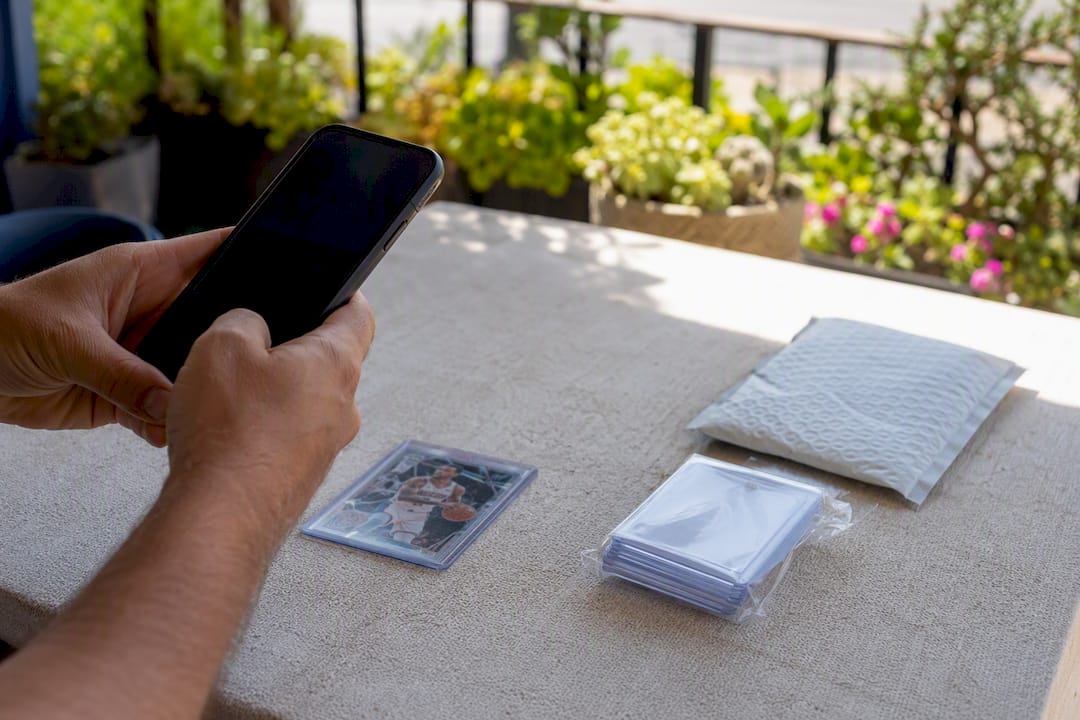
Sell Sports Cards for Top Dollar With Live Pricing & Instant Scans
If you want maximum return, list on a self-sell marketplace after checking sold comps and consider grading first. If you need cash today, walk into a local card shop or dealer table. If you’d rather not lift a finger, consignment does the work for a cut of the sale. The PSA Price Guide and Ripbin’s live comps both help you avoid the single biggest mistake sellers make: pricing off wishful listings instead of what cards actually sold for.
TL;DR:
- Listing on a self-sell marketplace yields higher returns if you accurately check sold comparisons and grade your cards before pricing.
- Selling to local shops offers immediate cash but typically at 40% to 75% of market value, requiring preparation and realistic negotiation.
- Using online auction houses benefits high-value or rare cards with potential for bidding wars, but involves higher fees and longer payment timelines.
- Consignment platforms are cost-effective when handling mid- to high-value cards and when sellers lack time or space to manage individual listings.
- Relying on live sale data from Ripbin helps sellers price more accurately, reducing unsold inventory and maximizing profit.
Table of Contents
- Where to sell sports cards: five routes and when to use each
- How do you sell sports cards yourself for the best return?
- Is consignment worth the fee for selling sports cards?
- Should you sell to a local card shop for fast cash?
- Card shows vs. auction houses for mid- to high-value cards
- When should you grade a card before selling it?
- How Ripbin removes the guesswork from pricing and selling
- Why data beats gut feeling on every sale
- Sell smarter with Ripbin’s live pricing and marketplace
- Sources
Where to sell sports cards: five routes and when to use each
Every route trades speed for money, or effort for control. Match the route to your goal before you match it to your cards.
- Online marketplaces (eBay, Whatnot, Ripbin’s marketplace): best for sellers who want top dollar and don’t mind photographing, listing, and shipping. Fees typically run in a moderate single-digit to mid-teen percentage range once you count payment processing and any promotion. Expect a sale in days to a few weeks.
- Consignment platforms: best for high-volume sellers or anyone with a shoebox of graded cards and no time. The service photographs, lists, stores, and ships for you, but takes a bigger cut, often 15% to 30%, and payout can take weeks to months.
- Local card shops and dealers: best when you need cash now. Offers usually land between 40% and 75% of market value because the shop absorbs resale risk and its own selling costs.
- Card shows: best for mid-range singles worth $50 to $500 where meeting collectors face to face beats paying platform fees. You pay a table fee and spend a day, but keep more of the sale price.
- Auction houses: best for rare, high-value, or graded cards where a bidding war can push price well past a fixed listing. Expect consignment fees plus a buyer’s premium, and a longer runway to payment.
Most sellers with a mixed collection end up using two or three of these at once, not just one.
How do you sell sports cards yourself for the best return?
Selling yourself online nets the most money per card, provided you price it correctly and don’t skip the prep work that actually moves a listing from “browsed” to “sold.”
1. Pull sold comps, not active listings. Filter for sold items only, look at the last 5 to 10 actual sales within a 30 to 90 day window, and match the exact grade, parallel, and condition.

2. Write the title like a buyer searches, not like a catalog entry. Include player name, year, set, card number, parallel or serial number, and grade if applicable. Buyers searching for a specific rookie parallel type that exact string into the search bar.
3. Shoot photos that show the corners and surface, not just the front. A blurry front-only photo signals a seller who doesn’t know what they’re selling, and serious buyers scroll past it.

4. Time the listing end. Auctions that close Sunday evening, Eastern time, on a 7-day cycle tend to draw the most bidders, since that’s when collectors are online browsing rather than at work.
5. Choose the format deliberately. Auction format tends to find true market value for scarce or in-demand cards; buy-it-now with “best offer” works better for common, easily comped cards where buyers know the going rate. Promoted listings can lift visibility, but they shave another percentage point or two off your net, so reserve them for cards that have sat unsold for a few weeks.
6. Pack it like it’s worth something. A penny sleeve, a semi-rigid holder, and a bubble mailer or small box protect against bent corners in transit, which is the single most common buyer complaint and return trigger.
Pro Tip: Screenshot your sold comps before you list. If a buyer disputes the price or a return claim comes in, having the comp saved makes the conversation a lot shorter.
Is consignment worth the fee for selling sports cards?
Consignment makes sense the moment your time is worth more than the extra cut you’d keep by listing everything yourself. A full-service consignor photographs each card, writes the listing, handles customer questions, ships the item, and often stores your inventory until it sells, which is the entire appeal for anyone sitting on a large or high-value collection they don’t want to manage piece by piece.
The fee structure is where sellers get surprised. That math works fine on a $2,000 graded rookie card and works poorly on a $15 common, so consignment tends to be most efficient for mid-value and high-value singles rather than bulk commons.
Before signing anything, ask a prospective consignor:
- What’s the all-in fee, including processing, listing, and any cash-out charge?
- What’s the average time from drop-off to sale, and to payment after the sale?
- Do you insure inventory while it’s in your possession?
- Can I set a minimum acceptable price or reserve?
- What happens to unsold cards after 90 or 180 days?
A consignor who dodges the fee question or won’t put terms in writing is a reason to walk.
Should you sell to a local card shop for fast cash?
A local shop or dealer buyout is the fastest way to turn cards into cash, often within minutes of walking in, but that speed comes at a real discount.
You can narrow that gap with a little preparation. Sort your collection before you arrive, separate the genuinely valuable singles from bulk commons, and bring printed or phone-ready sold comps for your best pieces. A dealer who sees you’ve done your homework tends to open with a fairer number than one who assumes you have no idea what anything is worth.
A few things to watch for:
- Vague or shifting offers. A dealer who quotes one number, then finds reasons to lower it after “closer inspection,” is negotiating in bad faith.
- No cash or check on the spot. Legitimate shops pay immediately; anyone asking you to leave cards “for evaluation” without payment upfront is a red flag.
- Refusal to explain the offer. A shop confident in its number will usually tell you why it landed there, whether that’s condition, current demand, or resale risk.
Negotiation room exists, but it’s usually a few percentage points, not double.
Card shows vs. auction houses for mid- to high-value cards
Card shows put you across a table from an actual collector with no platform taking a cut, which is why they remain one of the best channels for cards in the $50 to $500 range. You pay a table fee and spend a day, sometimes two, but every dollar of the sale price is yours minus that fixed cost.
- Card show advantages: no listing fees, no shipping, instant payment, and the ability to negotiate face to face on multiple cards at once.
- Card show trade-offs: table costs, travel time, and a buyer pool limited to whoever walks by that weekend.
- Auction house advantages: access to serious, often national, bidders willing to pay a premium for rare or heavily graded cards, which can push price well beyond what a fixed listing or show table would fetch.
- Auction house trade-offs: consignment fees plus a buyer’s premium, a reserve you need to set carefully, and a payment timeline that can stretch several weeks past the sale date.
The rule of thumb: shows for volume and mid-range singles, auction houses for the handful of cards in your collection that are genuinely rare or high grade.
When should you grade a card before selling it?
Grading only pays off when the expected price jump clears the grading fee, the shipping both ways, and the turnaround time you’re giving up. Start every valuation the same way: pull sold comps in a 30 to 90 day window, and if the card is already slabbed or a grading candidate, check grade-specific sold prices rather than a blanket raw-card estimate.
1. Check the raw comp first. Know what your card sells for ungraded before spending anything on grading.
2. Check the PSA 9 and PSA 10 comps for that exact card. The PSA Price Guide breaks out price by grade, and the gap between a 9 and a 10 on a modern rookie can be small, while on a vintage card it can be enormous.
3. Do the math on the spread. If a raw card comps at $40 and a PSA 10 comps at $60, grading fees and shipping will likely eat the entire upside. If a raw card comps at $50 and a PSA 10 comps at $400, grading is close to a no-brainer.
4. Prep before you submit or list. Scan the card under even lighting, shoot both sides in focus, and note any surface or corner flaws honestly. A grading company will find them anyway, and an honest listing description avoids return disputes.
The gap that costs sellers money: the difference between what a card is asking for and what it actually sells for regularly runs 30% to 50%. Combined seller fees across the main marketplaces typically land between 6% and 15%. Anyone pricing off active listings instead of sold comps is essentially donating that entire spread to a buyer who did their homework.
How Ripbin removes the guesswork from pricing and selling
Every step above depends on knowing what a card actually sold for, and that’s the exact problem Ripbin was built to solve. The platform tracks live market data on more than 78,000 cards, pulled from real completed sales rather than optimistic asking prices.
- Scan and get an instant valuation. Point your phone at a card and get a real-time price estimate instead of guessing from memory or an old price guide.
- Check grade-by-grade values before deciding whether a grading submission is worth the fee and the wait.
- Track your whole collection in a personal locker so you always know current value without re-researching cards you already own.
- List directly on Ripbin’s marketplace, or use the live comps to price your own eBay or show listings more accurately.
Ripbin charges no fee to browse the database or scan cards, which is a meaningful difference from platforms that gate pricing data behind a subscription. Sellers pay a transaction fee only when a sale actually closes.
Why data beats gut feeling on every sale
I’ve watched enough collectors underprice a card out of impatience, and just as many overprice one out of attachment, to conclude that the biggest variable in a sale isn’t the platform. It’s whether the seller checked real sold data before setting a number. Guessing from memory, or anchoring to the highest active listing you can find, is how cards sit unsold for three months and then finally move for less than a properly priced listing would have brought in week one. Scan a handful of cards through Ripbin before your next listing and compare the live comp to whatever number you had in your head. The difference is usually the whole reason a sale takes two days instead of two months.
— Saad
Sell smarter with Ripbin’s live pricing and marketplace
Ripbin gives you the one thing every route in this guide depends on: a real number to price against, pulled from actual sales instead of hopeful listings. Scan a card for an instant valuation, check its grade-by-grade history, store your whole collection in a locker that updates automatically, and list it on Ripbin’s marketplace when you’re ready to sell, all without paying a browsing fee.
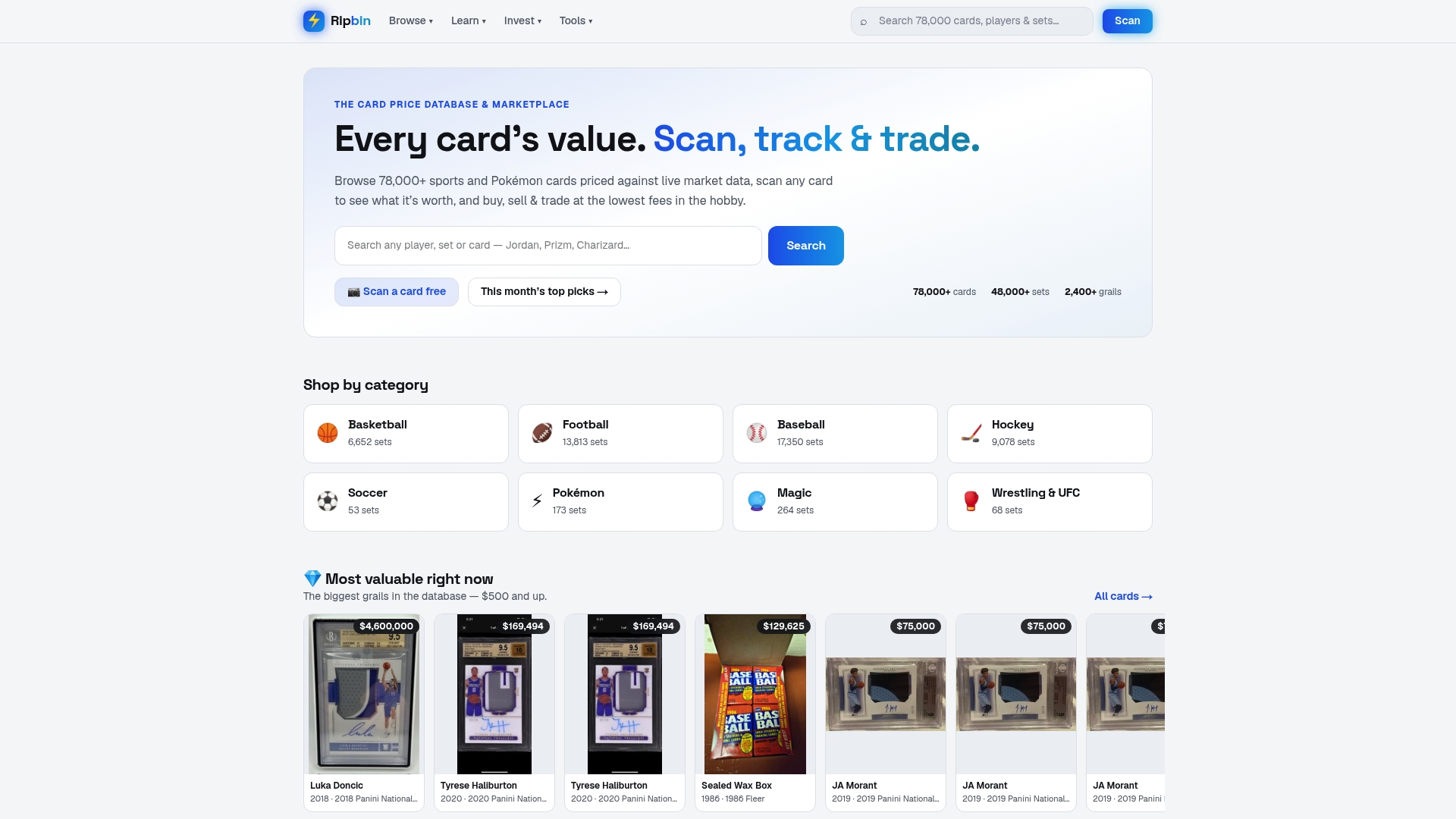
Whether you’re routing bulk commons to a show, a graded rookie to auction, or everything else to a self-sell listing, start by browsing current card values on Ripbin to see exactly what your inventory is worth today before you list anywhere.
Sources
The PSA Price Guide remains the standard reference for grade-by-grade pricing on certified cards. For pricing methodology, The Card Shop Finder’s guide and CardSense’s eBay selling guide cover comp research and listing mechanics in more depth. Sellers moving into wholesale volume can find margin guidance on The Secret Stash’s sourcing blog.
- PSA Price Guide
- Price your collection (The Card Shop Finder)
- How to Sell Sports Cards on eBay (CardSense AI)
- Understanding card market values (DCM Grading blog)