Where to Sell Graded Cards for the Best Price in 2026
By Ripbin Research · Published 2026-08-24
Where to Sell Graded Cards for the Best Price in 2026
The fastest way to decide where to sell graded cards is to match your goal to one of four channels: marketplace listings, consignment or auction, instant offers, or local shops. Want the highest price? List it yourself. Need cash by Friday? Take an instant offer. Clearing out a box of PSA 8s? A local shop or bulk buyer beats listing forty items one by one.
For most sellers listing single graded cards, Ripbin is worth starting with. It pulls live values from real sales across more than 78,000 cards, lets you scan a slab to get an instant price check, and skips the browsing fees that eat into smaller marketplaces’ appeal.
- Marketplace listing (eBay, Ripbin): best for maximum price on a single valuable card
- Consignment/auction house: best for high-grade slabs worth $500+
- Instant offers (like PSA Partner Offers): best for speed, lower payout
- Local card shop: best for convenience and same-day cash
Quick math: A PSA 10 can sell for 3 to 20 times a raw card’s value depending on scarcity, according to ShowVault’s selling guide — which is exactly why picking the right channel matters more for graded cards than raw ones.
Pick your lane below, then follow the specific steps for pricing, packing, and getting paid.
Key Takeaways
Selling a graded card profitably comes down to matching the right channel to your specific goal, then pricing off real sold comps rather than asking prices.
| Point | Details |
|---|---|
| Match channel to goal | Use marketplace listings for max price, consignment for high-value slabs, instant offers for speed, local shops for convenience. |
| Price from sold comps only | Filter by exact grade and certification company, and widen the date window if sample size is thin. |
| Run the grading break-even math | Add grading, shipping, and insurance costs before assuming a grade bump will pay off. |
| Protect yourself in shipping | Insure high-value slabs, require signatures, and photograph packages before drop-off. |
| Start pricing with Ripbin | Scan a slab for an instant, real-sales-based value before listing it anywhere, with no browsing fees. |
Table of Contents
- How to Sell Graded Cards: Comparing the Four Channels
- How Do You Price a Graded Card Correctly?
- Should You Grade a Card Before Selling It?
- Making Your Listing Convert and Your Shipment Safe
- How Long Does It Take to Get Paid for a Graded Card?
- How Ripbin Fits Into Your Selling Workflow
- What Legal and Provenance Issues Come Up When Selling Graded Cards?
- Quick Links Worth Bookmarking
- The Channel-First Case for Selling Graded Cards
- Turn Your Collection Into Cash With Ripbin
- Sources
How to Sell Graded Cards: Comparing the Four Channels
Each channel trades price for speed differently. Here’s what actually happens once you choose one.
1. Marketplace listing
Listing directly on a marketplace gives you the most control and, usually, the best final price for anything with real demand, similar to what you’ll find on Vinylcollectibles. You write the description, you set the price, you handle the shipping, and you eat the fees. Ripbin’s marketplace works differently, since it strips out browsing fees and sources its pricing straight from actual completed sales rather than asking prices, which matters if you’re trying to set a number that will actually close.
This lane suits sellers with one or two cards worth real money who don’t mind spending 20 minutes writing a description and photographing the slab properly.
2. Consignment and auction houses
For a PSA 9 or PSA 10 worth $500 and up, consignment or auction is often the smarter move. These houses put your card in front of serious, motivated buyers, run competitive bidding when demand is hot, and handle authentication questions before they ever reach you. Auction and consignment guidance consistently points to this route for high-value slabs specifically because it accesses buyers a solo listing never reaches.
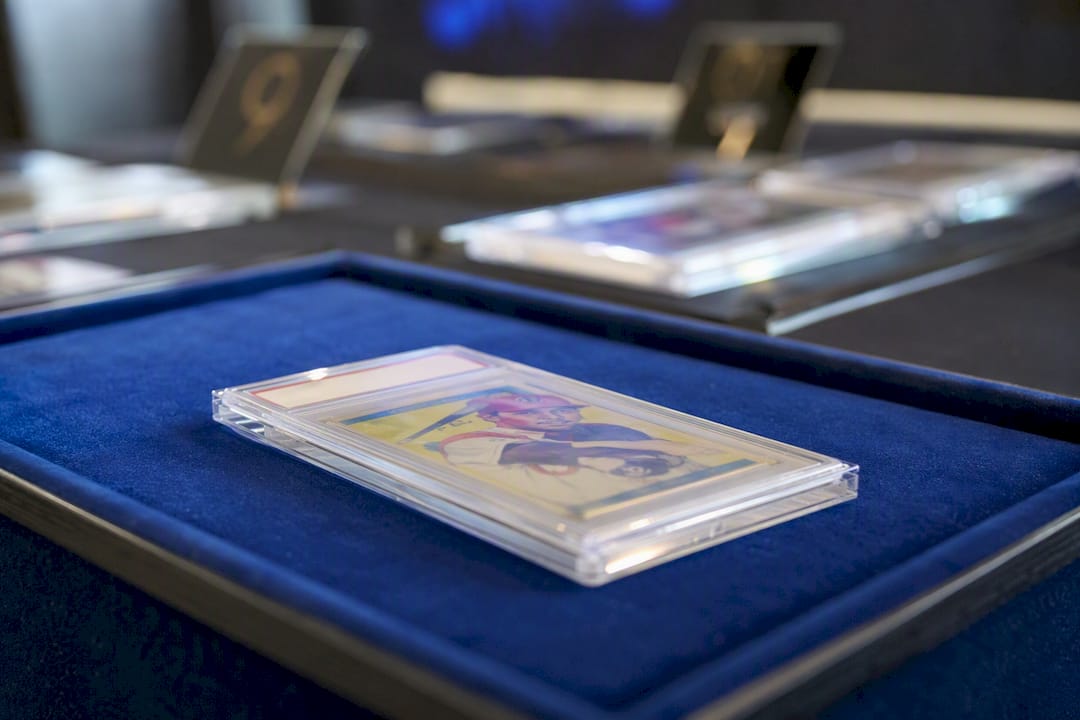
The tradeoff is fees, typically a percentage cut of the final sale plus sometimes a listing or photography charge, and the reserve risk: set your minimum too high and the card doesn’t sell; set it too low and a weak bidding day costs you real money.
3. Instant-offer partner programs
If speed matters more than squeezing out every last dollar, instant offers solve that instantly. PSA Partner Offers shows you a cash offer right in the PSA app the moment your card comes back from grading, with no fee on the offer itself and payment through Stripe as soon as you accept. You still paid the original grading and shipping costs, but there’s no marketplace listing, no photography, no waiting for a buyer.
Instant-offer programs typically return less than a full-market sale would, since the buyer on the other end needs margin to resell. Think of it as trading upside for certainty.
4. Local card shops
Walking a slab into a local shop is still the fastest way to turn cardboard into cash. No shipping, no listing fees, no waiting on a buyer to click “buy.” The catch is reach: a shop owner is pricing against their own inventory needs and local demand, not the national market, so offers usually land below what a well-placed online listing would fetch.
This works best for mid-tier cards you want off your hands today, or when you’re negotiating a bulk sale of several cards at once and the convenience outweighs a few extra dollars per card.
Decision checklist:
- High value, low urgency → consignment or auction
- High value, want full control → marketplace listing
- Need cash fast, okay with a discount → instant offer
- Selling in bulk or want it done today → local shop
How Do You Price a Graded Card Correctly?
Pricing starts with sold comps, not asking prices. Anyone can list a PSA 10 for $2,000; what matters is what buyers actually paid for one in the last 30 to 60 days.
Pull recent sold listings filtered specifically by grade and certification company. A PSA 9 and a PSA 10 of the same card can differ in price by a factor of several times over, so mixing grades into your comp set will wreck your number before you even start. When sample size is thin, widen the date window rather than guessing, and price conservatively until you see a pattern.
- Check the population report for that exact card and grade
- A low population at your grade can justify a premium, but only if buyers are actually competing for it
- Recent sale velocity (how fast comparable cards are selling) tells you whether demand is rising or stalling
- Auction results and Buy-It-Now prices are not interchangeable: BIN listings often close 10% to 14% higher than comparable auction sales for cards with clear, established value
Pro Tip: Scanning your slab in Ripbin’s app pulls live comps automatically and tracks the number in your personal locker, so you’re not rebuilding a comp sheet from scratch every time a card moves in price.
If you’re pricing for an instant offer, expect it to land below full market value by design.
Population data matters more with certain sets than others. A Pokémon slab with a thin population at gem mint can command a real premium, but a sports card from a mass-produced modern set won’t see the same effect even at a low pop, because buyer demand ultimately decides the ceiling regardless of how few copies exist.
Should You Grade a Card Before Selling It?
Run the math before you send anything to a grading company. Grading only pays off when the expected price increase clears your total cost with room to spare.
- Add up your real costs. Grading fee, return shipping, insurance, and any reholder fee if the card comes back damaged or mislabeled.
- Estimate the grade you’ll likely get. Be honest about corners and surface, not optimistic.
- Check what that grade actually sells for. A PSA 10 can multiply a raw card’s value anywhere from 3x to 20x, but that range depends entirely on scarcity and demand for the specific card, not the grade alone.
- Subtract your costs from the expected sale price. If what’s left barely beats what the raw card sells for today, grading isn’t worth the wait.
- Factor in the backlog. Grading turnaround has been a real constraint in recent years, and a slow submission can mean missing a selling window entirely.
Skip grading when the card has thin demand regardless of condition, when your honest self-assessment puts it at a grade with no real price bump over raw, or when you need the cash now and can’t afford months in a grading queue.
Making Your Listing Convert and Your Shipment Safe
A buyer paying real money for a graded card wants to see the label clearly before anything else. Photograph the cert number, the grade, and the label design in sharp focus, then get straight shots of the front and back of the card through the slab, plus close-ups on the corners where damage typically shows.
- Photograph the label, front, back, and all four corners separately
- State the exact grade, certification number, and population count if it’s notably low
- Write honest condition language: mention any surface haze on the slab itself, don’t just rely on the grade
- Note provenance if it adds value (pulled from a specific box, part of a known collection)
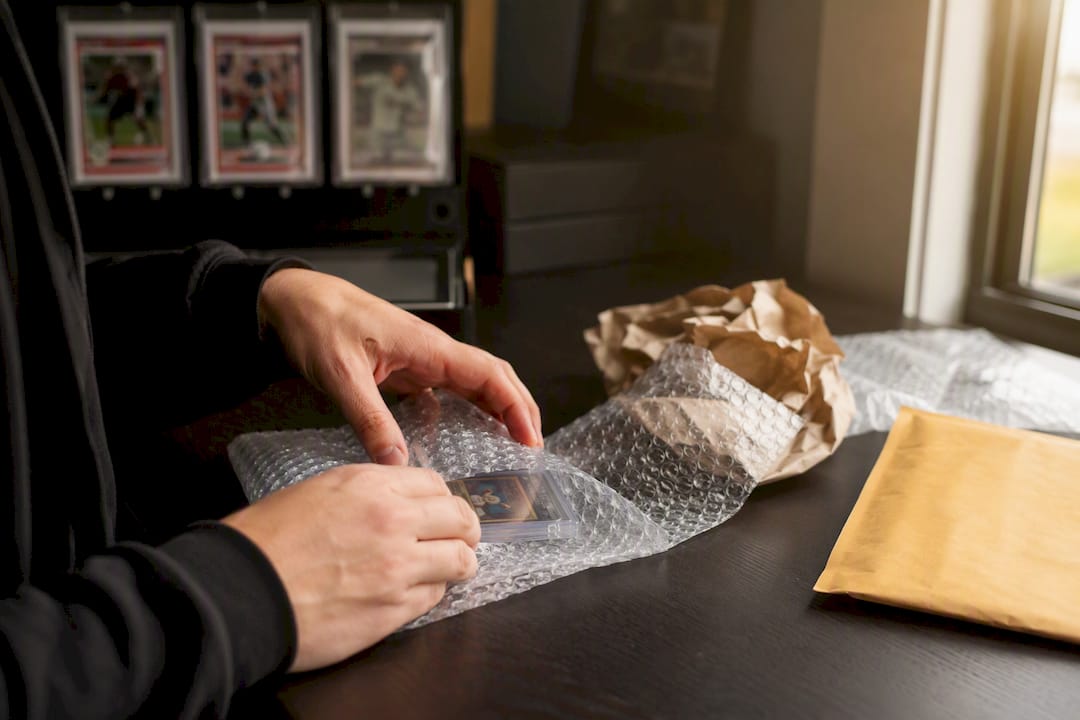
Packaging matters as much as photos. According to ShowVault’s selling guidance, sellers who pad slabs properly and insure shipments see fewer disputes and better outcomes overall. Wrap the slab in bubble wrap, box it inside a slightly larger box with padding on all sides, and never ship a graded card in an envelope no matter how sturdy it feels.
Pro Tip: Require signature confirmation on anything over roughly $200, and photograph the sealed package right before you drop it off. That timestamp is your best defense if a buyer later claims the item arrived damaged.
How Long Does It Take to Get Paid for a Graded Card?
Timelines and fees vary sharply by channel, and knowing both in advance keeps you from being surprised at payout.
- Marketplace listings: expect final value fees north of 13% plus a small per-order charge on platforms like eBay; sale-to-payment can take a few days once the buyer confirms receipt
- Consignment/auction: consignment fees vary by house and card value tier; auctions typically run one to two weeks from listing to close, with payment following after the sale settles
- Instant offers: no seller fee on the offer itself, and PSA Partner Offers pays through Stripe almost immediately after you accept
- Local shops: same-day cash, no fees beyond the discount already baked into the offer
Seasonal timing shifts things too. Demand spikes around the holidays and during tax-refund season tend to improve sale velocity, while a grading backlog can push your card past the window you were aiming for. Keep records of every sale, including date, price, and fees, since that data matters again when tax season rolls around.
How Ripbin Fits Into Your Selling Workflow
Most of the friction in selling a graded card is figuring out what it’s actually worth right now. Ripbin removes that step by pulling values from real completed sales, not guesses.
- Scan the slab to get an instant value based on current market data
- Check grade-by-grade pricing history before you commit to a number
- Store the card in your personal locker to track it alongside the rest of your collection
- Move straight into a marketplace listing once you’ve confirmed your price
A typical workflow looks like this: scan the slab, confirm the number against recent comps, set your price, list it, and manage offers as they come in, all without paying to browse listings first.
Ripbin sources its values straight from real completed sales across more than 78,000 cards, not asking prices, which is why the number you see when you scan a card tends to hold up when a buyer actually shows up.
Real-sales pricing plus no browsing fees is a combination most card marketplaces still don’t offer together, and it’s the reason Ripbin works well as the first stop before you commit to any of the four selling channels above.
What Legal and Provenance Issues Come Up When Selling Graded Cards?
Selling a graded card is generally straightforward, but a few provenance and legal basics protect you from disputes down the line. Ownership matters most: if the card came from an estate, a trade, or a purchased collection, keep whatever documentation exists, even if it’s just an old invoice or a message thread confirming the transfer.
Grading companies certify the card’s condition and authenticity at the time of grading, not your legal right to sell it, so a slab with a clean cert number doesn’t substitute for proof of ownership if a dispute arises. Altered or resubmitted cards carry their own risk: resoldering a card into a fresh slab after a crack-and-resubmit doesn’t erase its sale history if a buyer later questions authenticity, so disclose that history upfront rather than letting a buyer find out later.
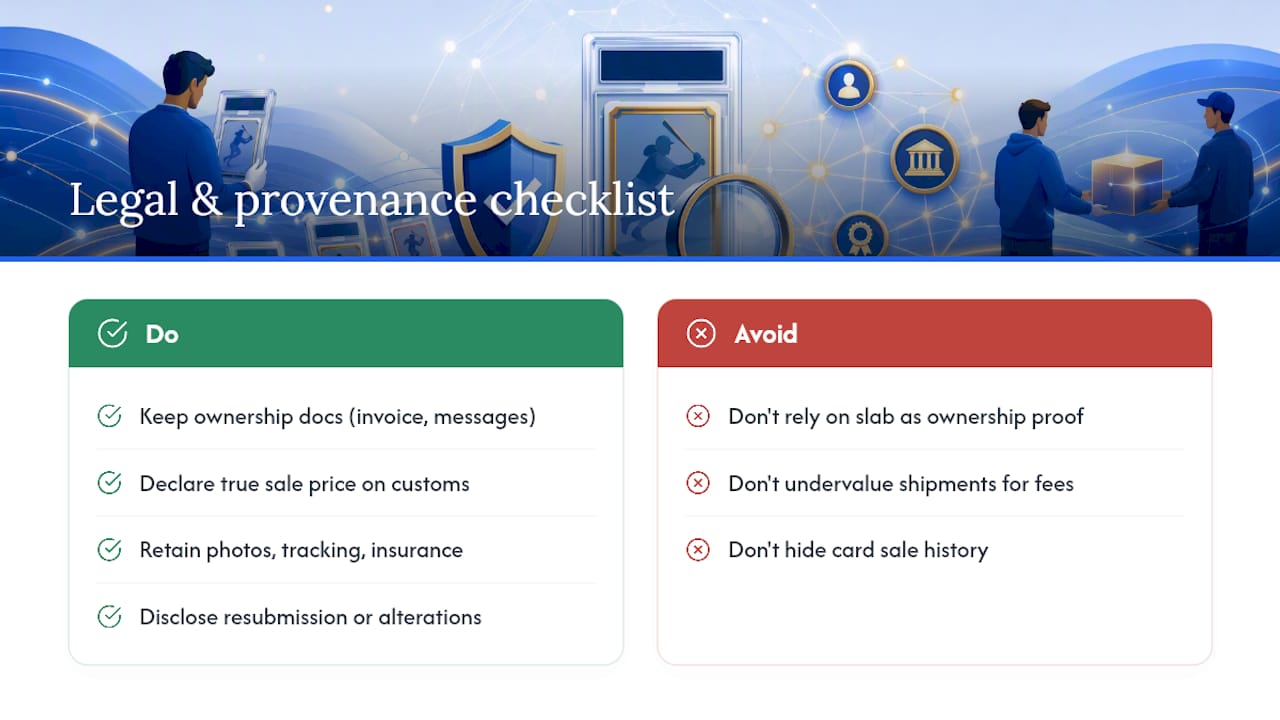
Cross-border sales add complexity too. If you’re shipping internationally, customs declarations need to reflect the actual sale price, since undervaluing a shipment to save on fees creates its own legal exposure if it’s ever audited. Keep dated photos of the card before shipping and retain your tracking and insurance records; those documents are what actually protect you if a buyer disputes condition or claims non-receipt, far more than any verbal assurance ever will.
Quick Links Worth Bookmarking
- PSA Partner Offers for instant-offer mechanics and payout timing
- Channel comparison guide for fee breakdowns across platforms
- Ripbin for scanning, live pricing, and marketplace listing tools
The Channel-First Case for Selling Graded Cards
Most advice on this topic treats “where should I sell” as one question with one answer. It isn’t. A PSA 10 rookie card and a box of PSA 8 commons have nothing in common as selling problems, and treating them the same is how sellers leave money on the table or waste weeks listing cards that should’ve gone to a bulk buyer in an afternoon.
The overlooked piece is that pricing research, not the channel itself, is where most sellers lose money. Get the price right first. The channel decision becomes almost mechanical once you know what the card is actually worth and how badly you need the cash.
Start with a scan, not a guess. Everything downstream, from which channel you pick to how you word the listing, gets easier once you’re working from a real number instead of a hope.
— Saad
Turn Your Collection Into Cash With Ripbin
If you’ve read this far, you already know pricing is the hard part, and that’s exactly where most sellers get stuck before they ever open a listing. Ripbin cuts that step down to seconds: scan a slab, get a value pulled from actual completed sales across more than 78,000 cards, and skip the browsing fees that other marketplaces tack on just for looking around.
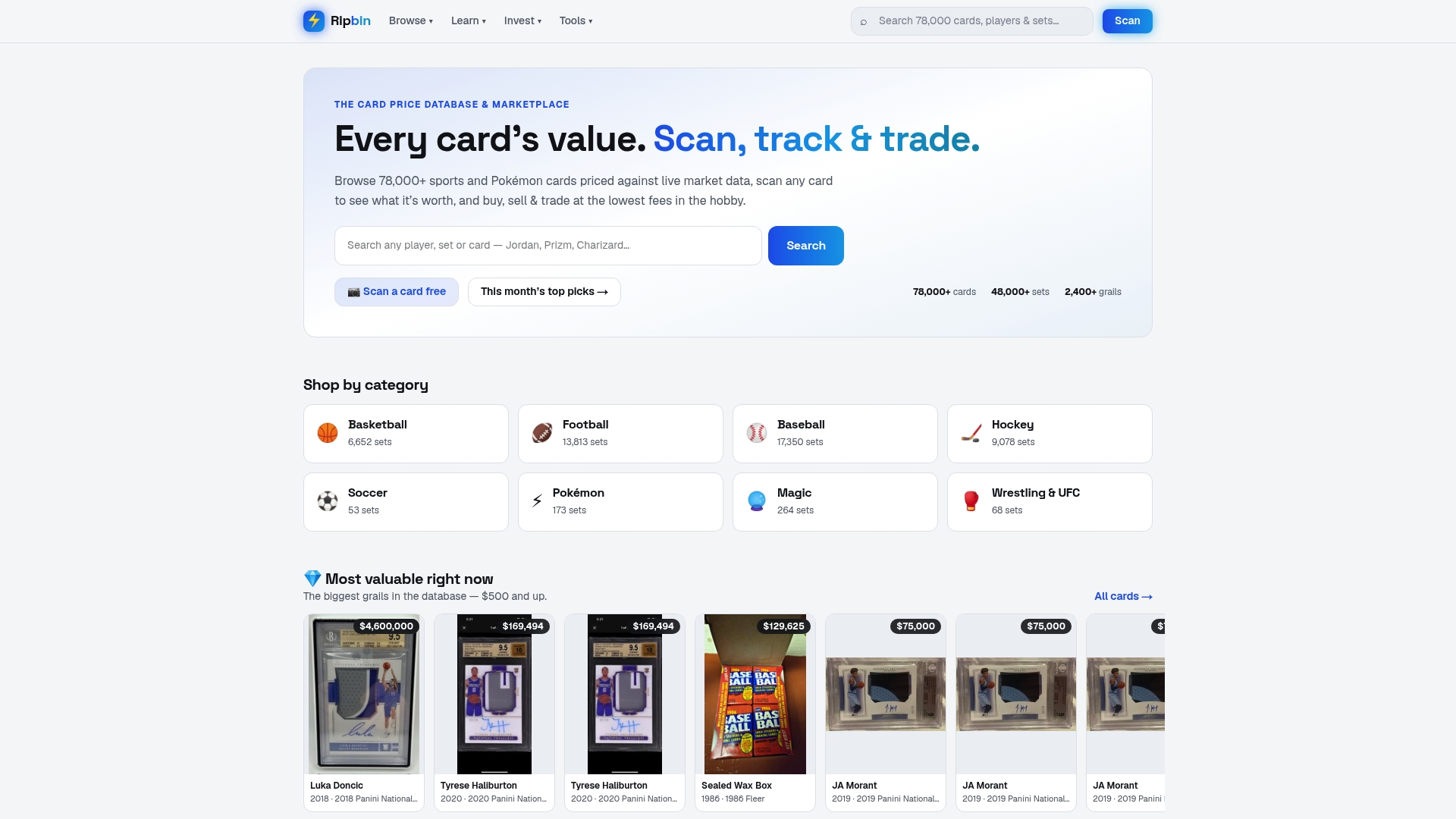
Once you’ve got a real number, you can list straight from the app, track the card in your personal locker alongside the rest of your collection, and manage offers as they come in without guessing whether your price will actually hold up when a buyer shows interest. That’s the whole point: less time second-guessing a number, more time actually closing a sale.
Browse current card values on Ripbin to see what your graded cards are worth right now, then list the ones ready to sell.
Sources
- How to Sell Trading Cards 2026: Every Channel Compared | The Card Shop Finder
- How to Sell Your Card Collection: Complete Guide for 2026 | ORB Sports Cards & Collectibles
- Instant Cash Offers on Graded Cards | PSA Offers