5 Margin First Steps to Flip Cards for Profit on a Small Bankroll
By Ripbin Research · Published 2026-09-13

5 Margin First Steps to Flip Cards for Profit on a Small Bankroll
Yes, flipping cards for profit works, but only in narrow conditions: you pick one lane and learn its comps cold, you model marketplace fees and shipping before you buy (not after), and you turn inventory fast instead of hoarding for a jackpot. Skip any one of those three and the math usually turns against you. A live pricing tool helps you confirm sold comps before you commit cash.
TL;DR:
- Focusing on a narrow card niche and modeling all fees before buying is essential to maintain profitable margins in card flipping.
- Using live sold data and scan-to-value tools helps verify comps and avoid overpaying, especially when sourcing from auctions or mispriced listings.
- Flattening the gap between gross spread and net profit requires tracking fees, hold days, and reinvesting profits quickly to keep cash flowing.
- Avoid grading lower-value cards unless the upside outweighs fees and turnaround times; raw sales generally outperform graded due to speed and liquidity.
- Building consistent relationships with local sellers and buyers enhances access to better inventory and more favorable deals over time.
Table of Contents
- How to Start Flipping Cards for Profit Step by Step
- Where Should You Source Cards to Flip?
- What Fees Eat Into Your Card Flipping Profit?
- Should You Grade the Card or Sell It Raw?
- Where Should You Sell Flipped Cards?
- Do You Have to Pay Taxes on Card Flips?
- How Should Beginners Budget and Manage Risk?
- How Ripbin’s Data Helps You Avoid Mispricing
- How Do You Spot a Fake or Altered Card?
- How Do You Market a Card to Get a Higher Sale Price?
- Are Pack Openings a Smart Speculation Strategy?
- Why Do Relationships With Buyers and Sellers Matter?
- Author Perspective: Realistic Expectations for Sustaining Flipping
- Try Ripbin’s Scan and Value Tools Before Your Next Buy
- Sources
- FAQ
How to Start Flipping Cards for Profit Step by Step
Card resale strategies live or die on process, not luck. Follow this sequence on every potential buy before you spend a dollar:
- Find three sold comps. Pull recent sold listings for the exact card and parallel, then check a scan-to-value tool for a current market read.
- Model every fee. Marketplace cut, payment processing, shipping, and packaging all come out before you see a dime of profit.
- Set a minimum net margin. Buy only if the math clears your target and you already know where you’ll sell it.
- List it right. Clean, well-lit photos and a realistic starting price beat a lowball auction that never gets bids.
- Track hold days. Log how long each card sits, then reinvest profit into the next buy instead of letting cash sit idle.
Where Should You Source Cards to Flip?
Auctions, online breaks, local card shops, and consignment deals each behave differently. Auctions reward patience and comp discipline; breaks give you volume but random hits; local shop dollar bins hide mispriced gems more often than you’d expect, because owners price by gut feel rather than sold data. Consignment works for higher-value cards you don’t want to hold personally.
Mispriced listings share a pattern: vague titles (“baseball card lot”), blurry photos, or a wrong set name entirely. Sellers who don’t know what they’re holding rarely price it correctly, and that gap is where flippers make money.
Choosing a lane matters more than most beginners realize. A sport, era, or price band that’s too broad means you’re re-learning comps every single buy. Stick to one lane, like 2020s baseball rookies under $50, and your pricing instincts sharpen fast. Checking live sold data before every purchase keeps your buy limits honest instead of hopeful. For bulk sourcing, wholesale lots like liquidation pallets of trading cards can seed inventory fast if you’re flipping by volume rather than singles.
Pro Tip: Set a hard buy ceiling before you look at a listing, not while you’re bidding. Emotional bidding is the fastest way to turn a good lane into a losing one.
What Fees Eat Into Your Card Flipping Profit?
Gross spread and net profit are two different numbers, and confusing them is the single most common beginner mistake. Here’s what comes off the top of every sale:
- Marketplace fee (typically a percentage of the final sale price)
- Payment processing charges
- Shipping and tracking
- Packaging materials (sleeves, bubble mailers, rigid holders)
- Grading fees, if applicable
- Return or dispute costs, which happen more than sellers expect
Worked example: You buy a card for $40 based on three sold comps averaging $70. Marketplace and payment fees run roughly 13% ($9.10), shipping and packaging cost $6, and there’s no grading involved. Net sale proceeds land near $54.90, against a $40 buy. That’s $14.90 net profit, not the $30 gross spread it looked like on paper.
That gap between gross and net is why tracking net profit per card divided by days held matters more than any single big win. A $15 profit turned over in five days beats a $50 profit that takes two months, because capital sitting in unsold inventory can’t buy your next flip.
Should You Grade the Card or Sell It Raw?
Grading makes sense when population reports are thin and PSA 10 comps run meaningfully higher than raw prices, especially on low-population vintage. It destroys margin fast on anything under roughly $80 raw value, where the $15 to $25 grading fee plus months of lockup time can wipe out your entire spread.
Before you submit anything, run this checklist:
- Do you have three clean sold comps at each grade tier (9 and 10)?
- Have you weighted the expected outcome by realistic gem rate, not wishful thinking?
- Can you afford the cash to sit locked up for the grading turnaround?
- Does bulk or economy submission pricing change the math in your favor?
Raw flipping strategies tend to outperform grading for exactly this reason: speed and liquidity beat a slab that might come back a 9 instead of a 10.
Pro Tip: Never submit a card to a grader unless the gem-rate-weighted upside clears the fee and lockup cost by a comfortable margin. “It might come back a 10” is not a plan.
Where Should You Sell Flipped Cards?
Your exit channel should match the card’s value and how fast you need cash. Broad marketplaces like eBay reach the widest buyer pool and work for almost any price point. Live-selling platforms like Whatnot move volume fast but favor sellers comfortable hosting shows. COMC and TCGPlayer suit higher-value singles you’re willing to let sit on consignment for a better price. Local card shows work best for quick cash on lower-value bulk.
- High-volume, mid-value cards: eBay or live breaks for broad demand
- Higher-value singles you can wait on: consignment through COMC or TCGPlayer
- Fast cash, lower friction: local shows and shops
Channel choice depends heavily on your lane: a $15 flip doesn’t justify consignment fees, while a $400 vintage card might. Momentum-driven flips, tied to a hot rookie season or a player milestone, need a fallback price if the buzz fades before you sell. Set that floor before you list, not after the bids come in slow.
Do You Have to Pay Taxes on Card Flips?
Every sale is a taxable event, and the rate depends on how long you held the card. Collectibles held over one year are taxed at a capital gains rate capped at 28%; anything sold within 12 months gets taxed as ordinary income, which is the far more common scenario for active flippers.
Whether the IRS treats you as a hobbyist, investor, or dealer depends on a nine-factor totality test under Section 183, covering things like how businesslike your operation looks, your time investment, and your income history from the activity.
For every transaction, record:
- Purchase date and full cost basis (card price plus fees and shipping)
- Grading costs, since grading fees roll into cost basis whether you’re a dealer or an investor
- Sale date, price, and platform fees deducted
- Net profit or loss per card
If you’re moving real volume, talk to a CPA and watch 1099-K reporting thresholds tied to your sales platform. Guessing at tax treatment after the fact is a bad habit that gets expensive.
How Should Beginners Budget and Manage Risk?
Start with a small amount of capital and one narrow lane for your first couple of months. Trying to cover three sports and five eras at once just means you’re re-learning pricing every time.
- Days 1 to 30: Pick your lane, study 20 to 30 sold comps, and make your first three to five small flips.
- Days 31 to 60: Track outcomes: hold days, net margin, and which sourcing channel produced the best hits.
- Days 61 to 90: Scale the winning pattern, cut whatever underperformed, and reinvest profit instead of pulling it out.
Cap any single card at a small percentage of your bankroll, spread buys across 10 to 20 cards rather than betting big on one, and set a stop-loss rule for listings that sit unsold past 45 days. For a longer view on lane selection and hold strategy, Ripbin’s guide to investing in sports cards breaks down how flip lanes differ from buy-and-hold picks.
How Ripbin’s Data Helps You Avoid Mispricing
A scan-to-value feature can turn a phone camera into a comp check: point it at a card at a show or shop, and you get a market read before you decide to buy. That’s the difference between guessing at a price and knowing it.
Live market values pulled from actual sales, not asking prices, mean you’re not anchoring to inflated listings that never sold. Ripbin’s monthly buy reports flag specific cards worth watching, which shortcuts the research phase considerably for anyone still building lane instincts.
A collection locker tool can let you model a sale with fees baked in before you commit capital, so you see net profit, not just gross spread, at the moment you’re deciding whether to buy at all. If you’re weighing a specific pickup, checking a page like the Aaron Judge 2017 Topps Chrome value shows exactly how that fee-inclusive math plays out on a real card.
How Do You Spot a Fake or Altered Card?
Counterfeits and altered cards are the fastest way to lose money on a flip, because you often don’t discover the problem until a buyer disputes the sale. A few checks catch most fakes before you buy.
Check the card stock first. Genuine cards from major manufacturers have a consistent texture and thickness; counterfeits often feel slightly glossy, too thin, or oddly flexible compared to a known-good card from the same set. Hold it under bright light and look at the printing: authentic cards use consistent dot patterns and sharp text, while fakes frequently show blurry logos, off-color registration, or fonts that don’t quite match the real set.
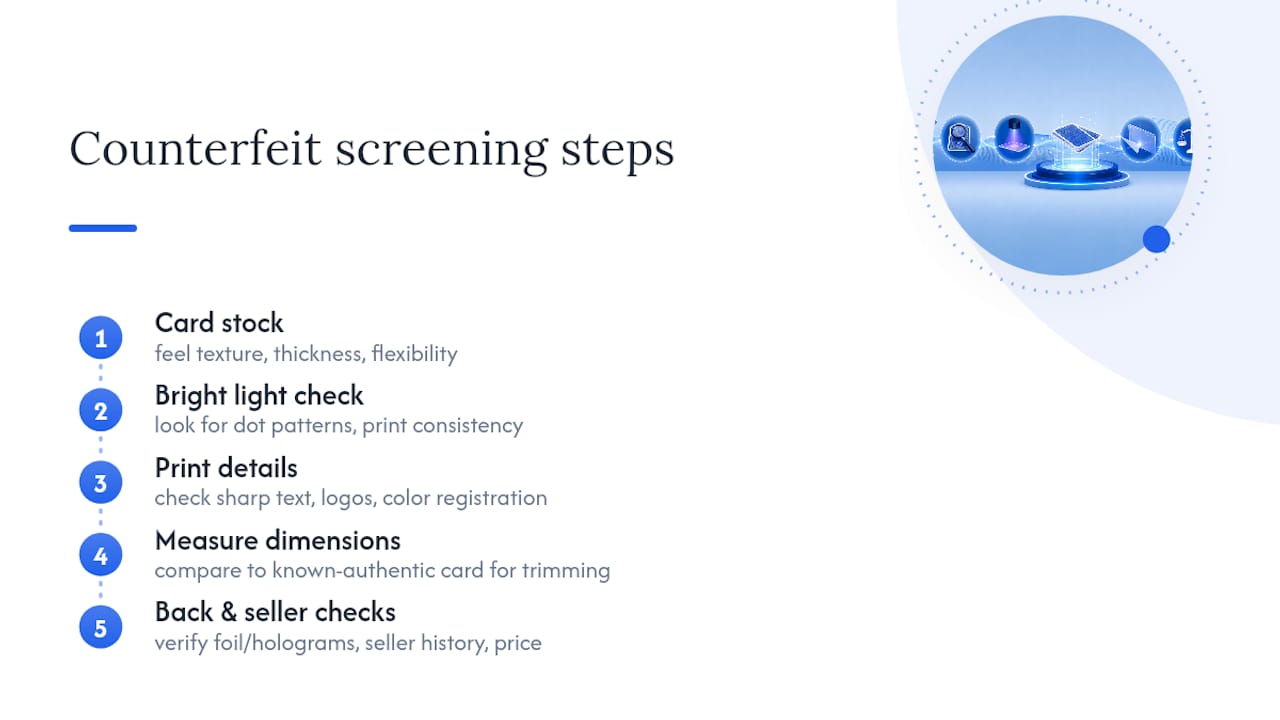
Trimming is the more common problem with vintage cards specifically. A trimmed card has been shaved down to hide worn corners or edges, making it look sharper than it actually is. Compare the card’s dimensions against a known-authentic example of the same set; even a millimeter off suggests trimming. Grading companies catch most trimmed cards, which is one more reason a PSA or SGC-slabbed card carries a real premium beyond just the grade number.
For modern cards, check the back for print quality and the presence of expected security features like foil stamps or holograms where the manufacturer uses them. Buying from established sellers with verifiable sales history matters here. A seller with years of completed transactions and consistent feedback is a far lower risk than an anonymous new account offering an unusually clean vintage card at a below-market price. If a deal looks too good relative to your sold comps, treat that gap as a warning sign, not a lucky break.
How Do You Market a Card to Get a Higher Sale Price?
The price a card sells for depends heavily on presentation, not just condition. Photography is the biggest lever you control directly. Natural light, a plain dark background, and both front and back shots in focus consistently outsell listings with a single blurry photo taken under a kitchen light. Buyers pay for what they can verify, and a photo that hides the corners or surface reads as something to hide.
Your title needs the specific details buyers search for: player name, year, set, card number, and parallel or insert type if applicable. A vague title like “cool baseball card” simply never surfaces in the searches serious buyers run.
Timing your listing around relevant news drives real price lift. A player having a breakout month, making an All-Star roster, or hitting a career milestone pulls fresh buyer attention to that name specifically, and listing during that window can add a meaningful premium over listing during a quiet stretch. The flip side matters too: a slow news month is often the wrong time to list a speculative card, since attention (and bidding) thins out.
Bundling low-value cards into a themed lot, rather than listing them individually, often nets more per card than a dozen single listings competing for the same tiny buyer pool. And responding fast to buyer questions matters more than most sellers assume. Slow replies lose sales to competing listings before a buyer even finishes deciding.
Are Pack Openings a Smart Speculation Strategy?
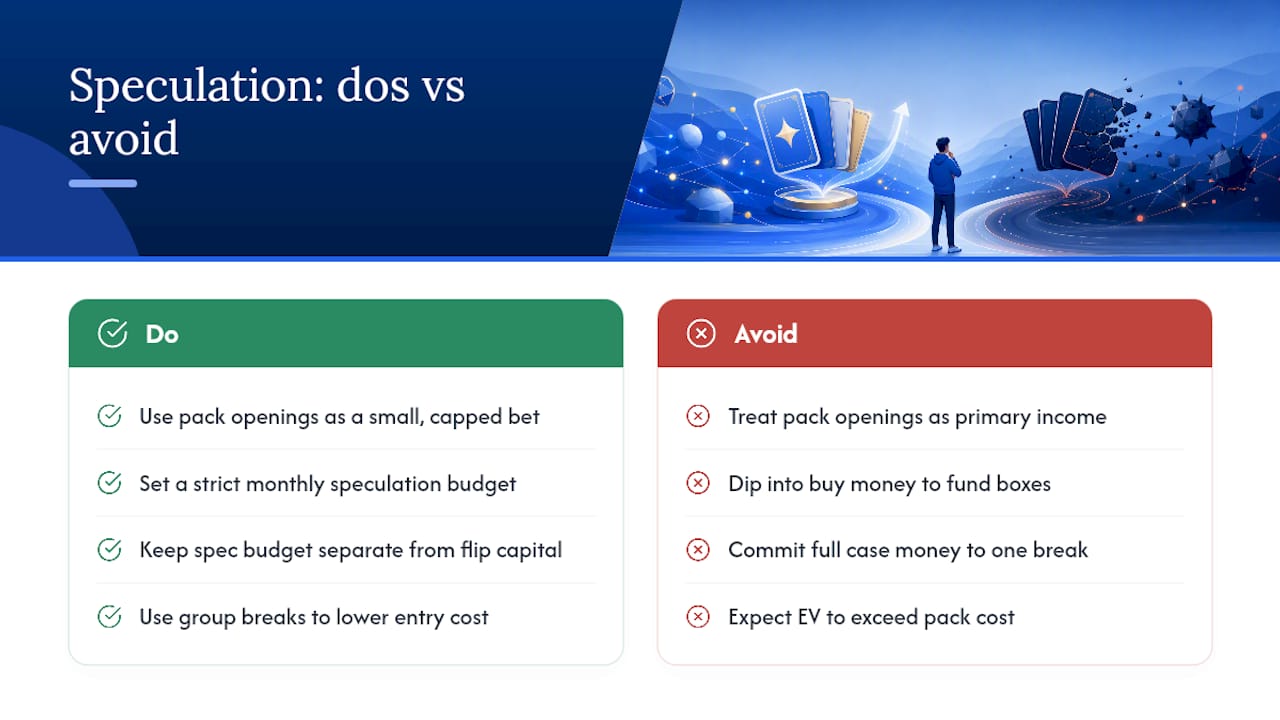
Pack openings and case breaks are the highest-variance corner of card flipping, and treating them as a primary income strategy is a mistake most beginners make once and regret. The math is simple: manufacturers price packs and cases knowing the expected value of the hits inside rarely exceeds the cost, especially once you account for the time spent opening and the cards you can’t sell for anything.
That doesn’t mean pack speculation has no place in a flipping strategy. It works best as a small, capped side bet rather than a core income source. Set a strict monthly budget for speculative breaks, separate entirely from your flip capital, and never dip into buy money to fund a box because a set looks hot.
Group breaks and online break platforms lower the entry cost by splitting a case among multiple buyers, each getting a specific team or player slot. This spreads risk but also caps upside, since you’re only exposed to your assigned slot rather than the whole case. It’s a reasonable way to sample a new set without committing full case money.
The real speculation skill isn’t opening packs, it’s reading which upcoming sets or rookie classes are likely to hold value based on player performance trajectories and print run size. Buying sealed product early on a set you believe in, before hype drives prices up, carries real risk but also the clearest upside in this category. Just keep it a small percentage of total capital, never the main plan.
Why Do Relationships With Buyers and Sellers Matter?
Card flipping rewards people who show up consistently more than people chasing one big score. A local card shop owner who knows you buy regularly will start setting aside cards that fit your lane before they even hit the shelf, because repeat business is worth more to them than a marginally higher one-time price.
The same logic applies to buyers. Sellers with a track record of accurate descriptions, fast shipping, and honest condition grading build a base of repeat buyers who don’t haggle as hard and don’t dispute sales as often. That reputation compounds: a buyer who trusts your grading history is more likely to bid confidently and less likely to walk away over a minor flaw you disclosed upfront.
Card shows and local shops remain underrated for this reason. The relationships built face to face, with dealers who remember your name and your buying patterns, often surface deals that never make it to an online listing at all. A dealer clearing out an estate collection is far more likely to call the flipper they already know than to list everything piecemeal online.
Online communities built around specific lanes, whether a particular sport, era, or set, work the same way. Consistent, honest participation earns you a reputation that opens doors to private sales and early access to inventory before it hits public marketplaces.
Author Perspective: Realistic Expectations for Sustaining Flipping
Discipline beats luck in this business, every time. Track every fee, every hold day, every dollar. A disciplined part-time flipper working evenings can realistically net a few hundred dollars a month once a lane clicks; full-time dealers scale that with volume and capital, not magic picks.
— Saad
Try Ripbin’s Scan and Value Tools Before Your Next Buy
These tools provide an operational edge that separates a hobby from a repeatable side income: scan a card for an instant value read, check live market data pulled from real sales instead of asking prices, and use monthly buy reports to spot lanes worth your attention.

That scan feature alone can save you from the single most common flipping mistake, buying based on gut feel instead of sold comps. The collection locker lets you model your net profit, fees included, before you ever spend a dollar. If you’re ready to check whether your next potential flip actually clears your margin target, browse live card values on Ripbin and run the numbers before you buy, not after.
This article is general information, not a substitute for advice from a qualified financial advisor. Consult a qualified financial professional about your own circumstances before acting on anything here.
Sources
- How are collectibles taxed? — Investopedia
- Trading Card Taxes 2026: Sports Cards, Pokemon, MTG — Monaco CPA
- Profitable sports card flipping strategies without relying on grading — Yahoo Sports
- Beancount
FAQ
What Is the Most Profitable Item to Flip in Cards?
Modern rookie cards of breakout players and low-population vintage cards with clear high-grade comps tend to produce the strongest margins, but profitability depends more on buying below sold comps than on any single category.
Do I Have to Pay Taxes on Selling Trading Cards?
Yes. Every sale is a taxable event, taxed as ordinary income if held under 12 months or capped at a 28% collectibles rate for cards held longer.
What Trading Cards Make the Most Profit When Flipping?
Cards in a tight, well-understood lane where you can pull three solid sold comps quickly tend to outperform scattered buys, since faster comp confidence means faster, more confident turnover.
Can You Make a Living Off Flipping Trading Cards?
Full-time dealers do it, but it takes real capital, volume, and consistent recordkeeping; disciplined part-time flippers usually see a few hundred dollars a month once their lane and process are solid.