Buyers: 3 Quick Tests to Spot Fake Pokémon Cards, Use Price Checks
By Ripbin Research · Published 2026-09-10

Buyers: 3 Quick Tests to Spot Fake Pokémon Cards, Use Price Checks
You can avoid most fake Pokémon cards by buying from verified sellers and running three quick, testable checks: the card-back detail, the light/core test, and a texture or holo inspection. These three tests catch the vast majority of counterfeits circulating right now. If real money is on the line, don’t stop at your own eyeballs. Insist on a graded copy or send the card to a professional authenticator before you pay.
TL;DR:
- Authentic cards show a multi-toned blue swirl and properly centered Poké Ball on the back, which is difficult for counterfeiters to replicate accurately.
- The black core layer in genuine Pokémon cards blocks light completely, so any light shining through indicates a fake or a highly sophisticated counterfeit.
- Genuine holographic and special illustration cards have a distinct raised texture that fakes often lack, instead appearing flat and glossy.
- Card borders and set symbols must match the correct era, with off-color borders or incorrect symbols signaling likely counterfeits, especially on high-demand cards.
- Buying from reputable sellers, requesting high-resolution images, and cross-checking recent market prices with a trusted database are essential steps to avoid scams.
Table of Contents
- How Do You Avoid Fake Pokémon Cards? A Quick Checklist
- What Are the Best Tests to Detect Counterfeit Pokémon Cards?
- How Do You Choose Sellers You Can Trust?
- What Should You Do If You Receive a Fake Pokémon Card?
- Which Pokémon Cards Get Faked the Most?
- Just How Big Is the Fake Pokémon Card Problem?
- What Should You Know About Booster Pack Seals Before Buying?
- A Collector’s Routine That Actually Prevents Scams
- Check Prices Before You Trust a Listing
- Sources
- FAQ
How Do You Avoid Fake Pokémon Cards? A Quick Checklist
Run through this order every time you’re eyeing a listing or holding a card in hand. Each step takes seconds, and together they catch nearly every counterfeit on the market today.
- Compare the back to a confirmed authentic scan. Pull up a verified image of the same set’s card back and check the blue swirl pattern and Poké Ball detail against your card side by side.
- Hold the card up to a bright light. Authentic Pokémon cards have a dark, opaque middle layer (often called the black core) that blocks light from passing through. If light shines straight through the card like a piece of paper, walk away.
- Run your finger over the surface. Holo patterns and Special Illustration Rare (SIR) cards should have a raised, embossed texture you can feel, not just see.
- Check the text closely. Look at the fonts, the accent mark over the “é” in “Pokémon,” the set symbol in the corner, and the copyright line at the bottom of the card.
- Look at the borders and centering. Slight off-center printing happens on real cards, but a wildly lopsided border, a fuzzy cut edge, or the wrong border color for the print era is a warning sign.
- Ask for more photos before buying online. A legitimate seller will happily send close-ups of the edges, the back, and the front text under good lighting.
None of these tests is bulletproof on its own. That’s the whole point of running all of them in sequence rather than betting everything on one glance at the holo pattern. A card that passes the light test but fails the texture check is still a fake, and vice versa.
What Are the Best Tests to Detect Counterfeit Pokémon Cards?
Each test below targets something counterfeiters still struggle to fake convincingly, though a few of these weaknesses are starting to close.
Read the card first
Before you touch anything physical, read the card like a proofreader. Fake cards frequently misspell attack names, use the wrong font weight, or drop the accent over the “é” in “Pokémon” entirely. Check the set symbol against the official Pokémon TCG card database to confirm it matches the actual set and print era, and look at the copyright line at the bottom. Real copyright strings use a consistent, thin font; counterfeit versions often look slightly bolded or spaced oddly.
Study the back detail
The card back is where counterfeiters most often slip up. Authentic backs feature a multi-toned blue swirl and a precisely centered Poké Ball, and Beckett’s authentication guide notes this detail is one of the hardest elements to reproduce accurately. Fakes tend to show a flat, single-shade blue with muddy dappling, and the Poké Ball is frequently off-center or printed with the wrong proportions between its red and white halves.
Run the light and core test
Hold the card up to a bright light source, like a phone flashlight or a sunny window. A genuine Pokémon card has an opaque black layer sandwiched in the middle of the cardstock that blocks most light from passing through. A counterfeit printed on thin cardstock or paper will let light bleed through in a way real cards never do, according to The Pokémon Company’s own support guidance.
Here’s the catch: this test is getting less reliable by itself. Higher-end counterfeit operations have started adding a dark middle layer specifically to defeat the light test, according to guidance from What The Slab’s fake-card breakdown. That doesn’t make the light test useless, it just means you can’t treat it as the only checkpoint anymore.
Feel the texture
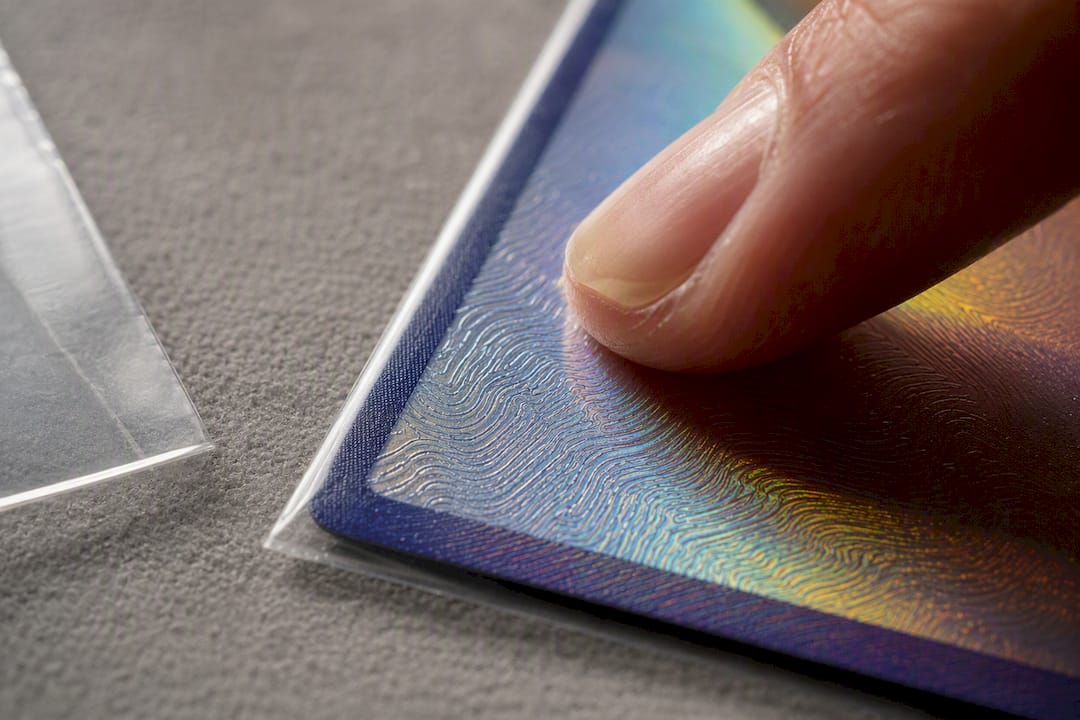
Holo cards, full-art cards, and SIR cards should have a distinct raised texture you can feel by lightly running a finger across the surface. Real embossing has depth and consistency across the whole holo pattern. Cheap fakes are printed flat and glossy, with the “holo” effect coming entirely from a shiny film rather than actual texture in the cardstock.
Check the holo refraction
Tilt the card slowly under a light source. On a real holo or rainbow card, the refraction pattern shifts smoothly and continuously as you change the angle. On a fake, the pattern often looks static, pixelated, or like it’s made of repeating geometric blocks rather than a genuine light-diffraction surface.
Inspect borders, centering, and cut quality
Minor centering variance happens even on factory-authentic cards. Bulbapedia’s documentation of official error cards shows that print quirks and off-center borders sometimes make it through legitimate production runs, so don’t treat mild centering issues alone as proof of a fake.
What should worry you is a border color that doesn’t match the print era. Since 2023, many English-language sets switched their border from the classic yellow to a silver or gray tone. If a card claims to be from a 2023 or later set but shows an old-style yellow border, that’s a fast, reliable red flag.
Weigh and measure when it matters
A jeweler’s scale and a set of calipers can help when you’re on the fence. Genuine Pokémon cards typically fall within a tight, consistent weight and thickness range for their print type. A card that’s noticeably lighter, thinner, or thicker than a known genuine copy is suspect. That said, weight alone isn’t definitive. Sleeves, sun damage, and print run variance can shift the numbers slightly, so treat this as a supporting data point, not a verdict.
Pro Tip: Never rely on just one test, especially the light test alone. Combine at least three checks (back detail, texture, and either light or holo refraction) before you draw a conclusion, and skip destructive tests like scratching or peeling entirely unless a professional authenticator is doing it.
- Bending a corner to “check the core” can permanently damage a genuine card.
- Scratching the surface to test for ink transfer destroys resale value even if the card turns out real.
- Soaking or cutting a card open should only ever happen in a lab setting, never as a buyer’s own test.
How Do You Choose Sellers You Can Trust?
The best fraud prevention happens before you ever touch the card, when you’re deciding who to buy from. Brick-and-mortar game stores, seller accounts with years of transaction history, and platforms that offer built-in authentication all cut your risk dramatically compared to an anonymous social media listing.
Watch for these red flags before you send any payment:
- A price sitting far below recent market value for that specific card and condition.
- Listing photos that are blurry, stock images, or missing the card back entirely.
- A seller account with few completed sales or a feedback history that’s brand new.
- Any request to pay through an untraceable method, like a gift card or a direct wire transfer.
Before you commit to a purchase, ask the seller for high-resolution scans of the front, back, and edges, plus a close-up of the text and copyright line. For anything expensive, ask whether the card has been graded or request proof of where it came from. A seller with nothing to hide will send these without hesitation.
Once you’re ready to pay, use a payment method with built-in buyer protection, and keep a screenshot of the listing, the seller’s profile, and your payment confirmation. If a dispute becomes necessary, having that paper trail ready from day one speeds up the process enormously. These habits carry over from resale authentication practices in general, and the same seller-vetting discipline collectors use for sneaker resale authentication applies just as well here. For anything above a few hundred dollars, insist on a graded card or professional pre-authentication before you finalize the deal. It’s a small delay that protects a real investment.
What Should You Do If You Receive a Fake Pokémon Card?
- Photograph everything immediately. Take clear, well-lit photos of the front, back, edges, and any packaging or shipping materials before you do anything else.
- Contact the seller and open a dispute. Lay out exactly which tests you ran (light, texture, back comparison) and attach your comparison photos as evidence.
- Report the listing and the seller. File a report with the marketplace, and if the platform directs you to, escalate to The Pokémon Company’s support team as well.
- Escalate large-value cases further. For significant losses, consider filing a report with your local consumer protection agency or law enforcement, and keep every message and payment record organized.
- Hold onto the card as evidence. Store it separately from your real collection, and talk to a specialist before you consider destroying or discarding it. It may still be needed for a dispute or investigation.
Which Pokémon Cards Get Faked the Most?
Counterfeiters follow demand, not rarity for its own sake. The cards that get faked most often are the ones every collector recognizes on sight and every buyer wants: Charizard, Pikachu variants, Gengar, Rayquaza, Umbreon, and Mewtwo show up repeatedly in industry fraud reporting as the most frequently counterfeited characters.
- High-demand chase cards command strong resale prices, which makes forging them worth a counterfeiter’s time.
- Instant recognizability means fakes can pass a quick glance from a buyer who isn’t looking closely.
- Because these cards move fast in the resale market, a fake can change hands two or three times before anyone catches it.
If you’re eyeing any of these names, especially in a rare print or high grade, treat professional authentication as close to mandatory rather than optional.
Just How Big Is the Fake Pokémon Card Problem?
The scale of counterfeiting isn’t a minor nuisance anymore. PSA’s own fraud reporting shows a sharp increase in counterfeit and altered card submissions, with Pokémon cards landing among the most frequently forged items the grading company sees come through its doors.
What makes this trickier for buyers is that counterfeiters aren’t standing still. The same techniques that used to make fakes easy to spot, thin cardstock, missing black cores, flat holo film, are being patched by more sophisticated operations. Some counterfeiters now specifically engineer a dark middle layer to defeat the classic light test, which is exactly why relying on a single check is a losing strategy going forward.
This is where market data earns its place in your buying routine. A card listed at half its recent sale price isn’t always a bargain. It’s frequently the first sign something is off. Checking a card’s actual recent sale history against the asking price, rather than trusting a seller’s stated “market value,” gives you a second layer of scrutiny that has nothing to do with the physical card at all. If a Charizard is listed well below market price with grainy photos and a brand-new seller account, the price itself is telling you more than any light test will.
What Should You Know About Booster Pack Seals Before Buying?
Sealed booster packs come with their own set of authenticity concerns, separate from single-card checks. Genuine Pokémon booster packs use a consistent factory seal along the top edge, with a clean, even fold and a specific texture to the foil wrapper. Counterfeit or resealed packs often show a slightly crooked seal line, a wrapper that feels thinner or glossier than a legitimate pack, or printing on the wrapper that looks a shade off from official color standards.
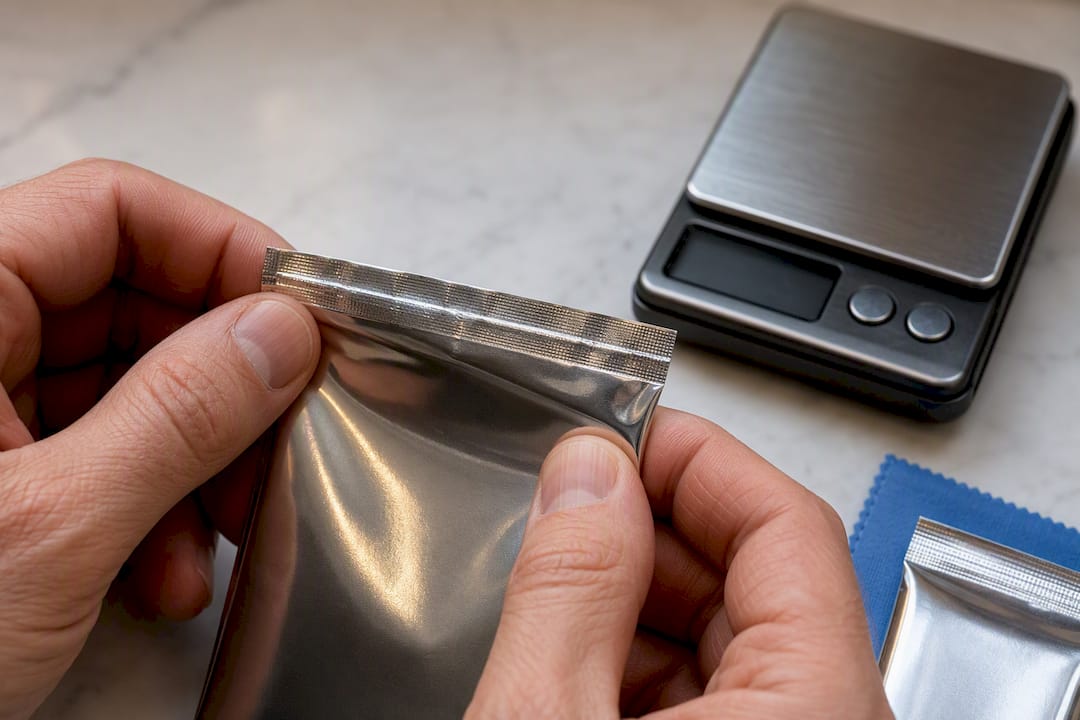
Weight is a useful secondary check here too. A factory-sealed pack has a fairly consistent weight for its set, and packs that feel unusually light or unusually heavy compared to a known genuine pack deserve a second look. Watch for packs sold loose without the outer box, packs with a wrapper seam that looks tampered with, or sellers offering “guaranteed hit” packs. That last one is a major red flag, since legitimate sealed product is random by design and no honest seller can guarantee what’s inside without having already opened it.
Buying sealed product from a hobby shop or an authorized retailer removes most of this risk outright. Once you step into secondhand marketplaces for booster boxes and packs, the same seller-vetting rules that apply to single cards apply here, arguably with even more caution, since a resealed box can hide a swapped or removed pack far more easily than a single card can hide a printing flaw.
A Collector’s Routine That Actually Prevents Scams
The buyers who get burned repeatedly usually share one habit: they fall for a good price before checking whether it’s actually good. A better routine looks like this: check recent sale prices for the exact card and condition first, request full scans from the seller second, and only run the physical tests, back detail, light, texture, once the card is in hand and payment is protected.
Using market data conservatively matters more than people expect. If a listing sits well under recent sales, that’s not a lucky find. It’s usually the first warning sign. Treating price as a diagnostic tool, not just a bargain hunt, cuts down on impulse buys and keeps you out of the riskiest corner of the market.
— Saad
Check Prices Before You Trust a Listing
A card price database gives you the one thing a listing photo can’t: a fast answer to “is this price even real?” Every check in this guide gets sharper when you pair it with actual recent sale data instead of guessing at what a card should cost.

Ripbin tracks live market values across more than 78,000 cards, sourced from actual completed sales rather than asking prices. Scan a card and get an instant value read, or pull up a set’s checklist and print details to compare against a listing that looks off. When a Charizard is priced well under what it’s actually selling for, that gap shows up immediately once you check the data instead of trusting the seller’s word. For anything expensive enough to matter, use Ripbin’s price history alongside a professional grading service before you finalize the purchase, and keep your own collection tracked in one place so you always know what fair value looks like. Start by checking a card’s current value on Ripbin before your next purchase.
Sources
- Did I purchase fake or counterfeit cards? – Pokémon Support
- How to spot a fake Pokémon card - Beckett News
FAQ
Are Fake Pokémon Cards Worth Buying?
No. Even novelty or “proxy” fakes sold as such carry no resale value and can be difficult to distinguish later from cards misrepresented as genuine, which creates problems if you ever try to sell or trade them.
Is It Hard to Spot a Fake Pokémon Card?
It’s gotten harder as counterfeiters improve print quality and even mimic the black core layer, but combining three or more tests, back detail, light, and texture, still catches the overwhelming majority of fakes.
What Should You Do If You Have Fake Pokémon Cards?
Photograph the card, contact the seller to open a dispute, report the listing to the marketplace and to The Pokémon Company support if directed, and keep the card as evidence rather than destroying it.
What Are the Most Faked Pokémon Cards?
Charizard, Pikachu variants, Gengar, Rayquaza, Umbreon, and Mewtwo top industry fraud reports as the most frequently counterfeited cards, largely because of their recognizability and resale demand.