Undervalued Pokémon Cards Worth Buying Before Prices Catch Up
By Ripbin Research · Published 2026-08-24

Undervalued Pokémon Cards Worth Buying Before Prices Catch Up
The best undervalued opportunities right now are short-run promos, low-pop Illustration Rares, and overlooked modern nostalgia pieces, not the obvious chase cards everyone already tracks on Ripbin. Think cards like the Phantasmal Flames Piplup promo or older Pikachu illustrations that never got their due. The list below breaks down twelve specific picks, then a checklist for finding your own before the rest of the market notices.
TL;DR:
- Many undervalued Pokémon cards, such as promotional and illustration rare cards, are overlooked due to limited distribution and small PSA populations, creating future scarcity.
- Cards from off-cycle sets, Japanese-only promos, and early 2000s trainer cards often have low graded populations and rising prices despite minimal market attention.
- Key signals for spotting hidden value include low PSA pop counts compared to raw supply, narrow grade spreads, and rising sale prices with low weekly trading volume.
- Ripbin’s platform provides real-time sales data, grade breakdowns, and tracking tools that help verify a card’s undervaluation before purchase.
- For safer investing, focus on fewer, well-grounded picks, set clear ROI and time limits, and beware of fees and grading costs that can eat into actual profits.
Table of Contents
- Why Undervalued Pokémon Cards Slip Through the Cracks
- 12 Undervalued And Underrated Pokémon Cards To Watch
- How To Spot Undervalued Pokémon Cards Yourself
- Where To Check Prices And Which Metrics Actually Matter
- How Ripbin’s Live Data Confirms A Sleeper Pick
- Risks, Common Mistakes, And Simple Portfolio Rules
- What I’m Watching Next
- Scan, Track, And Verify Every Pick With Ripbin
- Sources
Why Undervalued Pokémon Cards Slip Through the Cracks
Most collectors chase the same handful of chase cards: the charizards, the alt-art Pikachus everyone already knows are expensive. That leaves a wide gap of genuinely rare Pokemon cards trading well below what their scarcity and grading difficulty should support. Promotional and Illustration Rare cards in particular tend to launch under the radar because their distribution windows are short and their graded populations stay artificially low, which sets up future scarcity that most buyers miss at release.
This isn’t a new pattern. It repeats every set cycle. A card ships in limited numbers through a specific promo channel, collectors treat it as a throwaway “bonus” pull, and two years later the PSA population report shows maybe 40 gem mints in existence while sold prices have quietly tripled. The cards below follow that exact arc, or are early enough in it that you can still get in.
12 Undervalued And Underrated Pokémon Cards To Watch
These twelve span modern promos, mid-tier vintage, and a few Japanese exclusives that rarely get airtime in English-language collecting circles. Each one has a specific reason it’s cheap today and a specific reason that might not last.
1. Phantasmal Flames Piplup (Holofoil Promo)
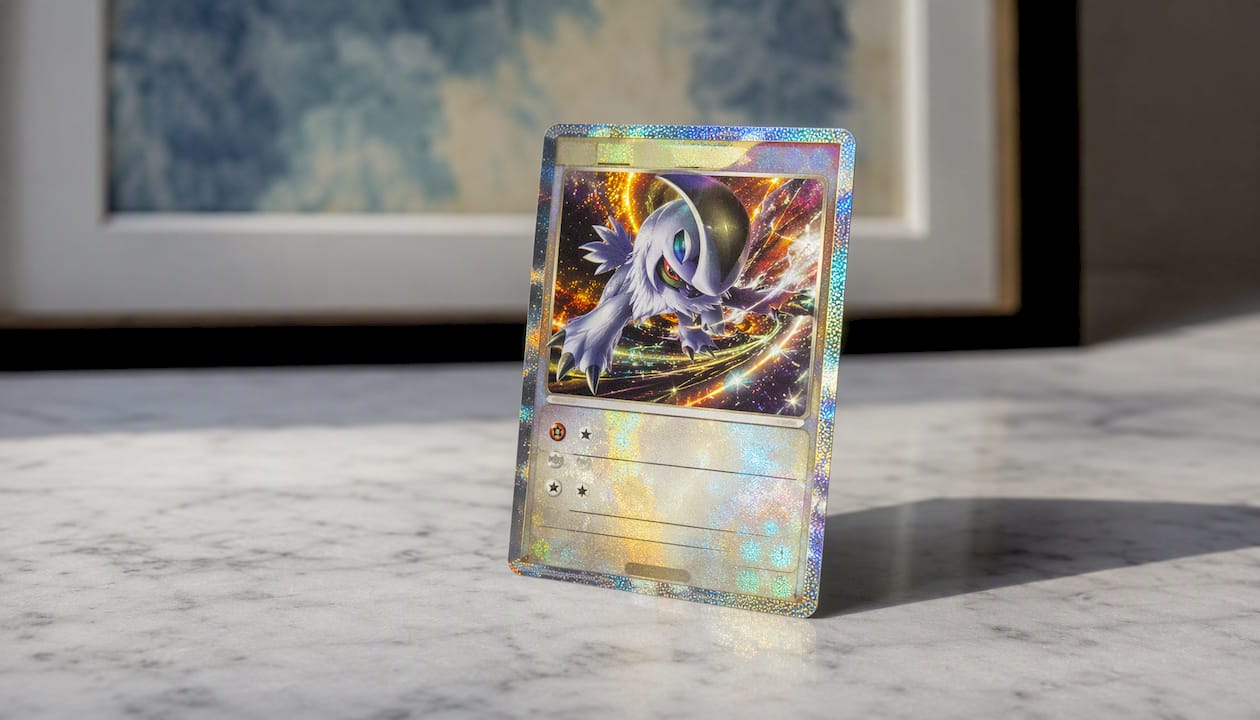
This modern Piplup promo from the Phantasmal Flames line is a textbook case of a card that looks like filler until you check the pop report. It ships in a holofoil-only print run tied to a limited promotional window, and current TCGplayer listings show it trading in the single digits raw. Piplup isn’t a marquee Pokémon, which explains why the card is currently overlooked by graders, presenting an entry opportunity.
2. Any low-pop Illustration Rare from an off-cycle set
Illustration Rares from sets that launched between two bigger, hyped releases tend to get skipped by graders and flippers alike. Data-driven breakdowns of the category consistently flag these “sandwiched” sets as where asymmetric upside hides, because raw supply looks normal on paper but PSA 10 pops stay thin for years. Check any set that released within a month of a bigger flagship product.
3. Vintage Pikachu illustrations outside the “famous” printings
Everyone knows the Pikachu Illustrator card. Almost nobody talks about the second and third-tier vintage Pikachu promos from the same early era, cards that were mass-distributed but rarely survived in high grade because kids actually played with them. Low NM-LP spreads on some of these suggest the market hasn’t priced in how scarce a PSA 9 or 10 copy actually is.
4. Recent starter-Pokémon promo cards flagged in year-end lists
Editorial roundups covering 2026 have specifically called out certain starter and promo cards as underrated relative to their long-term hobby significance, noting that modern picks tied to starter Pokémon tend to get dismissed early because starters lack the “chase” reputation of legendaries. That dismissal is precisely what keeps the price down.
5. Japanese sealed product tied to under-hyped English sets
Sealed Japanese boosters connected to a set that underperformed in English release often carry structural grading and long-term value advantages once collectors realize the print run was smaller than assumed. This tier moves slower than singles but rewards patience.
6. Error and misprint cards from mid-2010s sets
Misprints, off-center cuts, and color-shift errors from roughly a decade ago are some of the most overlooked valuable TCG cards in the hobby. Because they weren’t intentionally rare, most were tossed or bulk-sold, and grading companies now see very few submissions. A confirmed error card with a clean PSA slab can command a real premium over its “correct” counterpart, and almost nobody is watching this category.

7. Second-run holo rares from short print sets
Sets that got a shortened print run due to licensing transitions or distributor changes often left behind holo rares that are objectively scarcer than their set number suggests. These rarely show up in casual “most valuable cards” lists because they don’t have splashy artwork, just genuine scarcity.
8. Promo cards from short-lived retail partnerships
Retail-exclusive promos tied to a store chain or short marketing tie-in typically vanish from circulation within a single sales cycle. Packaging handling during that retail window tends to bang up corners and surfaces before the card ever reaches a collector, which quietly caps high-grade populations for good.
9. Alternate art cards from sets released alongside a major crossover
When a set launches at the same time as a big crossover event, the set itself gets overshadowed even if the alternate art pulls inside it are objectively well-executed. Collectors chase the crossover product and forget to check the sibling set until years later.
10. Early 2000s trainer and supporter cards in high grade
Trainer and supporter cards from the early 2000s rarely got graded because collectors assumed only Pokémon cards held value. That assumption is shifting as completionist collectors chase full graded sets, and PSA 10 supporter cards from this era remain genuinely scarce.
11. Non-English exclusive promos never reprinted in English
Some promotional cards were issued only in Japanese, Korean, or German print runs and never got an English equivalent. English-speaking collectors often skip these because of the language barrier, which keeps demand artificially soft relative to actual scarcity.
12. Modern promo Pokémon tied to unpopular anime arcs
Promos tied to anime story arcs that fans consider “weaker” seasons get overlooked at release regardless of the card’s actual print run. Once nostalgia cycles back around to that arc, usually five to seven years later, demand tends to catch up to a supply that never grew.
A few quick verification habits apply across every pick above:
- Cross-check the raw population against actual PSA submissions, not just print run estimates.
- Look at 90-day sold trends on eBay and TCGplayer rather than current asking prices.
- Confirm whether the card had a genuinely limited distribution window or just looks limited because nobody bought it.
How To Spot Undervalued Pokémon Cards Yourself
You don’t need someone else’s list forever. The same signals that flag the twelve cards above apply to anything currently sitting in the bulk bin at your local shop.
Hard signals are the numbers you can actually verify. Start with grading population gaps: if a card’s raw print run looks substantial but its PSA 10 population sits under a few hundred, something is suppressing the grade rate, usually centering issues or surface damage from how it was originally packaged. Limited distribution windows matter just as much. A card that was only available for a few weeks through one channel, a convention, a single retail promotion, a magazine insert, has a hard ceiling on future supply that a mainline set reprint doesn’t. Watch the NM-LP spread too. A tight spread between near-mint and lightly-played prices tells you graders and buyers haven’t fully priced in condition sensitivity yet, which usually means you can buy a lightly-played copy without much risk relative to a graded one.
The last hard signal is volume versus price direction. A card with low weekly sold volume but a sold price that’s crept upward over several months is more interesting than a high-volume card with flat pricing. Low volume plus rising price usually means a small number of informed buyers have already started accumulating.
Soft signals are harder to quantify but just as real. Iconic-character appeal matters even when a specific print isn’t the character’s flagship card. Art-driven demand can carry a card independent of its rarity tier entirely, some illustrators build cult followings that outlast the meta relevance of the card itself. And community distraction windows, periods when the hobby’s attention is locked onto one hyped set or reprint, are often the best time to buy something adjacent that nobody’s discussing.
Put those together with a simple two-step check before you buy:
- Pull recent sold comps and cross-reference against the PSA population report for that specific card and grade.
- Confirm the original distribution window and estimate whether future supply can realistically grow (reprint risk) or is functionally locked (no reprint planned, promo channel closed).
Pro Tip: Never buy on a single signal alone. A low PSA pop with flat sold prices for two years usually just means low demand, not hidden value. You want the pop gap AND a rising sold trend AND a closed distribution window, all three together, before you treat it as conviction rather than speculation.
Where To Check Prices And Which Metrics Actually Matter
Sold-listings analysis beats active-listing analysis every time. Active eBay and TCGplayer listings reflect what sellers hope to get, not what buyers are actually paying. The gap between the two, sometimes 20 to 30% on illiquid cards, tells you how much a seller is testing the market versus pricing to move. Always filter to sold and completed listings before drawing a conclusion about a card’s real value.
Trade volume checks matter almost as much as price. A card that sells twice a year isn’t liquid no matter how high its last sale price was; you could be sitting on a “valuable” card for eighteen months before finding a buyer at that price again.
Grading population reports from PSA, BGS, and CGC give you the supply side of the equation. A PSA 10 pop count under 200 for a card with real collector interest is a genuinely different risk profile than a pop count over 2,000. Check submission dates too. If pop growth has slowed to a crawl even though the card is still gettable raw, that tells you fewer people are bothering to grade it, which can mean either declining interest or a market that hasn’t caught on yet.
Marketplace mechanics change your real return more than most collectors account for:
- eBay and TCGplayer both take seller fees plus payment processing, typically eating 10 to 13% of a sale before shipping costs.
- Consignment through a grading service or auction house adds weeks to months of delay before you see proceeds.
- Shipping a graded slab safely costs more than shipping raw, and that cost scales against your margin more on lower-priced cards.
The Pokémon card market’s broader trajectory is worth keeping in mind here too. Coverage of the category’s growth notes that returns concentrate heavily in a small number of scarce vintage items rather than spreading evenly across the hobby, which is exactly why identifying the next undervalued tier matters more than chasing what’s already expensive.
How Ripbin’s Live Data Confirms A Sleeper Pick
Spotting a candidate is only half the job. Confirming it before you commit money is the part most collectors skip, and it’s the part Ripbin was built around. The platform tracks live values across more than 78,000 cards sourced from actual completed sales rather than asking prices, which removes the guesswork of comparing an active eBay listing to what a card is genuinely trading for.
A practical workflow looks like this on Ripbin:
- Scan the card (or search it) to pull its current live value based on real sales.
- Check the grade-by-grade value breakdown to see how much of a jump exists between raw, PSA 9, and PSA 10.
- Add it to your collection locker to track movement over time instead of relying on memory.
- Set it on your watchlist so price shifts surface automatically rather than requiring manual rechecks every week.
That last step matters more than it sounds. Undervalued cards tend to move slowly, then suddenly, and a watchlist catches the “suddenly” part before it’s fully priced in. For readers who want the deeper mechanics behind this approach, Ripbin’s Pokémon card investing guide walks through grading economics and allocation in more depth, and the monthly buy reports flag specific picks the data team is watching each cycle.
Risks, Common Mistakes, And Simple Portfolio Rules
Survivorship bias is the single biggest distortion in how collectors think about card investing. You hear about the one sealed booster box that sold for six figures; you don’t hear about the thousands of boxes bought at the same time that are worth roughly what they cost. Reporting on the broader collectibles boom has flagged this directly, noting that gains concentrate in a handful of scarce vintage outliers while the median card barely appreciates at all. Treat every “this card 10x’d” story as an outlier, not a template.
Fees and grading costs quietly erase a lot of paper gains. Here’s a realistic example: you buy a raw promo card for $40, submit it for grading at roughly $20 to $50 depending on turnaround tier, and it comes back a PSA 10 now worth $150. Your real profit is closer to $60 to $70, not the $110 gap between raw cost and sale price that looks good on paper.
A few guardrails keep this realistic:
- Cap speculative modern promo picks at a small slice of your overall collection, treat the rest as either personal-enjoyment holds or established, liquid graded singles.
- Set a target ROI before you buy, not after, so you’re not rationalizing a hold decision based on hope.
- Use a time-based exit rule too: if a card hasn’t moved in the direction your thesis predicted within 18 to 24 months, reassess rather than assume it just needs more time.
- Weight liquidity into every purchase. A card that’s cheap but sells twice a year ties up capital you might need elsewhere.
Practical investing guides echo this same caution: most cards simply don’t appreciate, and the ones that do usually reward patience over speculation, verified condition over hope, and a clear-eyed accounting of fees over gross sale price.
What I’m Watching Next
Promos and Illustration Rares are where I’d put new attention this cycle, specifically anything tied to a set that launched in the shadow of a bigger release. That sandwich effect keeps grading rates artificially low for a year or two longer than it should. Watch upcoming set announcements for any promo tied to a retail partnership with a short redemption window; those almost always undergrade in the first twelve months simply because collectors treat them as throwaways.
If you’re building conviction on a handful of picks versus spreading thin across a dozen speculative buys, I’d lean toward fewer positions with stronger data behind them. Three well-verified sleepers beat ten guesses.
— Saad
Scan, Track, And Verify Every Pick With Ripbin
Everything in the checklist above, sold comps, PSA pop overlays, distribution timing, is exactly what Ripbin’s platform is built to surface in one place instead of five open browser tabs. Scan a card to get its live value pulled from real completed sales, not asking prices. Layer in the grade-by-grade breakdown to see the actual jump between raw and PSA 10 before you decide whether grading is worth the cost. Save your candidates to a collection locker, set alerts, and let the monthly buy reports flag picks the data team is already watching.
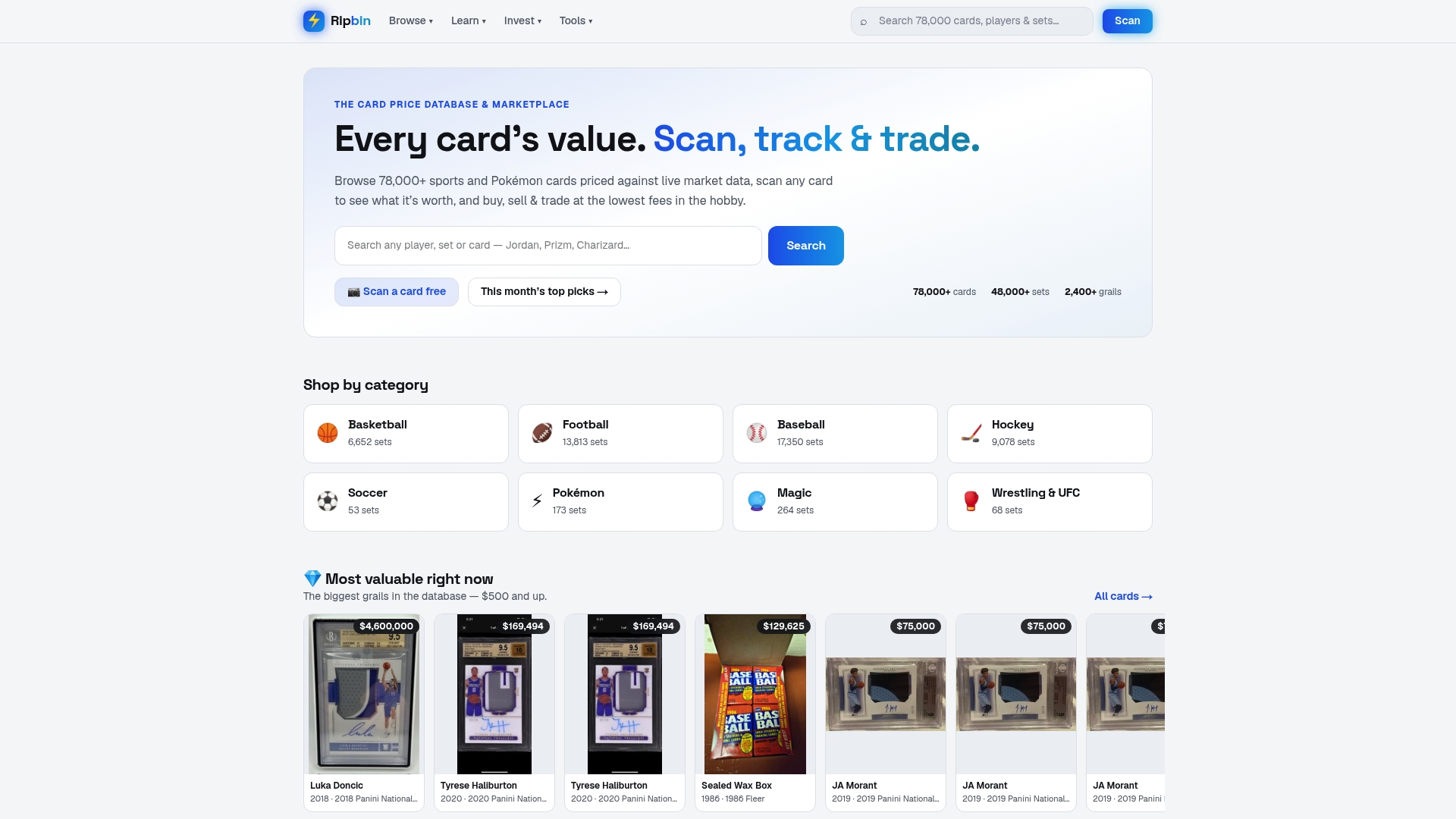
Ripbin charges no browsing fees, so scanning, tracking, and researching cost nothing whether or not you ever sell. When you’re ready to act on a pick from this list, start by pulling its live value and grading data on the card database, then compare it against the broader picks in this month’s investing guide before you buy.
Sources
- How to Spot Undervalued Pokémon Cards Before Everyone Else - Card Collector
- 10 Most Underrated Pokémon TCG Cards in 2026
- Rare Pokemon Cards Uncovered: Data-Driven Analysis of Undervalued Gems and Investment Potential - Card Chill
- Inside the Pokémon Card Gold Rush. Should You Invest? - Northeastern News