Collectors: 3 Checks to Verify SP and SSP Cards Before You Pay
By Ripbin Research · Published 2026-09-17

Collectors: 3 Checks to Verify SP and SSP Cards Before You Pay
SP means short print, a card intentionally produced in fewer quantities than the rest of the set. SSP means super short print, a rarer tier below it, usually tied to a photo variation. Neither label guarantees value on its own. Verify with the checklist code, graded population data, and actual sold prices before you pay a premium or set one on a listing. Scanning tools and player pages make that check fast.
TL;DR:
- SP and SSP designations lack standardized print run thresholds and vary across different manufacturers and sets, making rarity comparisons complex.
- Identifying an SP or SSP involves comparing the photo to the standard checklist image and verifying production codes on the back of the card.
- A low population count, typically fewer than 50 graded examples, suggests genuine scarcity, but demand ultimately determines value.
- Comprehensive verification through population reports and recent sale data is essential before paying a premium for any SP or SSP card.
- Using scanning tools like Ripbin streamlines the process by cross-referencing checklist details, production codes, and recent market prices in one step.
Table of Contents
- What Do SP and SSP Mean, and Why Do They Exist?
- How Do You Identify an SP or SSP Card?
- How Rare Are SP and SSP Cards, and What Does That Mean for Value?
- Your Verification Checklist Before You Buy or Sell
- SP/SSP vs Parallels, Inserts, and Numbered Cards
- How Ripbin Helps You Confirm SP/SSP Status and Recent Sale Prices
- When to Chase SP/SSP and When to Hold Back
- Scan and Verify Before You Spend Another Dollar
- Sources
- FAQ
What Do SP and SSP Mean, and Why Do They Exist?
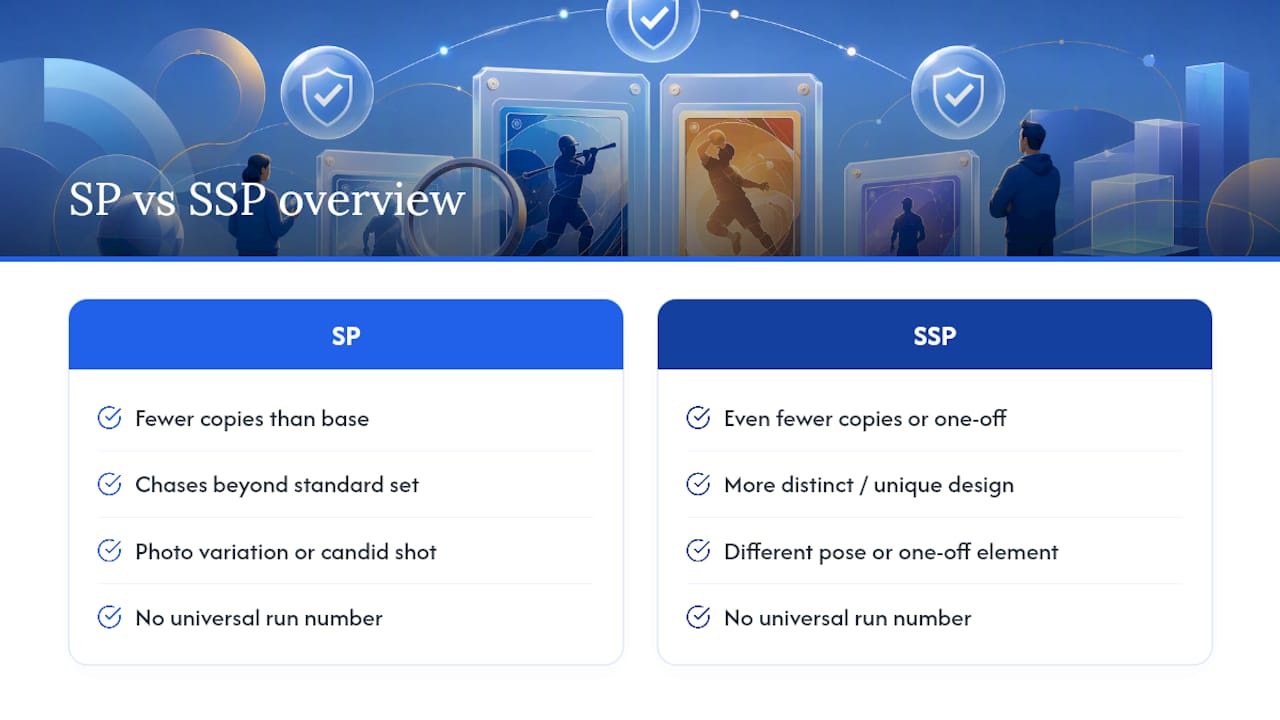
Manufacturers build scarcity into a checklist on purpose. An SP card is printed in noticeably fewer copies than its base counterpart, usually because the manufacturer wants collectors chasing something beyond the standard set. An SSP goes further, often with a distinct photo, a different pose, or a one off design element that never appears on the base card.
Here’s the part most buyers miss: there is no universal print run number attached to either term. A set’s SP might have a very different print run than another manufacturer’s SSP, because the labels describe a relationship within that specific product, not a fixed industry standard. Topps, Panini, and Bowman each apply the terms to their own checklists, and one brand’s “short print” can be more common than a rival’s regular insert.
Most SP and SSP cards show up as photo variations, a candid shot instead of an action pose, or a special one time checklist slot that only appears in a handful of packs. That’s usually the giveaway before you ever flip the card over.
How Do You Identify an SP or SSP Card?
You don’t need a magnifying glass, but you do need a routine. Run through these steps in order every time you suspect a variant.
- Compare the photo to the base checklist image. If the pose, background, or crop looks different from the standard card for that player, you’re likely holding a variation.
- Flip the card and read the tiny code near the copyright line. The production code on the back often differs between base, SP, and SSP versions in modern Topps releases, sometimes by a single digit at the end.
- Cross-reference the official set checklist. Hobby-compiled variation lists exist for most major products and will tell you exactly which card numbers carry an SP or SSP designation.
- Check graded population totals. A card with a suspiciously low population count relative to the base version supports the short print claim.
Some checklist guides even publish the exact digit that separates base, SP, SSP, and Ultra SP codes for specific Topps products, which turns a guessing game into a two-second lookup once you know where to look.
How Rare Are SP and SSP Cards, and What Does That Mean for Value?
Rarity here is relative, not absolute. SP sits between the base card and SSP on the scarcity scale, with SSP representing the smaller print run of the two. But because neither term is standardized across brands, you can’t assume a 2026 SP carries the same scarcity as an SP from a decade ago, or that a competitor’s SSP matches another brand’s version card for card.
Community analysts fill that gap with population data. Some collectors use a working threshold of fewer than roughly 50 graded examples as a rough marker for a genuine SSP, though that number isn’t an official industry rule. It’s a pattern collectors noticed, not a printed standard.
Value follows scarcity only when demand shows up too. A low population SSP of a Hall of Fame rookie will command real premiums. A low population SSP of a bench player from a forgotten checklist might sell for barely more than the base card. Population count tells you how scarce something is. Sold listings tell you whether anyone cares.
Your Verification Checklist Before You Buy or Sell
Treat an “SP” or “SSP” tag on a listing as a starting point for research, not proof of anything. Verifying through population reports and completed sales protects you from paying a premium for a card that isn’t actually as scarce as the title claims.
- Look up the official set checklist and confirm the card number carries an SP or SSP flag.
- Check the back code against known base and variant codes for that product.
- Pull graded population reports from a major grading company’s database.
- Search completed and sold listings, not active asking prices, to see what buyers actually paid.
- For a high-value find, get it graded and keep documentation of where and how you acquired it.
That last step matters more than most new collectors expect. A raw SSP with no paper trail is a harder sell than one with a clear chain of custody, especially at higher price points.
SP/SSP vs Parallels, Inserts, and Numbered Cards
Parallels and inserts are not the same thing as SP or SSP, even though listings often blur the line. A parallel is a color or design variant of an existing card, frequently printed in a stated run like /99 or /25. An insert is a separate subset built around a theme, unrelated to the base checklist’s numbering.
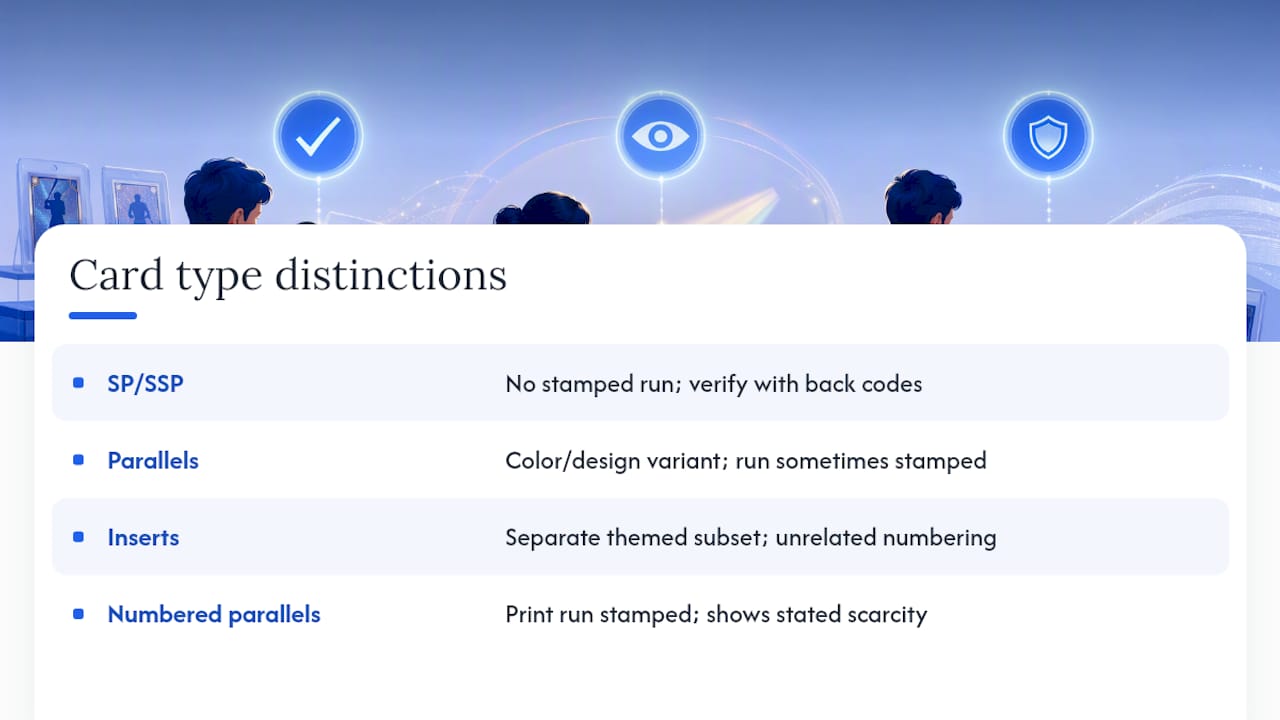
Numbered parallels tell you their scarcity outright, since the print run is stamped on the card. Most SP and SSP cards carry no such number, which is exactly why back codes and population reports matter so much. Watch for seller language like “possible SSP” or “rare variation, please verify.” That phrasing is a request for you to do the homework the seller either skipped or avoided.
How Ripbin Helps You Confirm SP/SSP Status and Recent Sale Prices
Doing all of the above by hand across three or four different websites gets old fast. Ripbin’s scanner reads a card and pulls up its set checklist, player page, and completed sale values in one pass, so you can match the exact card number against known SP and SSP listings without hunting through forum threads.
The player page shows live values sourced from real transactions, letting you check whether the “SSP premium” someone’s asking for actually shows up in recent investment and grading trends.
Pro Tip: Before paying a premium, stack three data points together: the checklist code match, a low graded population count, and at least two or three comparable sold listings. If any one of those is missing, treat the asking price as a starting offer, not a market rate.
When to Chase SP/SSP and When to Hold Back
Chase an SP or SSP when you’re building a set or you love the player. That’s the fun part of the hobby, and rarity is a bonus, not the point. Treat it as an investment play only after the population count and sold history back up the premium. Skip anything sold purely on the strength of the letters “SSP” in the title with nothing to verify it.
— Saad
Scan and Verify Before You Spend Another Dollar
This scanning service cuts out browsing fees and guesswork that come with piecing together checklist sites, grading databases, and marketplace listings separately. Scan a card, and the tool pulls the checklist, production code context, and live values from actual completed sales in one place, so you’re pricing against what buyers really paid, not what a seller hopes to get.

Start by pulling up the official checklist and current values for the set you’re chasing, or run a quick scan on Ripbin to see where your card lands against recent sold prices. If you’re weighing an SSP as a long-term hold, the sports card investing guide walks through how population and demand interact over time. And while you’re organizing a fresh pickup, a good sleeve and top loader setup keeps a genuine short print in the condition it needs to hold its value.
Sources
- What is an SP or SSP card? | SI Collectibles
- What Does SP And SSP Actually Mean On A Card | CardSZN
- Short prints | Junk Wax Museum
- How to tell if a card is really SP or SSP | Everycardastory
FAQ
Are SSP Cards Worth Anything?
Some are, some aren’t. Value depends on player demand and confirmed scarcity, not the label alone. A low population SSP of a star player can carry a real premium, while an SSP of an unpopular player may sell close to base card prices once you check completed sold listings.
How Can You Tell if a Card Is an SSP?
Compare the photo to the standard checklist image, then check the production code on the back against the base version. A different pose plus a mismatched back code is a strong signal, and confirming it against the official checklist removes the guesswork.
How Rare Are SSP Cards?
Rarity varies by set and manufacturer since there’s no fixed print run tied to the term. Some collectors use graded population data, with fewer than roughly 50 examples sometimes cited as a rough marker for a genuine SSP, though that figure isn’t an official standard.
What Is SP and SSP?
SP stands for short print, a card made in fewer quantities than the base version of that set. SSP stands for super short print, an even scarcer tier that often comes with a distinct photo variation. You can scan a card and check its checklist status directly on Ripbin before deciding what it’s worth.