78,000+ Live Sales: Silver Prizm Value for Collectors Using Ripbin
By Ripbin Research · Published 2026-09-03
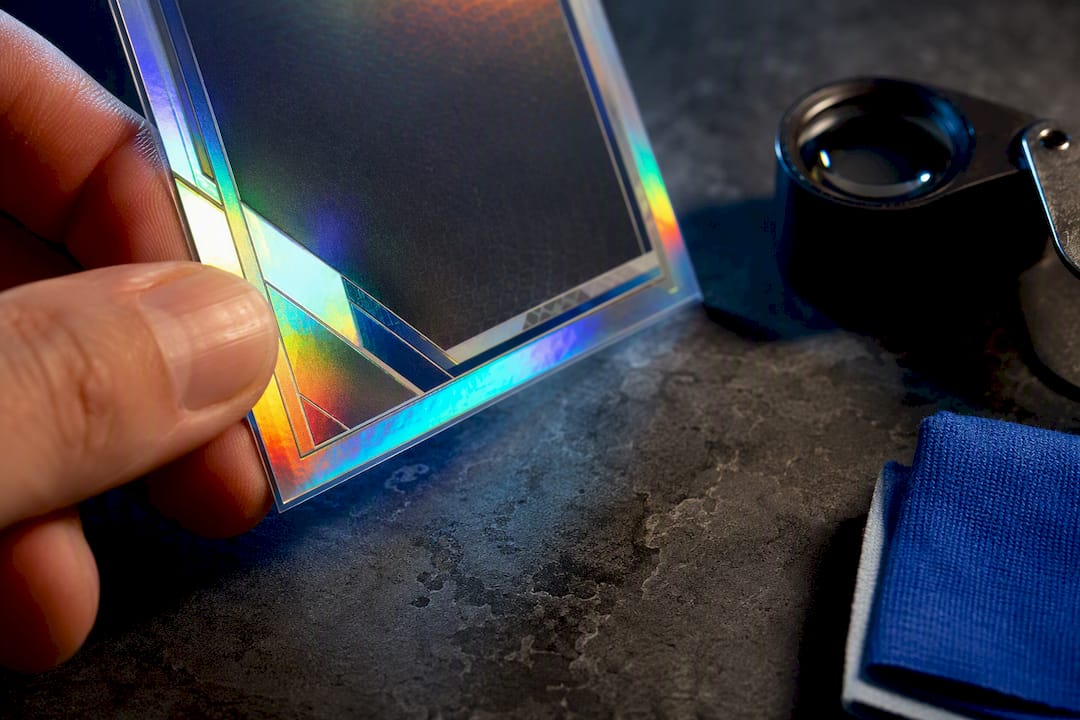
78,000+ Live Sales: Silver Prizm Value for Collectors Using Ripbin
Silver Prizms sell for a real premium over base cards, and that premium comes from three forces: player demand, grading, and how liquid the card is on the secondary market. A rookie Silver Prizm can trade for several times the base version depending on the name on the card, and the gap widens fast once a PSA 10 enters the picture. The only way to know what a specific card is worth right now is to check completed sales, not asking prices.
TL;DR:
- Silver Prizms typically sell for multiples of their base cards, with the highest prices going to superstar rookies in PSA 10 condition.
- Completed sales, not asking prices, determine a card’s true market value, especially when considering recent sales within the last 90 days.
- The condition, rarity in the desired grade, and recent player performance heavily influence Silver Prizm prices and their potential to spike or fall.
- Grading can significantly increase a card’s value, but only if the card is in excellent condition and the fee justifies the potential premium.
- Careful photography and honest condition disclosure are essential when listing Silver Prizms for sale, as visual quality greatly affects listings’ saleability.
Table of Contents
- Current Silver Prizm Market Prices and Ranges
- How Silver Prizm Values Are Actually Determined
- Grading and Condition: What Actually Moves the Price
- Where to Check Live Silver Prizm Prices
- Buying and Selling Silver Prizms the Right Way
- Tracking Silver Prizm Value with Ripbin’s Live Data
- Why Rarity Alone Doesn’t Explain Silver Prizm Premiums
- How Silver Prizm Prices Have Moved Over Time
- What Else Moves the Number Beyond Grade and Rarity
- Silver Prizm Compared to Other Parallels
- Authenticating a Silver Prizm Before You Buy
- What Collectors Get Wrong About Silver Prizm Value
- Track Silver Prizm Values in Real Time with Ripbin
- Sources
Current Silver Prizm Market Prices and Ranges
Prices swing hard depending on the player, the sport, and whether the card is graded. A Silver Prizm rookie of a bench player might sell for low double-digit amounts raw. A Silver Prizm rookie of a rookie of the year candidate can run into higher price ranges, and a true superstar rookie in PSA 10 can command a four-figure price.
Take Caleb Williams’ 2024 Panini Prizm Silver rookie as a working example. Quarterback rookies with early hype tend to see their Silver Prizm values spike around the draft, cool during a quiet training camp, then move again based on actual game performance. Price guides tracking his Silver Prizm rookie card show exactly this kind of volatility tied to on-field results rather than steady appreciation.
Pro Tip: Don’t anchor your expectation to a card’s all-time high. Check the last 90 days of completed sales specifically. A card that sold for $300 during draft week can settle at $80 six months later once the hype cools and supply catches up.
Here’s a rough framework for what separates price tiers on a given rookie Silver Prizm:
- Common/role player rookie, raw: usually within a low to moderate price range.
- Solid starter rookie, raw: typically higher than common rookies.
- Breakout or first round rookie, raw: often significantly higher, influenced by recent performance.
- Same breakout rookie, PSA 10: can sell for several times the raw price, depending on scarcity.
- Established star, well-known season, PSA 10: can reach into higher price levels for top players.
Cardlines’ breakdown of Panini’s refractor lineup notes that Silver Prizms typically sell for multiples of their base counterparts because of how the Panini refractor hierarchy is structured. Pull rates on Silver run tighter than the plain base card but far looser than serial-numbered colors, which puts Silver in a sweet spot: scarce enough to matter, common enough that there’s always a buyer on the other side of a sale.
Actual completed sales tell the real story better than any average. One recent eBay completed listing for a Panini Prizm Silver card closed at a price that reflected the card’s condition and the seller’s photo quality, not just the player’s name. A second recent completed sale shows the same pattern: buyers pay up for clean corners and centering even on an ungraded card.
The outliers matter as much as the averages. A low PSA 10 population count on a hot rookie can send a single card to a price that looks disconnected from every other sale of the same player. That’s not a market error. It’s scarcity meeting a moment, and it usually corrects once more copies get submitted for grading and the population count climbs.
How Silver Prizm Values Are Actually Determined
Completed sales are the only number that matters. Listing prices are wishes; sold prices are facts. A seller can list a raw Silver Prizm rookie at $200 and let it sit for months, but if the last five sales closed between $60 and $90, that’s the real market, regardless of what’s currently listed.
Grading population reports set the ceiling on high-end prices. When PSA has graded only a handful of Gem Mint 10 copies of a given rookie Silver Prizm, that scarcity compounds on top of the card’s unnumbered rarity. OnlyGreats’ handbook on Prizm basketball cards walks through several player examples where a tight PSA population count pushed the top grade to a price several multiples above the next grade down, even though the raw cards themselves aren’t especially hard to find.
The card doesn’t have to be rare to be valuable. It just has to be rare in the condition collectors want most, at the moment they want it most.
Three things move a Silver Prizm’s price faster than anything else:
- Rookie status. First-year cards carry speculative value that veteran cards simply don’t.
- On-field performance. A big game, an award nomination, or a viral highlight can spike demand within days.
- Collector narrative. Some players attract disproportionate attention because of personality, market size, or crossover appeal beyond the sport itself.
Silver Prizms often move first when a rookie breaks out, ahead of the numbered parallels. Cardszn’s color hierarchy guide calls Silver the entry point to the “rainbow” of parallels in a set, and its status as the most liquid unnumbered chase card means it trades hands fast enough to reflect breaking news almost immediately. Serial-numbered colors, by contrast, tend to lag because there are fewer copies changing hands to set a fresh price. That lag is exactly why sharp collectors watch Silver Prizm sales as an early signal before a numbered parallel repriced.
Grading and Condition: What Actually Moves the Price
Grading creates the widest price gaps on Silver Prizms. A PSA 10 will typically outsell a PSA 9 of the same card by a meaningful margin, and a PSA 9 usually beats a raw copy of comparable visual condition, mostly because buyers trust a third-party grade over their own read of a scan.
That trust isn’t always earned, though. A raw Silver Prizm with sharp corners, dead-centered printing, and no visible print lines can outsell a low-grade slab, especially a PSA 7 or 8, if the seller photographs it well and the buyer is confident in what they’re seeing. Chromium cards are notoriously hard to photograph, and a seller who nails the lighting captures real value that a rushed, glare-heavy listing loses.
Before deciding whether to grade a card, check these:
- Surface. Look for chipping along the borders and scuffing across the chrome finish under raking light.
- Print lines. Thin, straight lines running through the image are a common Prizm defect that tanks eye appeal even when corners are perfect.
- Centering. Off-center Prizms are common enough that even a small border imbalance can drop a grade from 10 to 9.
- Corners and edges. Chromium stock shows white on the edges faster than standard cardstock, so inspect closely under bright light.
Pro Tip: Grade before a player event you expect to boost demand, like a draft, a playoff run, or an award announcement, never after. Turnaround times at major grading companies can run weeks to months, and a card sent in reactively usually comes back after the price spike has already faded.
Grading costs money and takes time, so weigh the fee against the card’s realistic ceiling. A $15 raw card rarely justifies a $25 grading fee unless you have strong reason to believe a PSA 10 will multiply its value several times over.
Where to Check Live Silver Prizm Prices
Always sort by completed or sold listings, never active listings, when checking what a Silver Prizm is actually worth. Active listings show what sellers hope to get. Completed sales show what buyers actually paid, and that gap can be enormous on a hyped rookie.
A price database that pulls from real transaction history saves you from doing this sorting manually every time. Cross-referencing multiple completed sales, like this recent example, against a broader price history gives you a truer read than any single sale on its own.
A handful of habits separate collectors who price accurately from those who overpay:
- Check at least five to ten recent completed sales before setting a buy or sell target, not just the most recent one.
- Watch sales velocity. Multiple sales per week on a given card signal a liquid market; one sale a month signals thin demand and wider price swings.
- Compare raw and graded sales side by side to gauge the real premium grading adds for that specific player right now.
- Set a price alert or watchlist entry so you catch a dip without checking manually every day.
- Note the grading company on every sale you review. PSA, BGS, and SGC populations and premiums don’t always move in sync for the same card.
Population reports change over time as more copies get submitted, so a price that looked justified six months ago might look inflated today simply because more PSA 10s now exist. Recheck population counts periodically on any card you’re holding long term.
Buying and Selling Silver Prizms the Right Way
Photography makes or loses money on chromium cards more than any other card type. Diffused, indirect light, angled slightly off the direct glare point, shows off centering and surface condition without hiding flaws under a reflection. Buyers skip listings with a single glare-heavy photo almost every time.
Follow these steps when listing a Silver Prizm for sale:
- Shoot three to five photos minimum: front, back, and close-ups of each corner under angled light.
- Write a title that includes the year, set, player, parallel name, and card number so search results actually surface your listing.
- Disclose condition honestly, including any print lines or centering issues, in the description, not buried in fine print.
- State the grade clearly if graded, and if raw, describe it as “raw” or “ungraded” rather than implying gem quality.
Deciding whether to flip quickly or hold long term comes down to liquidity and news flow. Industry analysis generally treats Silver Prizms as better flip candidates than serial-numbered parallels precisely because they trade so much more often, while numbered cards tend to reward patience since their scarcity is fixed and won’t get diluted by new grading submissions. If you’re holding for a specific catalyst, like a playoff run or an award vote, set your exit target before the news breaks, not after, so you’re not chasing a price that’s already moved.
Spread your risk across a few players and positions rather than loading up on one name because of a hot week. Position size matters here: don’t put more into a single speculative rookie than you’d be comfortable losing if the breakout fizzles.
Tracking Silver Prizm Value with Ripbin’s Live Data
Checking sold prices across a dozen listings by hand gets old fast, especially if you’re tracking more than a few players. Ripbin pulls live market data across more than 78,000 sports and Pokémon cards, sourced from actual completed sales rather than asking prices, which solves the exact problem collectors run into when a marketplace search buries sold listings under active ones.
For someone tracking Silver Prizm rookies specifically, a few features do the heavy lifting:
- Grade-by-grade value tracking, so you can see the PSA 10 versus PSA 9 versus raw gap for a specific card without cross-referencing three sites.
- A scan feature that identifies a card and pulls its current value instantly, useful when you’re at a card show and need a fast read before making an offer.
- A collection locker that lets you monitor every Silver Prizm you own in one place instead of scattered notes or spreadsheets.
- Price movement signals that flag when a card’s sales pattern suggests it’s worth watching, buying, or selling.
| Feature | What it does for Silver Prizm collectors |
|---|---|
| Live price database | Shows sale-sourced values across 78,000+ cards, updated from real transactions |
| Scan and value | Identifies a card and returns its current market value in seconds |
| Collection locker | Tracks every card you own with current values in one dashboard |
| Investment signals | Flags data-driven buy and sell opportunities based on market movement |
Browsing and scanning on Ripbin costs nothing. The platform only charges a transaction fee when a sale actually closes.
Why Rarity Alone Doesn’t Explain Silver Prizm Premiums
Silver Prizm isn’t a serial-numbered parallel, and that’s the part newer collectors get wrong. There’s no fixed print run stamped on the card. Its rarity comes from pull rate: it’s harder to find in a pack than the base card, but nowhere near as scarce as a numbered color like gold or black.
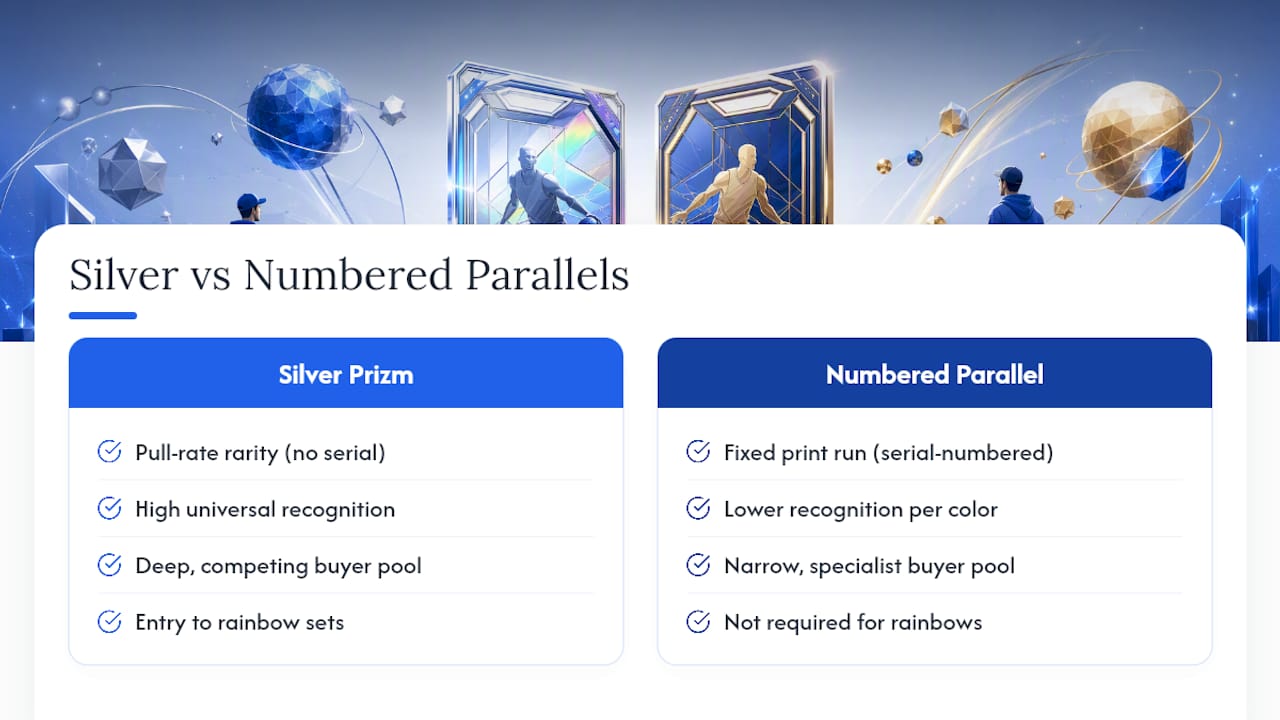
What makes Silver command a premium anyway is recognition. Every set has a Silver Prizm chase, and every collector knows what it looks like. That universal recognition creates a deep pool of buyers competing for the same cards, and deep buyer pools push prices up even without hard scarcity behind them. A numbered parallel might have fewer copies, but if only a handful of collectors care about that specific color run, the price ceiling stays low.
Silver also benefits from being the entry point into a set’s full parallel run, often called the rainbow. Collectors chasing a complete rainbow need the Silver copy regardless of price, which creates baseline demand that doesn’t disappear even when a player’s on-field performance cools off. That steady demand floor is part of why Silver Prizms hold value better than some numbered parallels of the same player once the initial hype fades.
How Silver Prizm Prices Have Moved Over Time
Silver Prizm values follow a pattern tied to hobby-wide cycles more than any single player’s performance. Prices across the entire trading card market spiked hard during 2020 and 2021, driven by pandemic-era demand, and Silver Prizms rode that wave along with everything else in the hobby.
Since then, prices have corrected across most of the market, and Silver Prizm rookies are no exception. A card that sold for triple digits during the peak might now settle at a fraction of that price, reflecting a return to fundamentals rather than speculative momentum.
Within that broader trend, individual players still create their own price cycles. A rookie’s Silver Prizm typically peaks around the draft or debut season, dips during a quiet stretch, and can spike again around a breakout game, an award, or a playoff run. These player-specific cycles play out inside the larger market trend, which is why two rookies from the same draft class can have wildly different price trajectories a year later.
The lesson for anyone pricing a card today: check recent sales, not historical highs. A card’s 2021 peak price tells you almost nothing useful about what it’s worth right now.
What Else Moves the Number Beyond Grade and Rarity
Player popularity outside the stat sheet matters more than most collectors want to admit. A quarterback with a modest completion percentage but a massive social media following can out-price a statistically better rookie simply because more people want his card. Crossover appeal, market size, and personality drive real demand that has nothing to do with performance metrics.
Print run also plays a role, even without serial numbers on the card. Some sets get produced in far larger quantities than others, and a Silver Prizm from a high-print-run product will generally trade lower than the same parallel from a scarcer release, even for a comparable player. Flagship sets like Prizm tend to have larger overall production than niche or lower-tier products, which spreads demand across more available copies.
Team market size and market timing matter too. A rookie on a large-market team playing in nationally televised games generates more visibility, and visibility converts into sales volume even when a smaller-market player is statistically similar. Timing within the season counts as well. Cards tend to trade at a premium during and right after standout performances, then settle once attention shifts to the next storyline.
Silver Prizm Compared to Other Parallels
Base Prizm cards sit at the bottom of the value chain, and Silver typically sells for a clear multiple above them, sometimes 5 times, sometimes 20 or more depending on the player and the specific set’s pull rates. Cardlines’ refractor guide lays out several of these multiplier examples across different Prizm products.
Above Silver sit the color parallels: red, blue, green, and the rest, most of which carry serial numbers. These generally command higher prices per copy than Silver because of that fixed scarcity, but they trade far less often, which makes their prices more volatile and harder to pin down from a small sample of sales.
At the very top sit the ultra-rare parallels, things like one-of-one printing plates or the rarest color variants, which can sell for many times a Silver Prizm’s price on the right player, but those sales are so infrequent that pricing them accurately requires patience and a wide search window.
Silver’s advantage over nearly every numbered parallel is liquidity. You can typically sell a Silver Prizm rookie of a known player within days. Try that with a numbered parallel in the 50 to 99 range and you might wait weeks for the right buyer to show up, even if the eventual sale price is higher.
Authenticating a Silver Prizm Before You Buy
Counterfeits do exist in the Prizm market, especially on high-value rookies, so a quick check before paying real money protects you from an expensive mistake.
Look first at the surface pattern under angled light. Authentic Prizm cards show a consistent, fine refractor pattern across the entire surface. Counterfeits often show a duller, less uniform shine or a pattern that looks slightly off compared to a verified copy of the same card.
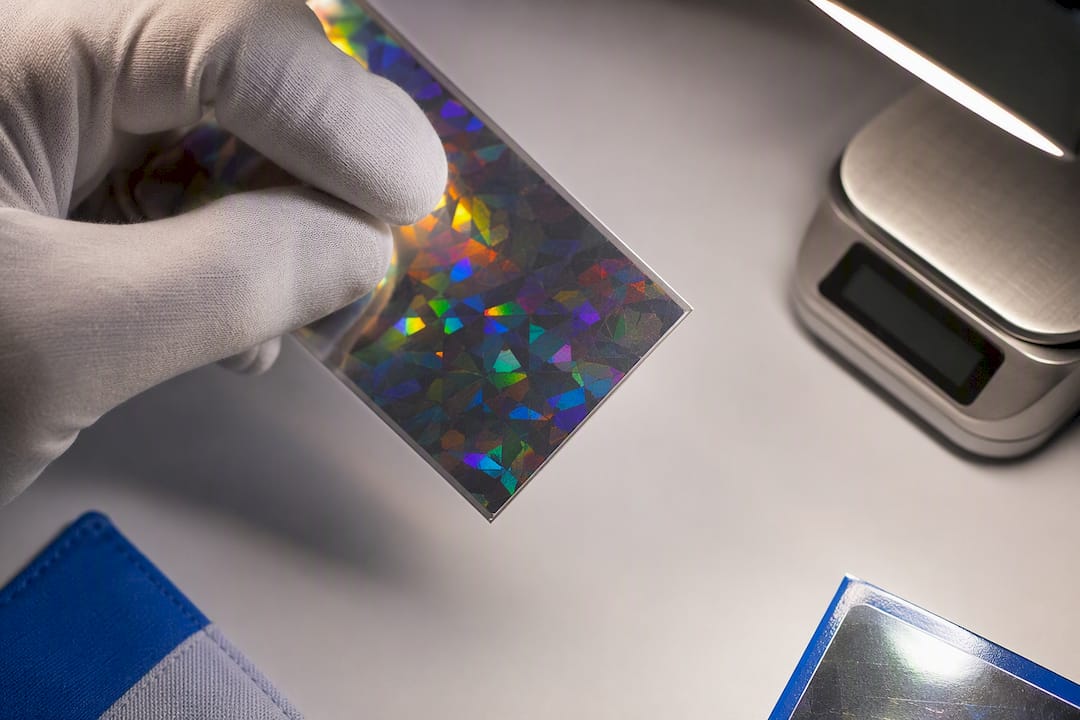
Check the card stock thickness and weight against a known authentic Prizm you own or have handled. Fakes frequently use lighter, cheaper cardstock that feels noticeably different in hand.
For anything above a modest price point, buy from sellers with strong, verifiable sales history, and lean toward pre-graded cards from PSA, BGS, or SGC when the price justifies it. A third-party grading company authenticates the card as part of the grading process, which removes most of the guesswork on a card that’s already slabbed.
If you’re buying raw and the price seems unusually low for the player and condition described, treat that as a warning sign rather than a bargain. Counterfeiters price fakes to move fast, undercutting the real completed-sales range you’d find by checking recent history.
What Collectors Get Wrong About Silver Prizm Value
Most price guides treat Silver Prizms as a footnote below the numbered rainbow, and that’s backward for anyone actually trying to trade in this market. Silver is where the price discovery happens first. By the time a numbered parallel reprices after a breakout game, the Silver copies already told you the move was coming, days or sometimes weeks earlier.
The bigger mistake is treating grading as automatic. Plenty of collectors send in a $15 raw card expecting a PSA 10 windfall, then eat a $25 fee on a card that grades a 9 and barely covers costs. Grade selectively, and grade around events, not on a whim.
If there’s one habit worth building, it’s checking completed sales before every buy or sell decision, not asking prices, not last year’s high. The market moves fast enough on these cards that yesterday’s number is already stale.
— Saad
Track Silver Prizm Values in Real Time with Ripbin
Ripbin replaces the manual work of hunting down completed sales across scattered listings, giving you sale-sourced values for Silver Prizms and everything else in your collection without browsing fees eating into what you’d actually make on a trade.

Scan a card and get an instant value pulled from real transaction data, then drop it into your collection locker to track how the price moves as new sales come in. That matters most on volatile rookie Silver Prizms, where a single breakout game can shift the price within days. Ripbin’s data-driven investment signals also flag when a card’s sales pattern suggests it’s worth watching, which beats refreshing a marketplace search every morning hoping something changed.
If you’re holding, buying, or thinking about listing a Silver Prizm right now, browse current values on Ripbin and check where your card actually sits against recent completed sales before you make your next move.
Sources
- Prizm Color Hierarchy Cheat Sheet: The Definitive Guide
- The Ultimate Panini Refractor Guide
- eBay completed listing example