How to Sell Pokémon Cards Online for the Most Cash
By Ripbin Research · Published 2026-08-22

How to Sell Pokémon Cards Online for the Most Cash
If you want the highest payout with the least hassle, match the route to the card, not the other way around. High-value graded cards belong on data-backed marketplaces or in auction, where competitive bidding pushes price toward true market value. Mid-value singles do best in curated collector listings with sharp photos and honest condition notes. Bulk commons move fastest through bulk buyers or a local shop. And if you need cash today, a local shop or show trumps waiting on a shipped sale every time.
Before you list anything, check what the card is actually worth right now:
- High-value graded cards: data-backed marketplace or auction listing
- Mid-value raw singles: curated collector listings with strong photos
- Bulk or common cards: bulk buyers or your local card shop
- Need cash immediately: local shop or in-person trade show
Pull up three recent sold prices on Ripbin before you set a number anywhere.
Key Takeaways
Selling Pokémon cards for the most money comes down to matching card value to the right route and pricing from real sold data instead of guesswork.
| Point | Details |
|---|---|
| Match route to goal | High-value graded cards suit marketplaces or auctions; bulk commons suit local shops or bulk buyers. |
| Price from sold comps | Use recent sold listings, not active asking prices, to set a realistic number. |
| Document everything | Photograph both card sides and pack with a timestamp to protect against disputes. |
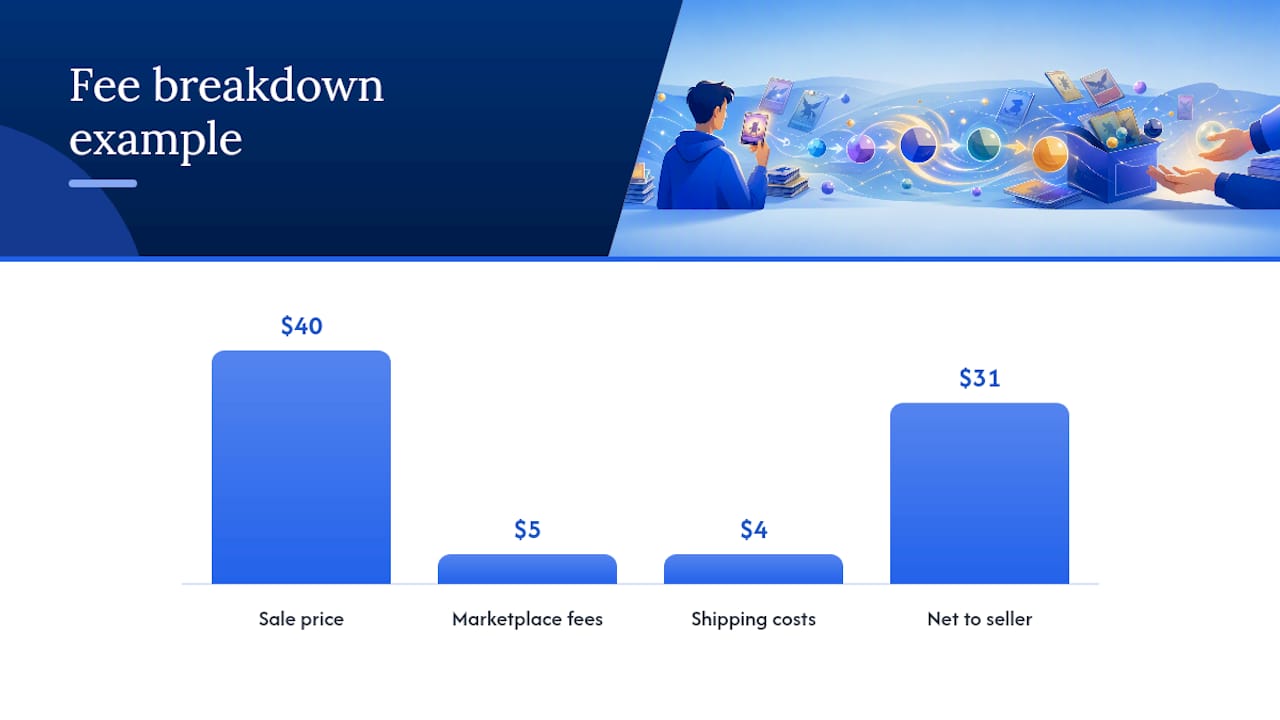
| Factor in fees and shipping | A $40 sale can net closer to $31 after typical marketplace fees and shipping supplies. |
| Verify value before listing | Check Ripbin’s live sold-data pricing to build a defensible price band before you write a listing. |
Table of Contents
- How Do You Choose the Best Way to Sell Pokémon Cards Online?
- How to Prepare Cards for Sale: Sorting, Photos, and Condition Notes
- How Do You Price a Pokémon Card to Sell Fast?
- How Should You Ship and Package Pokémon Cards Safely?
- What’s the Best Way to Sell Bulk Pokémon Cards or a Full Collection?
- How Do You Get Paid Safely and Avoid Pokémon Card Scams?
- How Ripbin Helps You Price and Document a Sale
- What Are the Legal and Tax Rules for Selling Pokémon Cards Online?
- How Do You Write a Pokémon Card Listing That Sells?
- How Should You Communicate With Buyers to Avoid Problems?
- What the Data Actually Tells You About Selling Smart
- Check Your Card’s Real Value Before You List It Anywhere
- Sources
How Do You Choose the Best Way to Sell Pokémon Cards Online?
Start by naming your actual goal, because “sell Pokémon cards online” means something different depending on whether you want speed, maximum dollars, or minimum effort.
- Fastest cash: local shops, trade-in kiosks, or bulk buyers pay less but settle same day.
- Highest net return: auction-style listings or specialized marketplaces for graded and rare cards, where buyer competition drives up final price.
- Least effort: consignment or bulk sale to a single buyer, even at a lower per-card rate.
- Bulk clearance: sell by volume to a bulk buyer or assemble lots by set/era for better per-card pricing.
Card type matters just as much as goal. A PSA 10 Charizard behaves nothing like a stack of commons from a 2023 booster box.
- Graded slabs over $100: best suited to marketplace listings or auction formats with wide buyer reach.
- Raw singles between $10 and $150: curated fixed-price or auction listings on general marketplaces.
- Cards under $5 or duplicates: bulk buyers, local shops, or lot sales.
Each route trades something for something else. Auctions maximize price but take longer and carry more listing work. Local shops pay instantly but usually offer 40 to 60% of resale value. Bulk buyers move volume fast but pay pennies per card. If you’re unsure, the rule of thumb is simple: the rarer and higher graded the card, the more patience pays off.
How to Prepare Cards for Sale: Sorting, Photos, and Condition Notes
Buyers pay more when they trust what they’re looking at, and that trust starts before you write a single word of copy.
- Sort first. Separate graded slabs from raw cards, then group raw singles by estimated value: high, mid, and bulk. This alone will shape which selling route each pile takes.
- Photograph both sides. Shoot the front and back of every card in natural, even light, avoiding glare and shadows. Include a straight-on shot and a slight angle to show gloss and edge wear, and keep the background plain so the card is the entire focus.
- Use accurate condition language. Describe corners, edges, surface, and centering honestly. Terms like “near mint,” “lightly played,” or “moderately played” mirror common grading categories, but never claim a numeric grade unless the card is actually slabbed by PSA, BGS, or CGC.
- List complete metadata. Include the set name, card number, edition (1st edition vs unlimited), language, and any print variant. Buyers searching a specific print run skip listings missing this information entirely.
Standardized condition notes and clear back-of-card photos are consistently recommended across seller preparation guides as the fastest way to cut down disputes after the sale.
Pro Tip: Photograph your card next to a printed date or a piece of paper with today’s date written on it. If a buyer ever disputes the condition, that timestamp backs up exactly when and how the card looked before it shipped.
How Do You Price a Pokémon Card to Sell Fast?
Ignore asking prices from active listings entirely. They tell you what sellers hope for, not what buyers actually pay. Recent sold listings are the only reliable signal, and pricing guides consistently point sellers toward sold comparables rather than list prices.
- Pull three to five recent sold comps in the same grade or condition tier.
- Check Ripbin’s live values, which pull from actual sales rather than seller-set prices, to build a realistic price band by value tier.
- Adjust for condition differences you spot in your own photos versus the comps.
- Factor in shipping cost and platform fees before settling on your listing price.
Here’s the math sellers skip. Say a raw single sells for $40. A typical marketplace fee runs in a moderate range depending on the platform, plus payment processing. Subtract $5 in fees, $4 in shipping supplies and postage, and your net lands closer to $31, not $40. That gap is exactly why fee structure changes which platform makes sense at different value tiers — a card worth $15 can lose a third of its value to fees and shipping if you’re not careful.
Statistic Callout: Listing quality (photos and condition notes) often moves final sale price more than small fee differences between platforms for mid-value cards, according to seller-preparation research from SellCCG.
Auctions suit rare or graded cards where demand is uncertain and competitive bidding could push price above your expectation. Fixed-price listings suit common or mid-value cards where you already know the going rate from comps. If you do run an auction, set your reserve at or slightly below your last confirmed sold comp, not your dream price.
How Should You Ship and Package Pokémon Cards Safely?
Damage in transit turns a good sale into a refund fight, so packaging discipline matters as much as pricing.
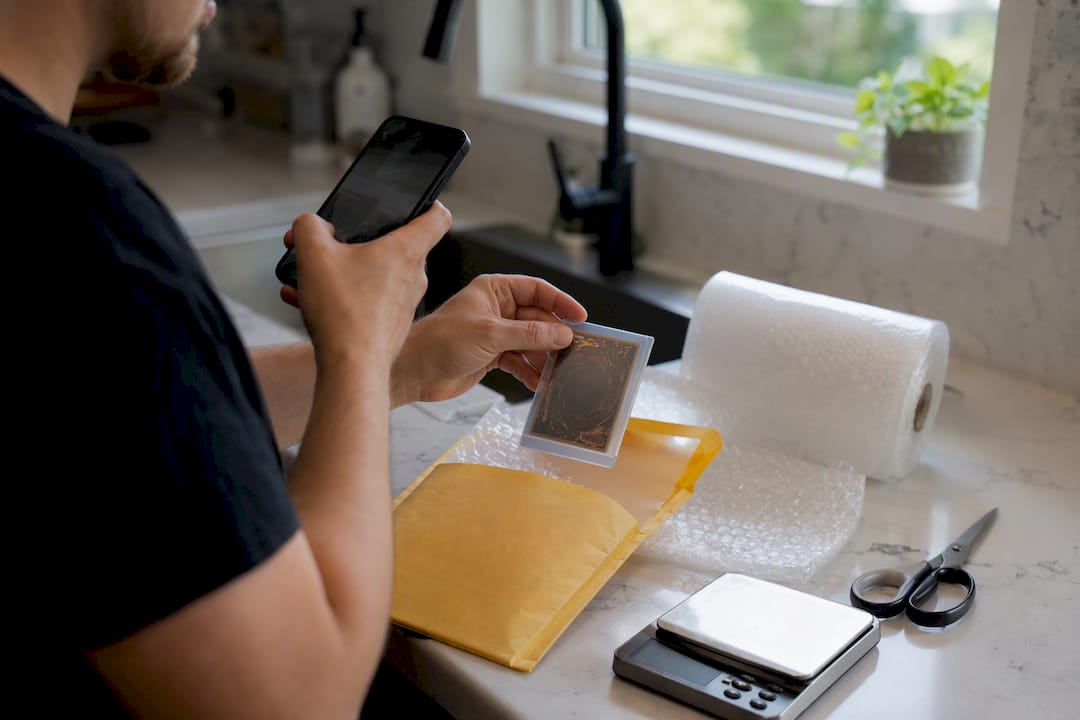
- Raw singles: penny sleeve, then a rigid toploader, then a bubble mailer or small box. Never ship a bare sleeve in a plain envelope.
- Graded slabs: wrap the slab in bubble wrap, then pad the box on all sides so the slab can’t shift or crack in transit.
- Insurance and signature: insure anything over roughly $100 and require signature confirmation on cards worth several hundred dollars or more.
- Tracked shipping is non-negotiable for anything beyond bulk commons; it’s your proof of delivery if a buyer claims a card never arrived.
Domestic shipments typically arrive in two to five business days depending on carrier and service level. Set that expectation with the buyer up front so a normal transit delay doesn’t trigger a panic message on day two.
Pro Tip: Take a quick video while you pack a high-value card, from unsleeved card to sealed box. It costs you thirty seconds and gives you real evidence if a dispute ever comes down to “what condition was this card in when it shipped?”
What’s the Best Way to Sell Bulk Pokémon Cards or a Full Collection?
Bulk commons and full collections need a different math than singles.
- Decide bulk vs. lots. Selling by the thousand to a bulk buyer is fastest, but grouping cards into themed lots (by set, type, or era) often nets more per card from collectors filling gaps.
- Know the going rate. Bulk buyers and shops typically offer modest per-card or per-thousand rates for commons, with some shops paying more in store credit than straight cash since credit keeps the sale in-house.
- Weigh consignment. A consignment service handles listing and shipping for you but takes a larger fee cut and can take weeks to months to fully sell through inventory.
- Prep your inventory. Sort by set, remove obvious hits and holos into a separate “sell individually” pile, and photograph the bulk lot as a whole before boxing it up.
How Do You Get Paid Safely and Avoid Pokémon Card Scams?
Payment method is your first line of defense, and it matters more than almost anything else in this process.
- Use payment platforms that offer buyer and seller protection with dispute resolution, not direct bank transfers or gift cards from a stranger.
- Watch for classic scam patterns: rushed buyers pushing off-platform payment, requests to ship before payment clears, or offers that beat every sold comp you’ve checked.
- Require tracked shipping and signature confirmation on anything valuable enough to matter if it disappears.
- Before shipping to any buyer or consignment service you don’t already know, check a business profile or review site to confirm they have a real track record.
If a dispute opens anyway, your timestamped photos, tracking number, and delivery confirmation are what resolve it in your favor.
How Ripbin Helps You Price and Document a Sale
Scan a card in Ripbin and you get a live median value pulled from actual sales, plus grade-by-grade breakdowns if the card is slabbed, across a database covering over 78,000 cards.
- Scan for instant value: identify the card and see current market pricing without digging through old listings.
- Pull real comparables: use Ripbin’s sold-data pricing to set a defensible price band and reference it in your listing description, which tends to reduce lowball offers by giving buyers confidence in your number.
- Track your collection: the locker feature lets you log condition and value before you ever list a card, so you have a documented baseline if a dispute comes up later.
- Check grading upside: Ripbin’s Pokémon investing guide shows when the value jump between raw and graded justifies the grading fee and wait time.
| Step | What to Do |
|---|---|
| Price | Scan the card and check Ripbin’s live median value |
| List | Reference the comparable price range in your description |
| Track | Log the card in your locker before shipping |
| Review | Compare final sale price against the original valuation |
What Are the Legal and Tax Rules for Selling Pokémon Cards Online?
Selling a handful of cards you’ve owned for years is different, legally, from running a regular reselling business, and the IRS treats them differently too.
If you’re occasionally selling personal collection items, profit is generally treated as a capital gain, while cards sold at a loss compared to what you paid usually aren’t deductible as a casual seller. If you’re buying and reselling regularly with intent to profit, that activity looks more like a business, and income gets reported as such, often triggering self-employment considerations.
Marketplaces are also required to report seller earnings to tax authorities once you cross certain payment thresholds, and platforms typically issue a 1099-K form for sellers who exceed those limits in a calendar year. The threshold has shifted in recent years, so check the current figure directly with the platform you’re using rather than relying on last year’s number.
Keep records regardless of scale: what you paid for a card (your cost basis), what you sold it for, platform fees, and shipping costs. This is the same documentation that protects you in a dispute and makes tax time far less painful. If your collection has meaningful value or you’re selling frequently, a conversation with a tax professional familiar with collectibles is worth the hour. Rules vary by state and by how the IRS classifies collectibles income, and getting it wrong after the fact costs more than getting it right up front.
None of this should scare you away from selling. It just means treating your listings and payouts like the financial transactions they are.
How Do You Write a Pokémon Card Listing That Sells?
Your title is doing one job: getting the right buyer to click. Include the Pokémon name, set name, card number, and condition or grade in that order, since collectors search by exact set and number more than by general terms. “Charizard 4/102 Base Set Unlimited Near Mint” outperforms “Rare Charizard Card” every time, because it matches exactly what a buyer typed into search.
Your description does the second job: closing the sale without a follow-up question. Open with the card’s identity (name, set, number, edition, language), then condition detail matching your photos, then any relevant history like whether it’s been sleeved since pack-opening or stored in a binder. Mention if it’s graded and by whom, and always state whether the slab has any visible surface issues.
Reference your pricing logic directly. A line like “Priced in line with recent sold comps in this condition tier” signals to buyers that your number isn’t arbitrary, and it heads off the lowball offers that waste everyone’s time. Skip filler adjectives like “amazing” or “must-have.” Collectors respond to specifics: centering percentage estimates, edge wear location, whether the surface has scratches visible under light.
End every listing with your shipping method and expected handling time. A buyer who knows the card ships within one business day via tracked mail is far less likely to message you asking where it is.
How Should You Communicate With Buyers to Avoid Problems?
Most disputes start with a mismatch between what a buyer expected and what actually showed up, not with bad faith on either side. Set expectations early and you avoid nearly all of it.
Respond to buyer questions before the sale, not after. If someone asks about a corner or a print line, answer with a specific photo rather than a vague reassurance. Once the sale is confirmed, send a short message confirming the shipping timeline and tracking number as soon as it’s available, since silence for three or four days is what triggers anxious follow-ups and premature disputes.
If a buyer flags a condition concern after delivery, ask for photos before assuming the worst. Compare it against your pre-shipping documentation. Most issues resolve cleanly once both sides are looking at the same evidence. Stay factual and calm even if the buyer is frustrated. A defensive tone escalates faster than almost anything else in a dispute, while a buyer who feels heard is far more likely to accept a reasonable resolution instead of opening a formal claim.
What the Data Actually Tells You About Selling Smart
The conventional advice on this topic treats every card the same way: list it, wait, hope. That’s backwards. The single biggest lever most sellers ignore isn’t which platform they pick, it’s whether they check a real sold comparable before typing in a price. Listing quality and honest condition notes move final sale price more than small fee differences between platforms, which means the seller who spends twenty minutes photographing carefully and checking three sold comps usually outperforms the one who chased the “cheapest fees” platform.
Where I’d push back hardest on typical guides: they obsess over comparing fee percentages across platforms while glossing over the fact that a mispriced listing loses far more money than any fee spread ever will.
Prioritize this order: verify the real value with sold data first, prepare honest documentation second, then pick the route that matches your goal. Speed, price, and effort are always a tradeoff. Data removes the guesswork from at least one variable.
— Saad
Check Your Card’s Real Value Before You List It Anywhere
Every route covered here works better when you know what your card is actually worth first, and that’s exactly the gap Ripbin closes. Instead of guessing from outdated price guides or active listings that never sell at asking price, you scan the card, or search it, and see a live value pulled from real completed sales across more than 78,000 tracked cards.
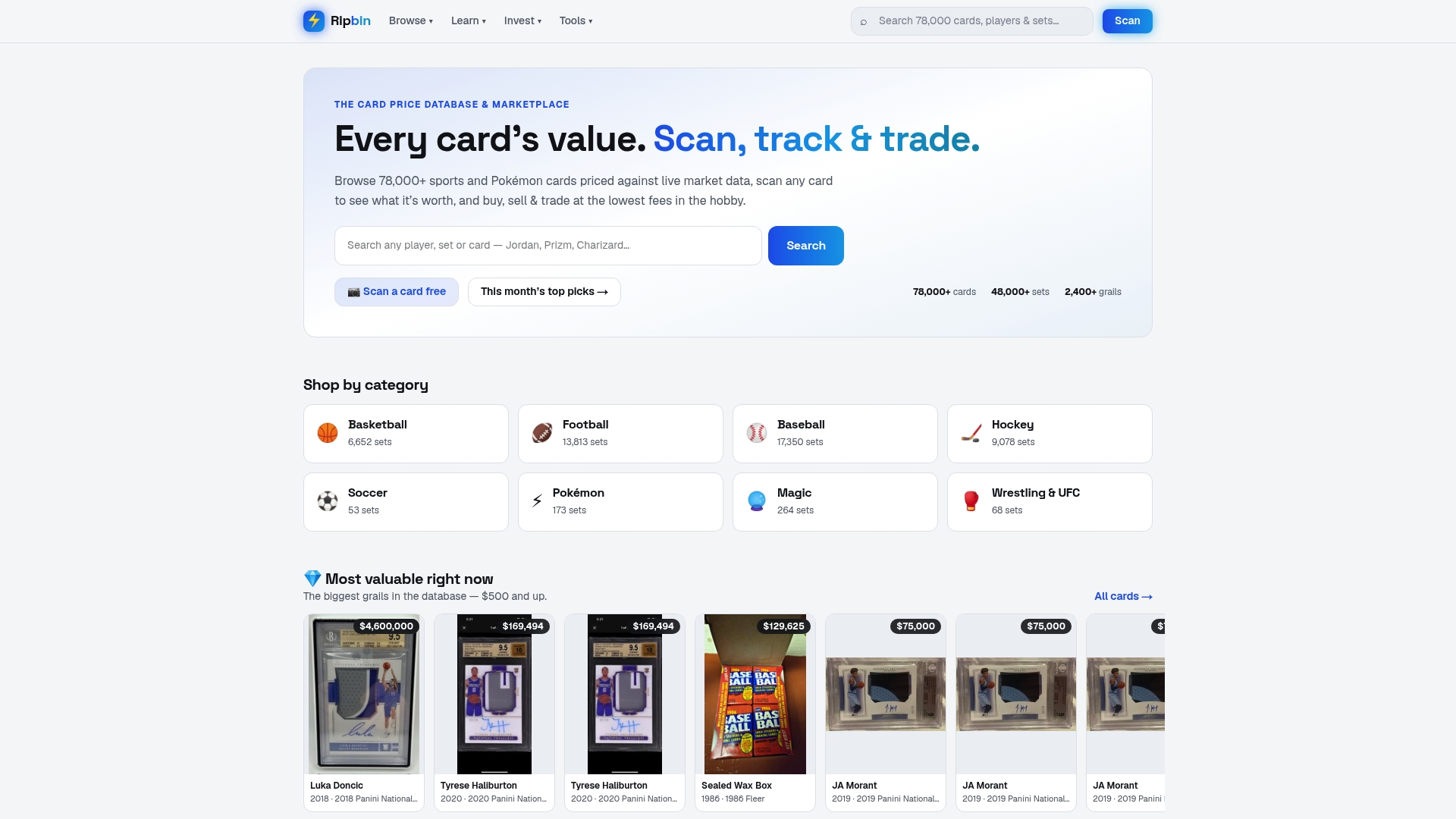
That number becomes your price band, your reserve for an auction, and your proof point in a listing description that heads off lowball offers before they happen. If you’re deciding whether to grade a card before selling, Ripbin’s Pokémon investing guide breaks down when the grade-by-grade value jump actually justifies the wait and the fee. The locker feature lets you document condition and track value over time, so you’re never selling blind or scrambling for evidence if a buyer disputes a sale later.
Start by browsing card values on Ripbin for the set you’re planning to sell, and build your price band from there before you write a single listing.