Which Pikachu Cards Are Worth the Most Money Right Now
By Ripbin Research · Published 2026-08-23
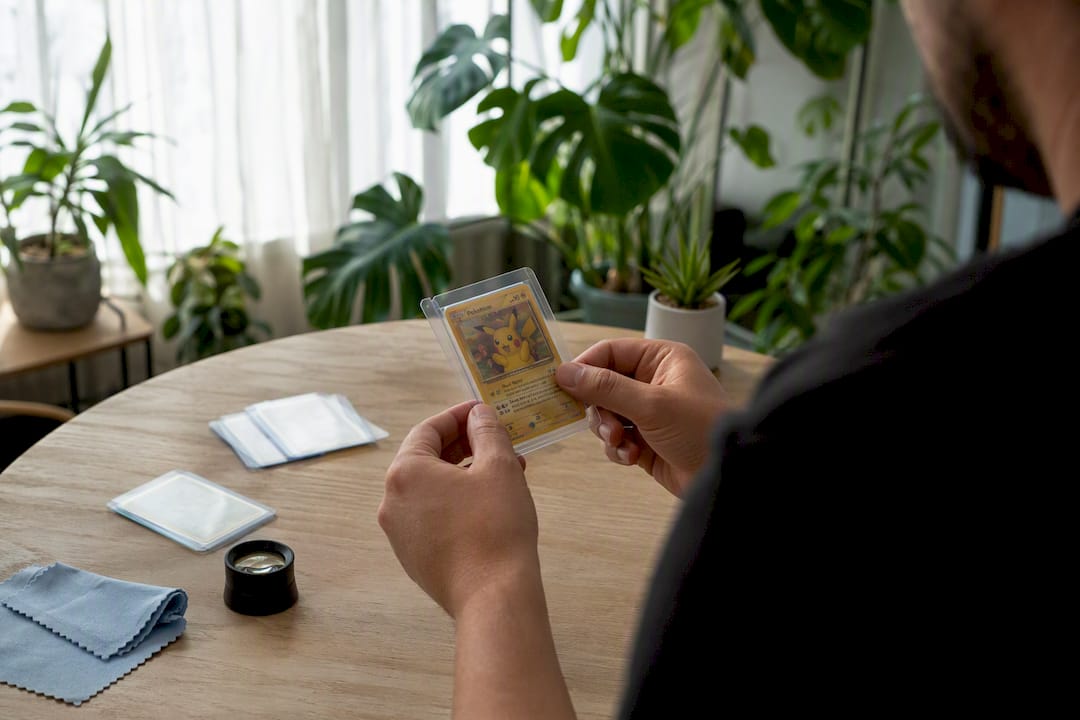
Which Pikachu Cards Are Worth the Most Money Right Now
The Pikachu Illustrator is the single most valuable Pikachu card in existence, and it isn’t close. A PSA 10 copy sold for $16.49 million through Goldin Auctions in February 2026, cementing its place as the most expensive trading card ever sold. Behind it sits a short list of marquee names that drive most of the serious money in Pikachu card values: the Trophy Pikachus, the 1999 Base Set 1st Edition Red Cheeks Pikachu, and the Birthday Pikachu promo.
If you’re holding a Pikachu and wondering what it’s actually worth, run three checks before you trust any number you find online.
- Identify the exact variant. Set name, card number, edition stamp, and any promo or tournament markings.
- Check the grade and condition. A PSA 10 and a PSA 8 of the same card can differ by 10x or more.
- Confirm recent sold comps. Not listing prices. Actual completed sales, ideally within the last year.
Pro Tip: An $16.49 million Illustrator sale sets the ceiling for the hobby, but it also skews expectations. Most Pikachu cards, even good ones, sell for double or triple digits, not seven figures.
Key Takeaways
Pikachu card values run from under a dollar for common modern prints to $16.49 million for the graded Pikachu Illustrator, with grade and variant explaining nearly all of the gap in between.
| Point | Details |
|---|---|
| Grail tier is different | Pikachu Illustrator and Trophy Pikachus rarely trade publicly and don’t follow normal market pricing. |
| Grade drives extreme swings | Gold Star Pikachu PSA 10 comps moved from about $15,000 to over $100,000 in a single year. |
| Identify before you price | Confirm exact set, card number, edition stamp, and holo status before trusting any valuation. |
| Modern promos are accessible | Van Gogh, Special Delivery, and VMAX Rainbow promos offer PSA 9/10 comps in the hundreds to low thousands. |
| Use Ripbin for live comps | Ripbin scans and tracks grade-specific sold data across 78,000+ cards without browsing fees. |
Table of Contents
- Pikachu Card Values by Tier: From Grails to Everyday Pulls
- What Actually Determines a Pikachu Card’s Price
- How Grading Changes What a Pikachu Card Is Worth
- Where to Find Real Sold Prices, Not Just Listings
- How Ripbin Turns This Process Into a Few Minutes of Work
- A Grade-First Approach Beats Guessing on Pikachu Values
- Check Your Pikachu Cards Against Live Market Data
- Sources
Pikachu Card Values by Tier: From Grails to Everyday Pulls
Pikachu card values break into three rough tiers, and understanding which tier a card falls into tells you more than any single price you’ll find on a marketplace listing. Grade and variant do the heavy lifting inside each tier.
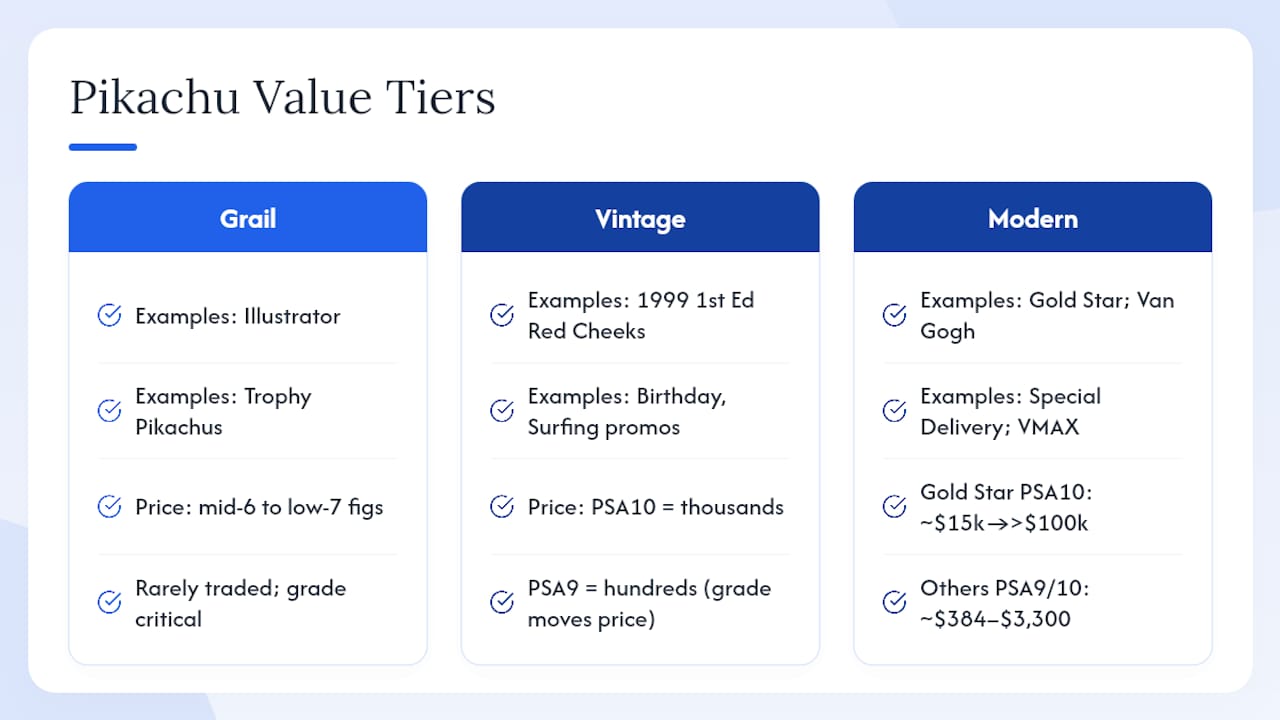
1. Grail tier: Pikachu Illustrator and Trophy Pikachus
These are the cards that don’t really trade on the open market. The Pikachu Illustrator was a promotional card given to winners of a CoroCoro comic illustration contest in Japan, and fewer than 40 copies are believed to exist; learn more about how limited promotional releases impact collectible value in our guide to LEGO Cars Disney sets and exclusives. Its $16.49 million sale isn’t a market price so much as a data point from a single auction. Trophy Pikachus, awarded to top finishers at Japanese tournaments in the late 1990s and early 2000s, are similarly scarce and rarely surface for public sale. When they do, prices land in the mid six figures to low seven figures depending on the specific tournament edition and grade.
2. Vintage promos and 1st Edition variants
The 1999 Base Set 1st Edition Red Cheeks Pikachu is the card most collectors can realistically chase. A PSA 10 copy commands thousands of dollars, while PSA 9 examples trade for hundreds, reflecting how much grade alone moves price at this level. The Birthday Pikachu promo, distributed through a limited redemption program, and the Surfing Pikachu Black Star Promo both follow a similar pattern: PSA 10s carry a real premium over PSA 9s, but neither requires a seven-figure budget to own a strong copy.
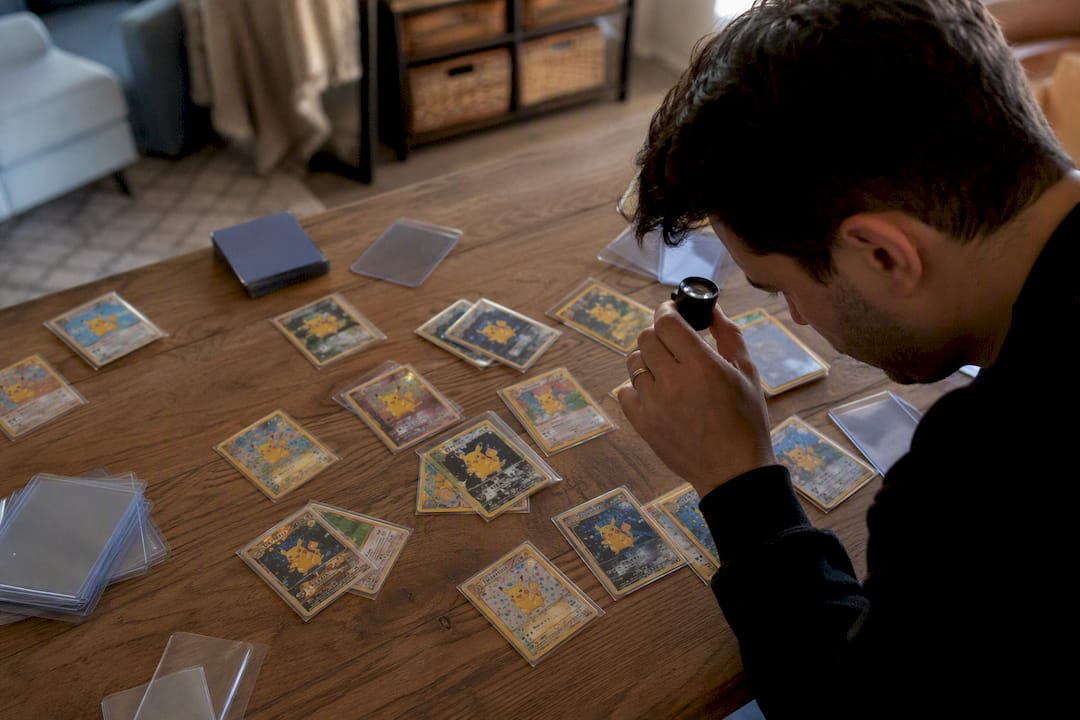
3. Modern high-value promos and SIR-era cards
Gold Star Pikachu from EX Holon Phantoms belongs in a category of its own. PSA 10 comps for this card jumped from roughly $15,000 in 2025 to more than $100,000 in 2026, a repricing driven almost entirely by how few gem-mint copies exist. That kind of swing is rare even by hobby standards.
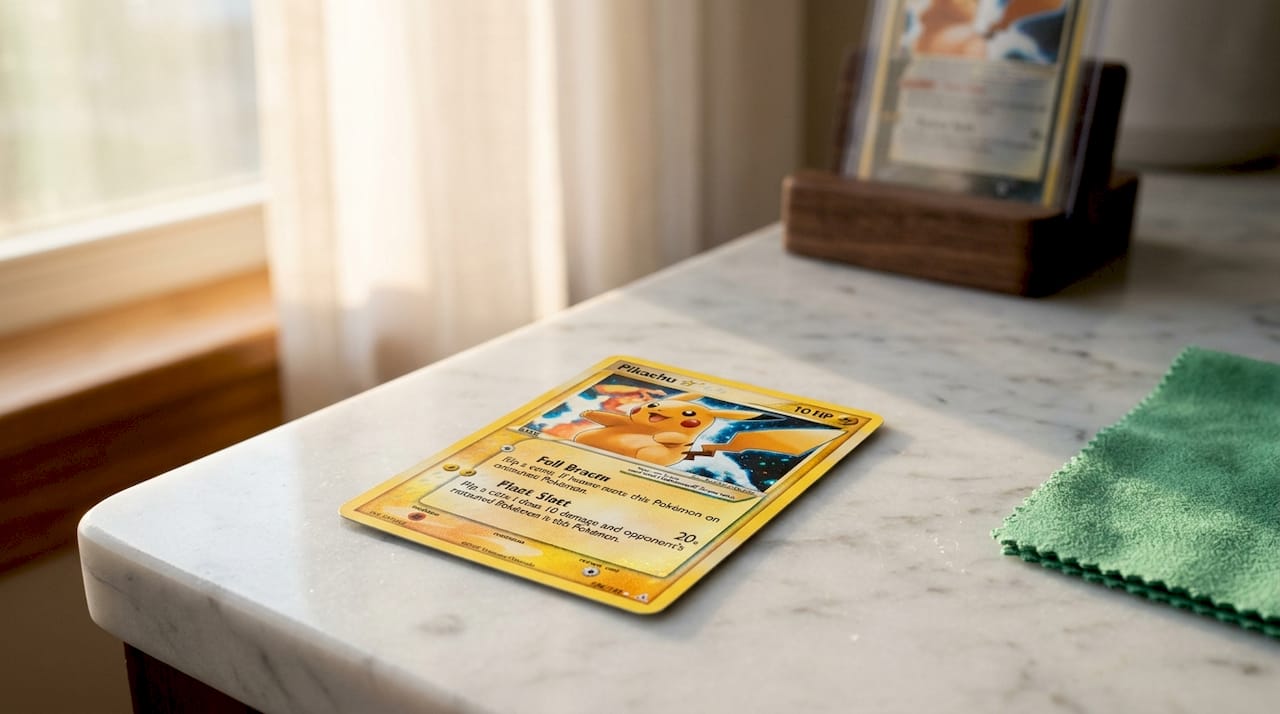
Other modern cards are far more accessible. The Van Gogh Museum collaboration Pikachu (sometimes called the Pikachu with Grey Felt Hat promo), the Special Delivery Pikachu, and the Pikachu VMAX Rainbow from Vivid Voltage all carry PSA 9 and 10 comps in the mid three to low four figure range. Special Delivery Pikachu in PSA 9 has traded around $455; the Van Gogh promo in PSA 10 has landed near $3,300; VMAX Rainbow in PSA 10 has sold closer to $384. These are the entry points for collectors who want a genuinely valuable Pikachu without competing for a grail.
Recent SIR releases add another wrinkle. Surging Sparks’ Pikachu ex, a Special Illustration Rare with ukiyo-e inspired artwork, commanded elevated prices right at launch because of strong demand and a limited print run relative to the set’s overall volume. Whether that premium holds long term depends on how the next few sets treat Pikachu illustrations.
What Actually Determines a Pikachu Card’s Price
Two Pikachu cards can look nearly identical and sell for wildly different amounts. The gap usually comes down to four things.
- Variant identification. Edition stamp (1st Edition versus unlimited), holo pattern, set symbol, and promo or tournament flags all separate a common card from a rare one. Guides consistently push collectors to confirm the exact card ID, holo status, and grade before trusting any price estimate, and that step alone prevents most valuation mistakes.
- Print run and distribution. A card given to 40 contest winners behaves nothing like a card inserted into millions of retail packs. Museum tie-ins and tournament promos are capped by design; mass retail Pikachus are not.
- Artwork and cross-collector demand. The Van Gogh Museum Pikachu pulls in art collectors who’ve never opened a booster pack in their life. That crossover appeal supports a higher floor than an ordinary promo gets, because demand comes from outside the usual hobbyist pool as well as inside it.
- Reprints and revised art. When a popular Pikachu illustration gets reused or reprinted in a later set, it usually softens long-term demand for the original, even if the original remains technically rarer.
Pro Tip: Before you assume a card is rare, search its exact card number and set name, not just “Pikachu.” Plenty of common reprints share very similar artwork with cards worth ten times as much.
How Grading Changes What a Pikachu Card Is Worth
Grade is often the single biggest lever on price, bigger than most collectors expect until they see the numbers side by side. The Gold Star Pikachu jump from around $15,000 to over $100,000 for PSA 10 copies happened without the card itself changing at all. What changed was how the market started pricing extreme scarcity at the top grade.
A few things matter once you’re deciding whether to grade a card or sell it raw:
- Population reports tell you the real story. If PSA has graded thousands of PSA 9s for a card but only a handful of PSA 10s, that gap is where the premium lives.
- Grading is worth the cost when the jump between grades is large. A card worth $50 in PSA 8 and $60 in PSA 9 isn’t worth grading. A card worth $500 in PSA 9 and $5,000 in PSA 10 almost always is.
- Provenance matters for high-value pieces. A documented auction history, especially through a house like Goldin or Heritage, gives buyers confidence that a six-figure or seven-figure card is exactly what it claims to be.
- Watch for red flags on ungraded high-value cards. Trimmed edges, recolored surfaces, and altered holo patterns are the most common manipulation attempts on cards with real money attached to them.
Given Pikachu’s universal recognizability, counterfeiting risk runs higher for this character than for almost any other card subject. Insist on a graded slab or independent expert verification before paying serious money for anything above entry-level tier prices.
Where to Find Real Sold Prices, Not Just Listings
Getting an accurate number means looking at what actually sold, not what a seller is asking. Here’s how to do it properly.
- Start with auction-house archives. Records from Goldin and Heritage give you final hammer prices on the highest-value Pikachu cards, which is the gold standard for grail-tier comps.
- Search by exact card plus grade. A generic “Pikachu card” search is nearly useless. Search the specific set, card number, and PSA or BGS grade together.
- Weight recent sales more heavily. For volatile modern promos and SIRs, a sale from 18 months ago may already be stale. Prioritize comps from the last six to eighteen months.
- Cross-check marketplace listings against sold data. Sites like PriceCharting and TCGplayer aggregate a lot of listings, but active asking prices routinely run higher than what buyers actually pay.
- Vet the seller before you buy. Check account history, ask for slab serial numbers you can verify directly with PSA or BGS, and request a receipt or invoice on anything over a few hundred dollars.
Pro Tip: For anything approaching five figures or more, get a second opinion from an independent authenticator before you commit funds. A wrong call on a grail-tier card is an expensive mistake.
How Ripbin Turns This Process Into a Few Minutes of Work
Running all five of those verification steps by hand for every card in a collection isn’t realistic. Ripbin tracks live market data across more than 78,000 sports and Pokémon cards, built specifically to shortcut the identify-grade-compare workflow.
The process looks like this: scan the card, confirm the exact variant and edition, pull up grade-specific sold comps instantly, then set a price-watch alert if you’re deciding whether to hold or sell.
- Values are sourced from actual completed sales, not asking prices.
- There are no browsing fees to check comps on a card you already own.
- Monthly investment reports flag cards showing the kind of grade-driven repricing that hit Gold Star Pikachu.
For a hobby where a single grade jump can multiply a card’s price tenfold, that kind of speed matters more than most collectors realize until they’ve tried tracking it manually.
A Grade-First Approach Beats Guessing on Pikachu Values
Most collectors still price cards backward. They start with a card they like, assume it’s rare because it’s old or shiny, then go looking for a number that confirms what they already believe. The data doesn’t support that instinct. Gold Star Pikachu’s jump to six figures in PSA 10 happened because of population scarcity at the top grade, not because the card suddenly became more interesting.
The conventional advice, “check a price guide,” undersells how fast this market moves. A guide published even a year ago missed the Gold Star repricing entirely. What actually works is checking grade-specific sold comps close to the moment you need the answer, then treating variant identification as the first step rather than an afterthought.
If you take one thing from this guide, prioritize the grade check over everything else. Variant matters, era matters, but grade is where the order-of-magnitude moves happen, and it’s the one factor most collectors still underweight.
— Saad
Check Your Pikachu Cards Against Live Market Data
Every price range in this guide came from checking real sold comps, and that’s exactly the habit worth building for your own collection. Ripbin eliminates the guesswork by pulling live market values sourced from actual completed sales across more than 78,000 sports and Pokémon cards, so you’re never pricing a Gold Star Pikachu off a listing that’s months out of date.
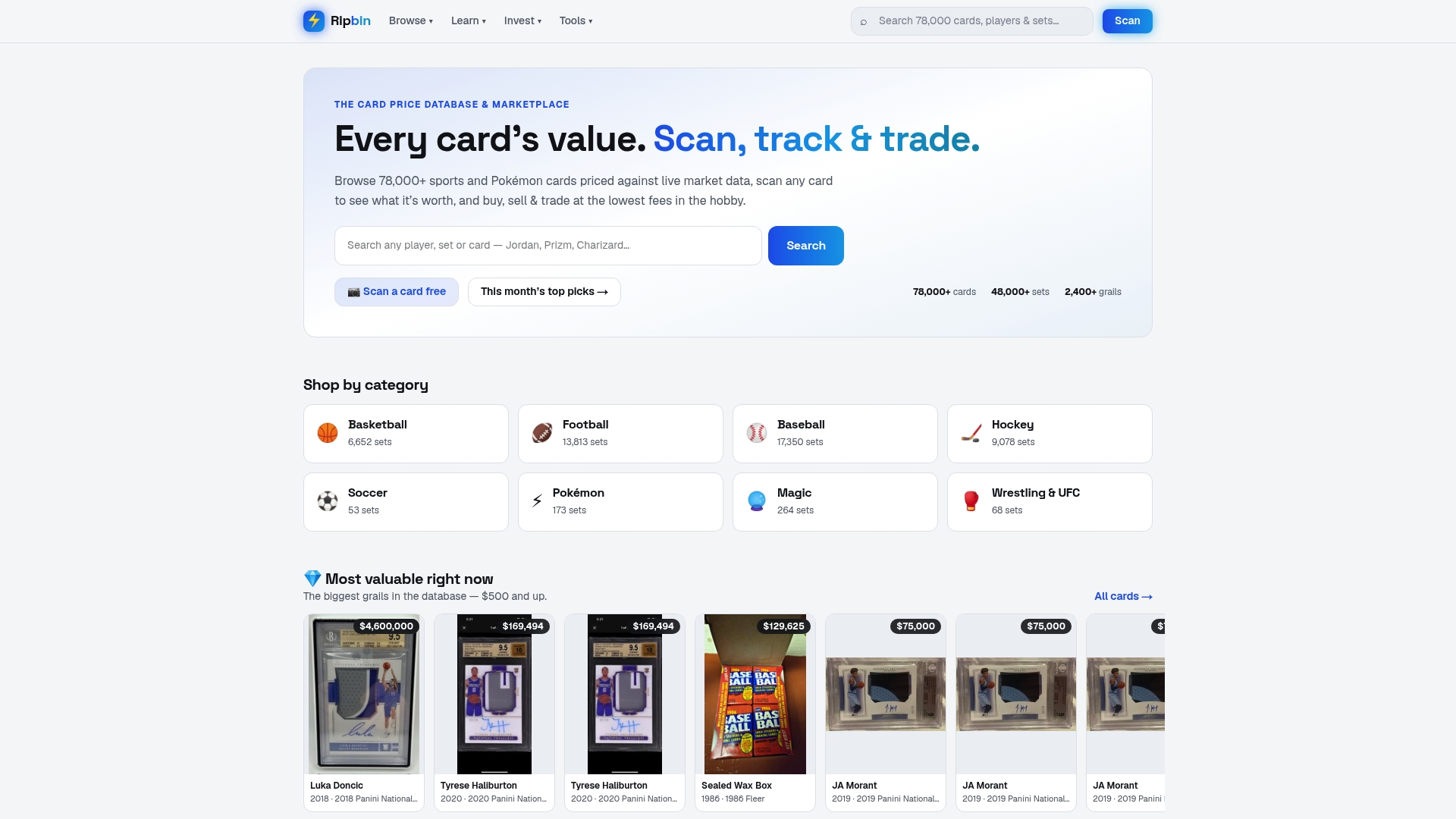
Scan a card and Ripbin identifies the exact variant, pulls grade-specific comps, and lets you save it to a personal locker to track over time. There are no browsing fees to check what your collection is worth, and the monthly investment reports flag cards showing the kind of rapid repricing that hit several Pikachu promos this year. If you’re holding a Base Set Red Cheeks Pikachu, a Vivid Voltage VMAX Rainbow, or anything in between, browse current card values on Ripbin and see exactly where it stands against recent sales.
Sources
- Best Graded Pikachu Cards to Invest In (2026) | Graded
- Most Expensive Pikachu Cards: Rarest and Most Valuable
- Pikachu ex (Surging Sparks 57) — Bulbapedia