What Are Michael Jordan Cards Worth in 2026?
By Ripbin Research · Published 2026-08-22
What Are Michael Jordan Cards Worth in 2026?
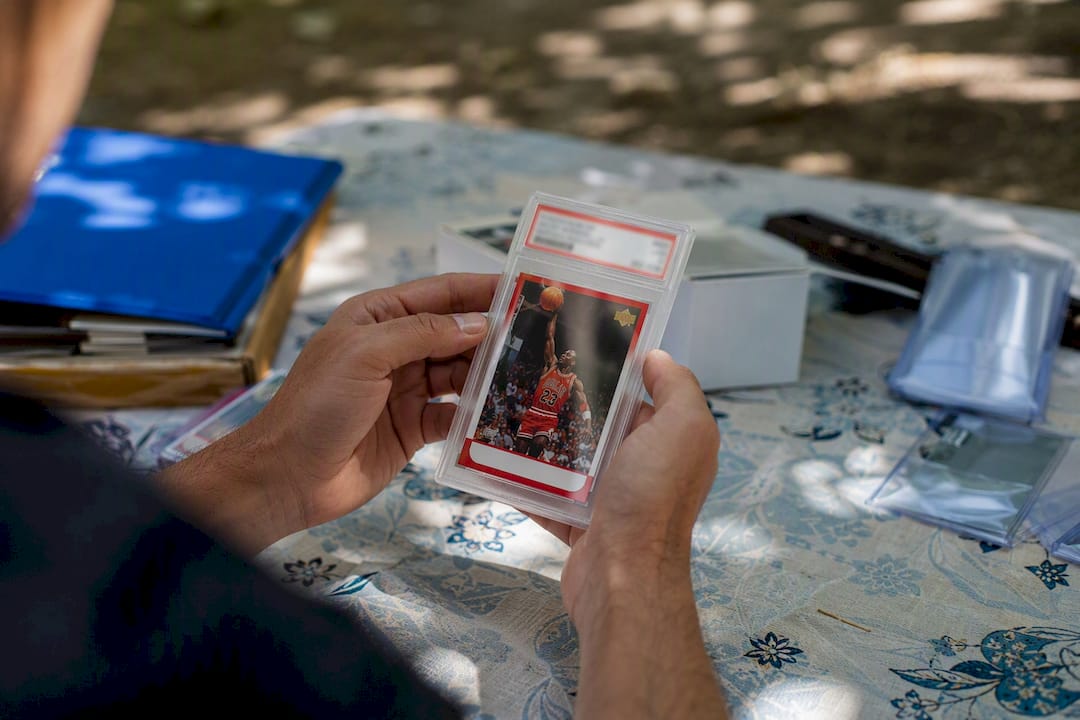
Bottom line: Michael Jordan cards range from a few dollars for common ungraded '90s issues to six and seven figures for rare graded and memorabilia pieces. The 1986 Fleer #57 rookie sits at the top of the base-card market, with raw copies trading around $2,200 to $3,800 and PSA 10s selling as high as $341,600.
- Common '90s base cards: roughly $2 to $50 raw, depending on set and condition.
- 1986 Fleer #57 raw: approximately $1,900 to $3,800.
- 1986 Fleer #57 PSA 10: six figures, with recent sales topping $341,600.
- Elite memorabilia/autograph cards: high six figures to over $1 million.
Before you buy or sell anything, check recent sold comps on a live price database. Prices on this card move fast enough that a guide from even six months ago can mislead you.
Key Takeaways
Michael Jordan card values run from a few dollars for common raw '90s issues to six and seven figures for elite graded and memorabilia pieces, with the 1986 Fleer #57 anchoring the rookie market.
| Point | Details |
|---|---|
| Fleer #57 sets the ceiling | Raw copies run $1,900 to $3,800; PSA 10s have sold as high as $341,600. |
| Centering drives grade jumps | Centering issues, more than surface or corners, keep most raw copies out of PSA 9–10 territory. |
| Memorabilia cards outpace base cards | Rare autograph and jersey cards have sold for over $1 million at auction. |
| PSA 7–8 is a pricing sweet spot | Grade compression makes these tiers a better value entry than chasing PSA 10 premiums. |
| Verify before you transact | Ripbin’s live sales data and scanning tools help confirm current comps before buying or selling a card. |
Table of Contents
- Snapshot: The Top Michael Jordan Cards and What They’re Worth
- How Grading, Centering, and Population Actually Move Prices
- 1986-87 Fleer #57: Grade-by-Grade Price Ranges
- Recent Auction Records and What They Signal for 2026
- How to Verify a Jordan Card’s Value Before You Buy or Sell
- Buying and Selling Smart: A Practical Checklist
- Where to Verify Jordan Card Values and Auction Records
- The Fleer Rookie Still Defines This Hobby, and That’s Not an Accident
- Check Live Jordan Card Values Before You Buy or Sell
- Sources
Snapshot: The Top Michael Jordan Cards and What They’re Worth
If you only remember one card from this list, make it the Fleer rookie. But the rest of the market matters too, especially if you’re building a collection instead of chasing a single grail.
- 1986-87 Fleer #57 (rookie/base) — the card that defines the category; raw copies run $1,900 to $3,800, graded copies climb steeply from there.
- 1997 Upper Deck Game Jersey Autograph (memorabilia/autograph) — a rare parallel that sold for $1,440,000 in a headline 2021 auction.
- 1997-98 Metal Universe Precious Metal Gems (limited parallel) — extremely low population, grade-sensitive, and priced closer to art than sports cards.
- 1996-97 Finest Refractor (limited parallel) — a '90s insert that carries real premiums in high grade.
- 1991-92 Fleer #29 (base) — a common '90s issue collectors often owned as kids, worth modest sums raw but climbing with a PSA 9 or 10 label.
- 1992-93 Upper Deck #23 (base) — another widely produced card, cheap raw, more interesting graded.
- 1997-98 Upper Deck Game Jerseys (memorabilia) — one of the earliest mainstream jersey-swatch cards, still commands strong prices.
- 1985-Star Co. Jordan set cards (rookie-era, pre-Fleer) — less liquid, harder to authenticate, but historically significant.
- 1996-97 Skybox Premium (base/insert mix) — solid mid-tier collector card with occasional high-grade spikes.
The Fleer rookie and the Precious Metal Gems parallel are particularly sensitive to grade, with price differences increasing significantly between grades.
How Grading, Centering, and Population Actually Move Prices
Price bands aren’t arbitrary. Three companies dominate grading: PSA, BGS, and SGC. Each assigns a 1 to 10 scale (BGS also issues half-point grades and subgrades), and the market treats PSA 10 and BGS 9.5/10 “Black Label” copies as the ceiling for any given card.
Centering is the biggest lever for the 1986 Fleer #57 specifically. Fleer’s production in that era was famously inconsistent, so a card can have sharp corners and clean surfaces yet still miss PSA 10 because the image sits off-center. That’s why PSA’s own grading guidance treats centering as a primary factor for this card, more than for most other issues from the same period.
Population reports matter just as much. A card with only a handful of PSA 10s commands a premium that a card with hundreds does not, and population shifts can swing prices significantly when a new PSA 10 surfaces or a resubmission bumps the count.
- Auction house sales (Goldin, Heritage, PWCC) often set records because bidding competition pushes prices past what fixed-price listings show.
- eBay “Buy It Now” prices tend to run higher than actual sold comps, so always filter for completed sales.
Pro Tip: Never price a card off active listings alone. Pull the last three to five actual sold comps in the exact grade you’re evaluating, then average them.
1986-87 Fleer #57: Grade-by-Grade Price Ranges
This card is the benchmark for the entire hobby, and its price curve between grades is steep enough to catch new buyers off guard.
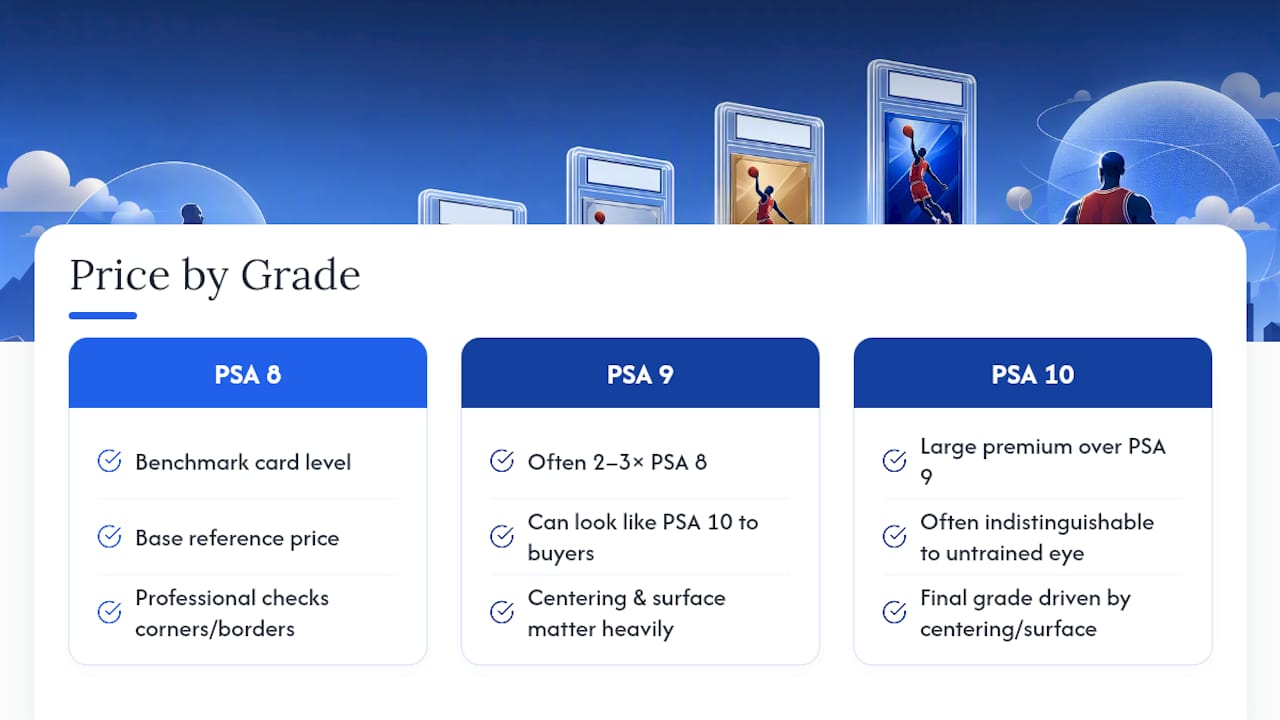
Recent activity backs this up. Sports Card Investor tracks last-sale prices across 2026, and its data shows the jump from PSA 8 to PSA 9 alone often doubling or tripling price, well before you even reach PSA 10 territory.
The gap between PSA 9 and PSA 10 exists almost entirely because of centering and surface. Two cards can look nearly identical to an untrained eye and land three grades apart once a professional service checks corners under magnification and measures border ratios.
Before you bid on any raw or graded copy, confirm the cert number on PSA’s public lookup, check that the photos match the actual card (not a stock image), and ask for a shot of the slab’s back label if buying graded.
Recent Auction Records and What They Signal for 2026
The memorabilia and autograph tier keeps setting records well above what base rookie cards ever reach. The $1,440,000 sale of a 1997 Upper Deck Game Jersey Autograph remains a reference point for how high the ceiling goes on rare parallels.
- Base rookie prices (Fleer #57) tend to appreciate more steadily and gradually compared to headline memorabilia pieces.
- Mid-grade compression, particularly between PSA 7 and PSA 8, has made those grades relatively more attractive for buyers priced out of gem-mint copies.
- High-end graded cards remain the most volatile segment, reacting sharply to new population reports or a single record sale.
Industry commentary consistently frames premium graded Jordan cards as highly reactive to market sentiment and population shifts, while common base cards behave more like a stable, slow-appreciating asset.
If you’re investing rather than collecting for love of the game, that split matters. Casual collectors can ride out volatility; investors chasing PSA 10s need to watch population counts closely.
How to Verify a Jordan Card’s Value Before You Buy or Sell
Guesswork is how people overpay or undersell. Run through this before any transaction:
- Pull the most recent sold comps for the exact card, year, set, and grade, not just similar cards.
- Cross-check the PSA population report to see how many copies exist at that grade and above.
- Compare listing photos against known centering and corner issues for that specific card.
- Verify the seller’s or auction house’s return policy and authentication guarantee before paying.
Ripbin pulls live market values sourced from actual sales across more than 78,000 cards, so you can scan a card and see current pricing without digging through multiple sites or paying browsing fees. That speed matters when a comp from three weeks ago might already be outdated.
Pro Tip: If a listing’s photos look suspiciously clean or the price sits far below every recent comp you find, ask for additional angles before you commit. That gap is usually a sign of an altered or miscategorized card.
Walk away from any seller who won’t provide a cert number, refuses close-up photos, or pressures you to skip verification.
Buying and Selling Smart: A Practical Checklist
Whether you’re the buyer or the seller, the fundamentals are the same: verify condition, confirm comps, and price with fees baked in.
- Buyers: request full, high-resolution photos of front, back, and corners; compare at least three sold comps in the same grade; factor in grading, shipping, and insurance costs before deciding your max bid.
- Sellers: disclose grade and population honestly, list clean well-lit photos, and choose auction format for scarce high grades but fixed pricing for common raw copies.
- Pricing tactic: PSA 7–8 copies have become a relative sweet spot as grade gaps compress, offering solid quality without PSA 10 pricing.
- Red flags: vague grading claims, refusal to show a PSA cert number, and prices dramatically below or above recent comps.
Where to Verify Jordan Card Values and Auction Records
- Auction houses (Goldin, Heritage) for headline record sales and provenance.
- PSA population reports for grade rarity and cert verification.
- Ripbin for live sold comps and instant card scanning.
The Fleer Rookie Still Defines This Hobby, and That’s Not an Accident
Most price guides treat every high-grade Jordan card as equally scarce, and that framing misleads more collectors than it helps. The 1986 Fleer #57 deserves the attention it gets, but the gap between a PSA 9 and PSA 10 isn’t really about rarity in the way people assume. It’s centering, a manufacturing flaw from 1986 that has nothing to do with how well a card was cared for. That distinction should change how you shop: a PSA 8 with great eye appeal can be a smarter buy than a marginal PSA 9 priced at a steep premium.
The conventional advice to “buy the highest grade you can afford” also undersells how much population reports move the market month to month. A single new PSA 10 surfacing can soften prices on existing copies overnight, which is exactly why static price guides go stale fast. Collectors who check live sold comps before every purchase consistently do better than those relying on last year’s numbers. Prioritize verification over gut instinct. The data changes faster than most people expect, and the cards that hold value longest are the ones bought with real comps in hand, not hope.
— Saad
Check Live Jordan Card Values Before You Buy or Sell
Price guides and outdated blog posts are still the default for most collectors, and that’s exactly why so many overpay or undersell. Ripbin pulls live values from over 78,000 cards, sourced from actual completed sales rather than asking prices, so the numbers you see reflect what buyers are paying right now, not what a seller hopes to get.
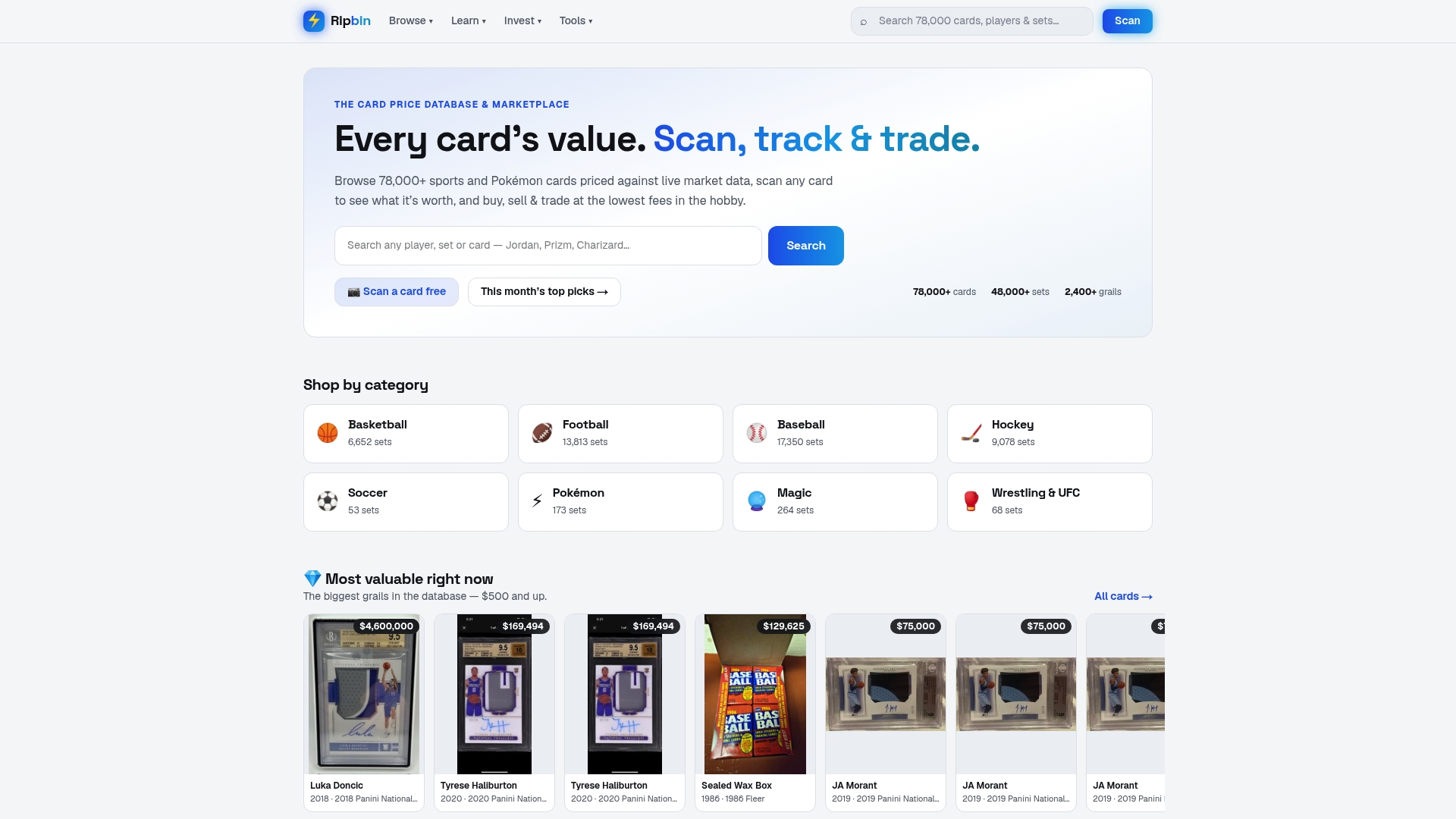
That matters most for a card like the 1986 Fleer #57, where the gap between a stale comp and a current one can be thousands of dollars. Scan a card, check its grade-specific value, and log it in your personal collection locker without paying browsing fees or digging through multiple sites. Ripbin also flags investment opportunities based on real sales trends, so you’re not guessing which cards are heating up. Start by browsing current card values to see where your Jordan cards, or your next purchase, actually stand in today’s market.
Sources
- 1986 Fleer Michael Jordan #57 Value & Price Guide (2026) | Curio Comp
- 10 Most Expensive Michael Jordan Basketball Cards | Public
- PSA: Photograde guidance on the 1986 Fleer Michael Jordan #57