Stop Overpaying: Best Vintage Pokémon Cards Collectors Should Buy
By Ripbin Research · Published 2026-09-21
Stop Overpaying: Best Vintage Pokémon Cards Collectors Should Buy
The best vintage Pokémon cards to chase fall into a short, well-defined list: iconic Wizards of the Coast holos from Base Set through Neo Genesis, plus a handful of true grails like the Pikachu Illustrator. This guide breaks that list into entry, mid, and grail tiers, explains how grading and print runs move prices, and walks through buying, authentication, and storage so you spend money on the right card.
TL;DR:
- Raw, ungraded Jungle and Fossil holos typically sell for a few hundred dollars, making them accessible entry points for new collectors.
- High-grade PSA 8 or higher Fossil Dragonite and Jungle Eeveelution cards significantly increase in value due to rarity at that condition, especially shadowless and 1st Edition base cards.
- The Pikachu Illustrator, awarded to only 39 winners, regularly sells for hundreds of thousands or millions of dollars, making it the ultimate vintage grail.
- Grading quality, print run distinctions like 1st Edition and shadowless, and card condition are the primary factors influencing vintage Pokémon card prices.
- Using a live price database helps verify actual sale prices before purchasing a vintage card and avoids overpaying compared to asking prices.
Table of Contents
- What Are the Best Vintage Pokémon Cards to Collect?
- How Do Grading and Print Runs Affect Vintage Card Value?
- Which Vintage Pokémon Sets Matter Most?
- How Do You Safely Buy and Authenticate Vintage Cards?
- How Should You Store and Protect Vintage Pokémon Cards?
- What Does the 2026 Vintage Market Look Like?
- Grails, Sets, or Bargains: What Should You Actually Chase?
- Track Vintage Card Values With Ripbin
- Where to Verify Grading and Price Data
- Sources
- FAQ
What Are the Best Vintage Pokémon Cards to Collect?
Not every old Pokémon card deserves a spot in a serious collection. The cards worth hunting share three traits: they came from the original 1999 to 2003 Wizards of the Coast era, they carry real print-run scarcity, and they show up repeatedly in auction records. Below is a tiered shortlist organized around what a collector can realistically buy today, from a first vintage purchase to a genuine grail.
Entry tier cards let you own real vintage history without draining a bank account. Raw, ungraded copies of Jungle and Fossil holos like Vaporeon, Flareon, or Zapdos typically run in the low hundreds of dollars depending on condition, and unlimited-edition Charizard reprints from later Base Set runs sit in a similar range. These are the cards most collectors start with because population is high enough that pricing stays predictable.
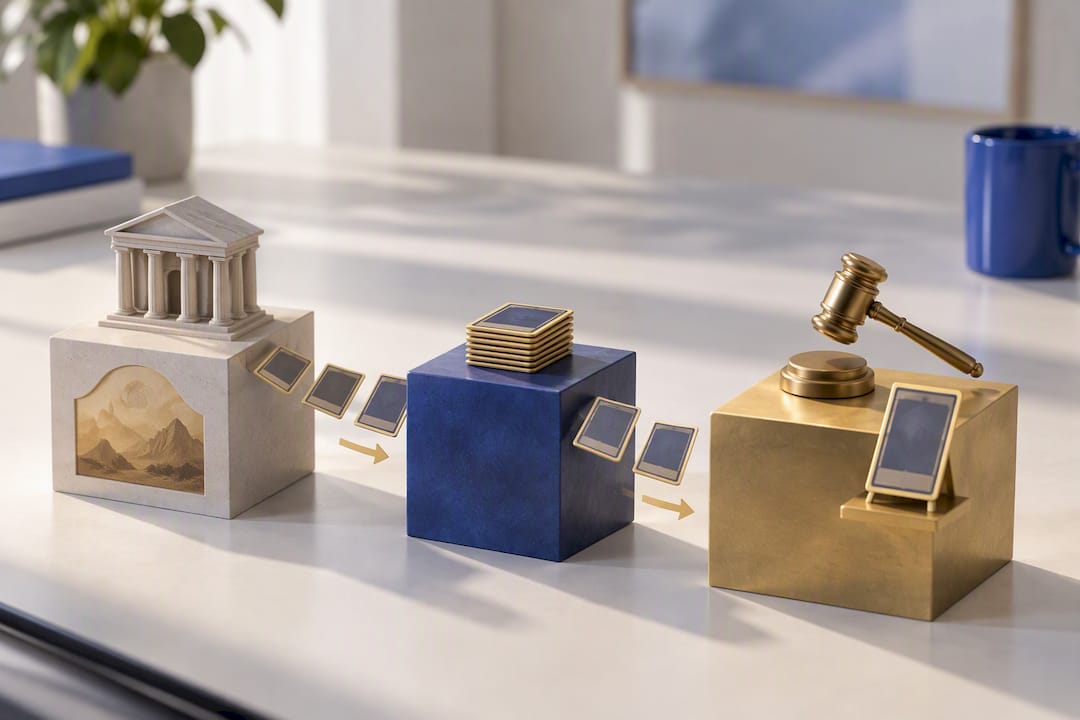
Mid tier is where condition starts doing the heavy lifting. A Fossil Dragonite or a Jungle Eeveelution graded PSA 8 or higher moves well beyond its raw price because fewer copies survive at that grade. This is also where shadowless and 1st Edition Base Set cards live, since the smaller print runs behind those variants create real premiums over the far more common unlimited prints.
Grail tier is a different game entirely. The 1998 Japanese Pikachu Illustrator promo, awarded to only 39 winners of a CoroCoro magazine illustration contest, is widely regarded as the hobby’s ultimate grail, with realized sales ranging from the high hundreds of thousands into multi-million dollar territory depending on grade and provenance. Heritage Auctions has sold examples at prices that dwarf almost anything else in the trading card hobby. A 1st Edition Shadowless Charizard in high grade belongs in this tier too, with PSA’s own price history showing significant value increases between grade levels rather than a smooth curve.
- Entry: Jungle/Fossil holos (Vaporeon, Zapdos, Ninetales), raw or low-grade
- Mid: 1st Edition or shadowless Base Set commons, Fossil Dragonite, high-grade Jungle Eeveelutions
- Grail: Pikachu Illustrator, 1st Edition Shadowless Charizard, tournament trophy cards
Statistic Callout: The Pikachu Illustrator’s contest origin, just 39 copies ever awarded, is why it commands realized prices that outpace nearly every other trading card ever printed, according to PSA CardFacts.
How Do Grading and Print Runs Affect Vintage Card Value?
Grading is the single biggest price lever in vintage Pokémon collecting, and it comes down to five criteria that services like PSA and Beckett apply consistently: centering, corners, edges, surface, and authenticity. A card that looks flawless to the naked eye can still drop several grade points because of a centering ratio a fraction off, and grading criteria explained by Sports Illustrated show why those small differences create outsized price gaps once population reports come into play. Fewer surviving copies at PSA 10 mean each one carries a scarcity premium the raw market never reflects.
Print run also matters independently of grade. First Edition cards carry a stamp near the bottom of the card, shadowless cards lack the drop shadow behind the artwork window, and unlimited cards have neither marker. Beckett’s grading premium guide breaks down exactly how those visual cues separate the rarest early prints from the far more common later runs.
- Corners and edges: whitening or fraying drops grade fast
- Centering: even a slight shift knocks points off an otherwise clean card
- Surface: scratches, print lines, and indentations count against you
- 1st Edition stamp, shadowless artwork, and copyright line placement all signal print-run rarity
Pro Tip: Before submitting a card for grading, weigh the jump from PSA 9 to PSA 10 against submission cost and turnaround time. On common cards that gap might not be worth the wait, but on a 1st Edition Charizard it can multiply the card’s value several times over.
Which Vintage Pokémon Sets Matter Most?
Base Set anchors the entire hobby because it introduced Charizard, Blastoise, and Venusaur and because its early print runs created the shadowless and 1st Edition variants everyone chases today. Collectors who understand the Wizards of the Coast era treat those fixed, identifiable print runs as the gold standard for verifying vintage rarity.
Jungle and Fossil followed close behind and produced some of the hobby’s most consistent chase cards. Beckett’s set guide singles out Snorlax and the Eeveelution holos as Jungle’s top targets, while Fossil’s Dragonite draws similar attention. Jungle also hides an error cohort worth knowing: certain holographics were printed without the expansion symbol, and that “no symbol” variant can be worth notably more than the standard unlimited print.
- Base Set: the foundational set, home to 1st Edition and shadowless variants
- Jungle/Fossil: Snorlax, Eeveelutions, Dragonite, plus “no symbol” error holos
- Neo Genesis onward: Lugia and Shining/Gold Star cards command steep premiums at high grade
How Do You Safely Buy and Authenticate Vintage Cards?
Vintage cards move through three main channels, and each has a different pricing pattern. Auction houses tend to produce the highest realized prices on rare, well-documented pieces because bidding competition surfaces true market value. Established dealers offer more price stability and often provide return policies. Marketplaces give the widest selection but carry the most authentication risk, since anyone can list a card.
- Buy graded whenever possible, and verify the slab’s serial number directly on the grading company’s own lookup tool rather than trusting a screenshot.
- Inspect slab seams and labels closely. Reglued or swapped slabs often show mismatched fonts, uneven labels, or a cert number that doesn’t match the card pictured.
- Ask the seller for high-resolution photos of both sides, the slab’s edges, and any invoice or provenance history tied to the card.
- Cross-check the asking price against recent realized sales rather than active listing prices, since asking prices routinely run high.
Pro Tip: If a seller resists sending a close-up photo of the slab’s cert number or won’t answer a direct question about the card’s history, treat that as a red flag and walk away, no matter how good the price looks.
How Should You Store and Protect Vintage Pokémon Cards?
Handle vintage cards by the edges only, and never touch the surface with bare fingers. A penny sleeve plus a rigid top loader is the minimum standard for anything worth grading, and gloves are worth using on grail-tier pieces.
- Store at stable room temperature with humidity kept low and consistent
- Keep cards out of direct sunlight to prevent fading and warping
- Use acid-free sleeves and top loaders, never plain plastic sheets
- Display low-value duplicates, keep grails in a dark, climate-stable box or safe
What Does the 2026 Vintage Market Look Like?
Recent auction activity confirms vintage Pokémon hasn’t cooled off. Heritage Auctions’ listing history for Neo Genesis Lugia shows collectors locking away grails even as some modern-era segments corrected through 2025. PSA’s own auction price tables for Lugia show how sharply price climbs by grade, a pattern that repeats across nearly every headline vintage card.
Statistic Callout: PSA’s price-by-grade tables for Neo Genesis Lugia show realized prices step up sharply at each grade level, reinforcing why grade, not just card name, drives value.
- Use a live price database before bidding, not a listing price, to set a realistic ceiling
- Track sale history on grails separately, since single outlier sales can skew averages
- Reserve budget for grading costs when buying raw vintage cards
Grails, Sets, or Bargains: What Should You Actually Chase?
Chasing headline grails makes headlines but rarely builds a satisfying collection on its own. Building a well-graded set teaches you condition standards faster than any single purchase. Buy for enjoyment first; let investment upside follow. New collectors do best starting with one attainable holo, not a grail.
— Saad
Track Vintage Card Values With Ripbin
A live price database gives you the one thing a checklist like this can’t: a live price to check a listing against before you pay. Instead of guessing whether a “great deal” on a shadowless Charizard is actually fair, you pull up its real sale history first. Some platforms track live values across many cards sourced from actual sales, so you can verify a realized price, scan a card for an instant estimate, and log it in a personal collection locker without browsing fees.

That matters most at the buying stage covered above: cross-checking a seller’s asking price against recent sales is exactly what a live price database is built for. If you’re weighing whether a vintage holo belongs in your collection long term, Ripbin’s Pokémon card investing guide walks through market context beyond what any single auction result can tell you. Start by browsing cards to check current values on the pieces from this list before you make your next offer.
Where to Verify Grading and Price Data
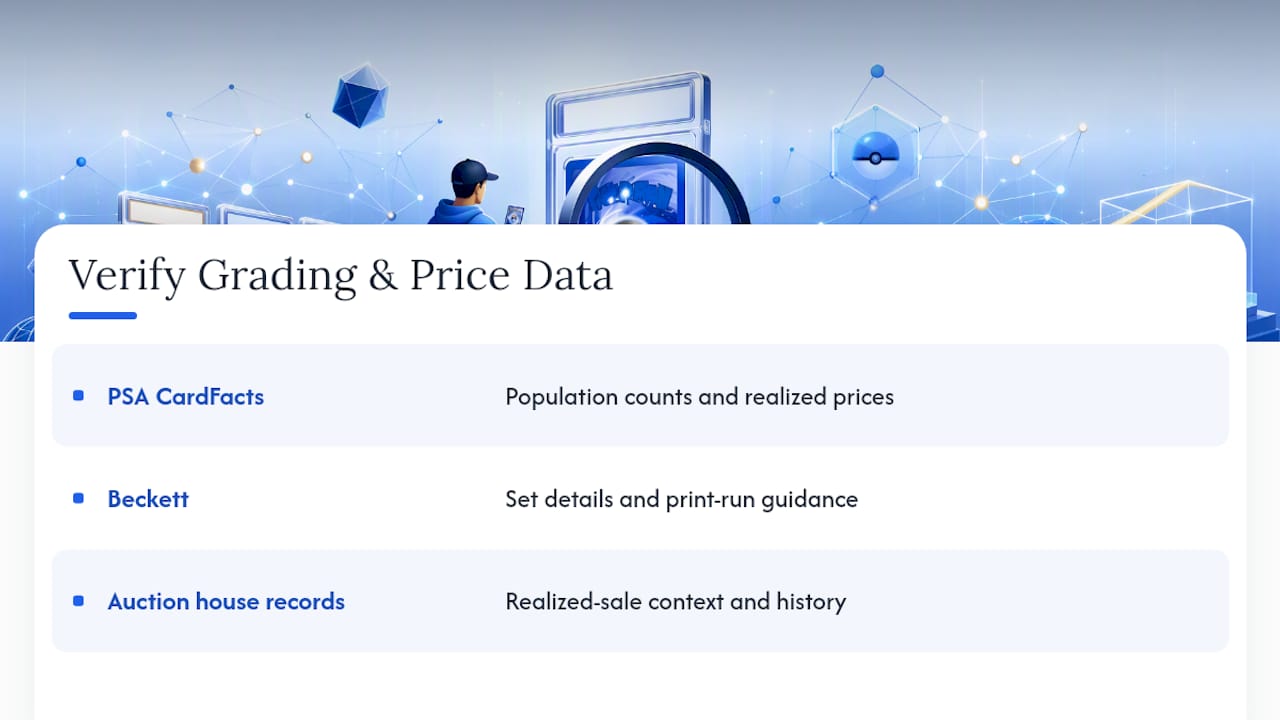
Cross-check any card decision against primary sources: PSA CardFacts for population and realized prices, Beckett for set and print-run guidance, and major auction house records for realized-sale context.
Sources
- PSA CardFacts — 1998 Nintendo Pokémon ‘Pikachu Illustrator’ (CoroCoro promo)
- Beckett — Shadowless vs. Unlimited: The grading premium guide every Pokémon collector needs
- Sports Illustrated — An education of card grading criteria
FAQ
What Vintage Pokémon Cards Are Worth Buying?
Start with 1st Edition or shadowless Base Set holos, Jungle and Fossil chase cards like Dragonite and the Eeveelutions, and grail-tier pieces like the Pikachu Illustrator if your budget allows. Grade drives value more than card name alone, so prioritize condition over rarity when comparing two similar options.
What Is the Best Vintage Pokémon Set?
Base Set holds that title for most collectors because it introduced Charizard and produced the 1st Edition and shadowless variants that anchor the entire vintage market. Jungle and Fossil follow closely, each contributing specific chase cards like Snorlax and Dragonite that command strong premiums at high grade.
Which Vintage Pokémon Cards Look the Coolest?
That’s subjective, but Base Set Charizard, Neo Genesis Lugia, and the Gold Star cards from the Neo era consistently top collector polls for artwork and presence. PSA’s auction data on Lugia shows demand for that card has stayed strong across multiple grade tiers.
What Is the Holy Grail of Pokémon Cards?
The 1998 Japanese Pikachu Illustrator, awarded to only 39 CoroCoro contest winners, is widely regarded as the hobby’s true holy grail. Realized prices have reached into the millions for top-grade examples, far outpacing any other vintage Pokémon card.
How Can I Check a Vintage Card’s Current Value?
Check a live price database like Ripbin rather than relying on active listing prices, since asking prices often run well above what cards actually sell for. Ripbin pulls values from real sales data across thousands of cards, giving you a realistic price band before you buy or sell.